
Digital Invitations·17 min read
Do You Need a Wedding Planner? Costs & Alternatives for 2027
Wedding planner costs, what full-service, partial and day-of coordinators include, and budget-friendly alternatives to help you decide what your wedding needs.

By Aurelia Editorial Team · Wedding stationery & planning guides
Published
However, hiring professional help can be worthwhile if you’re planning a destination wedding, managing multiple venues, or simply don’t have enough time to handle everything yourself.
The good news? You don’t have to choose between an expensive full-service planner and doing absolutely everything alone.
This guide breaks down wedding planner costs, what different planning services actually include, and practical alternatives to help you decide where your wedding budget is best spent.
Do You Actually Need a Wedding Planner?
The answer depends less on how extravagant your wedding is and more on how complicated it will be to organise.
A 40-guest wedding at a fully serviced venue may require very little outside coordination. Meanwhile, a 50-guest destination wedding involving travel arrangements, multiple locations and unfamiliar vendors could benefit significantly from a planner.
Here’s a quick way to assess your situation.
| Your wedding situation | Recommended approach |
|---|---|
| Small wedding at an all-inclusive venue | DIY planning with venue support |
| Simple wedding with a limited budget | DIY planning with online tools |
| Medium-sized wedding with several independent vendors | DIY planning + wedding-day coordinator |
| Destination wedding | Local wedding planner or destination specialist |
| Large wedding with complicated logistics | Partial or full-service planner |
| Multi-day celebration with multiple venues | Full-service planner |
| You enjoy planning but don’t want to manage the wedding day | Wedding-day coordinator |
When hiring a wedding planner makes sense
Consider professional planning support if:
- You’re having a destination wedding. A local planner can help navigate unfamiliar venues, vendors, language barriers and local requirements. Our guide to inviting overseas wedding guests covers the guest side.
- You have limited free time. Finding vendors, comparing proposals, reviewing contracts and coordinating schedules can take considerable effort.
- Your venue is a blank canvas. Private estates, outdoor spaces and unconventional locations may require you to arrange everything from tables to electricity and toilets.
- You’re hosting multiple events. Welcome parties, rehearsals, ceremonies and receptions can become difficult to coordinate across different locations.
- You want a complex design. Large floral installations, custom structures and detailed venue transformations often involve multiple production teams.
When you can probably plan your own wedding
You may not need a full-service planner if:
- Your wedding has relatively straightforward logistics.
- Your venue provides catering, furniture, staffing and basic event support.
- You’re comfortable researching and communicating with vendors.
- You have enough time before the wedding.
- You enjoy making creative decisions and keeping things organised.
The key question isn’t whether you can plan the wedding yourself. It’s whether you want to spend your time doing it.
What Does a Wedding Planner Actually Do?
A wedding planner helps organise the decisions, people and logistics required to turn your wedding plans into a real event.

Depending on the package, their responsibilities can include:
- Budget management: creating a spending plan, tracking payments and monitoring costs.
- Vendor sourcing: recommending and helping you evaluate photographers, caterers, florists, entertainment and other suppliers.
- Venue coordination: working with the venue to confirm layouts, schedules, access and requirements.
- Wedding design: helping develop the colour palette, decor concept and overall atmosphere.
- Timeline creation: organising planning deadlines and preparing the wedding-day schedule.
- Vendor communication: confirming arrival times, setup requirements, deliveries and responsibilities.
- Wedding-day management: overseeing setup, coordinating vendors, managing transitions and resolving unexpected problems.
Not every planner provides all these services. Some focus primarily on logistics, while others specialise in creative design or destination weddings.
Always request a detailed list of deliverables before signing a contract.
How Much Does a Wedding Planner Cost in 2027?
For couples planning a wedding in 2027, recent US pricing data provides a useful starting point.
According to Zola’s Wedding Cost Index, updated in February 2026, the average wedding planning cost in the United States is approximately $4,047, with many couples spending between $3,200 and $4,900.
These are US market benchmarks published in 2026, not confirmed 2027 prices. Your actual quote will depend on your location, wedding date, service package and event complexity.
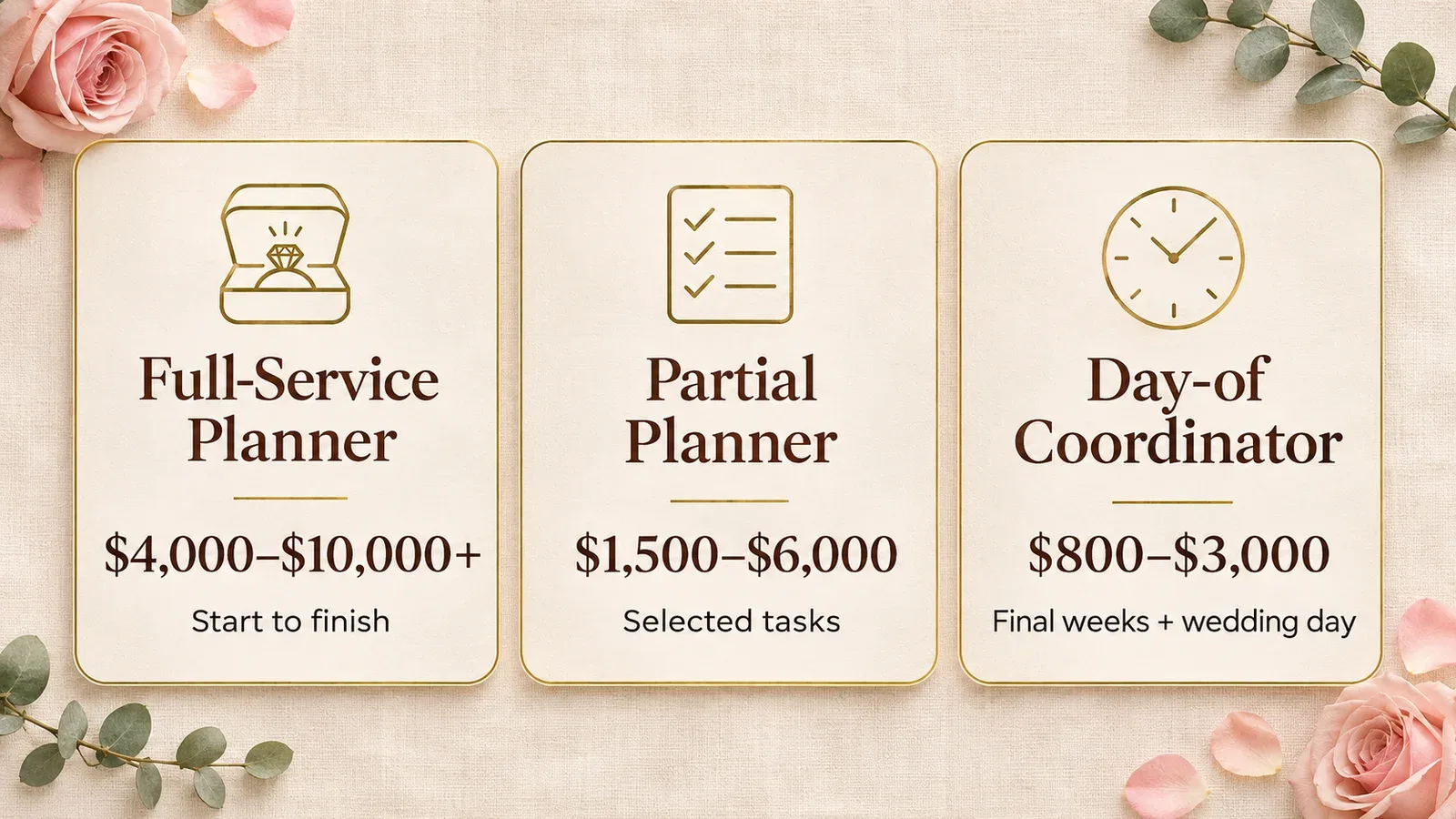
Wedding planner cost comparison
| Planning service | Indicative US cost | What you’re paying for |
|---|---|---|
| Full-service wedding planner | $4,000–$10,000+ | Comprehensive support from early planning through the wedding day |
| Partial wedding planner | $1,500–$6,000 | Help with selected planning tasks and final coordination |
| Day-of wedding coordinator | $800–$3,000 | Final preparations and wedding-day logistics |
What affects the cost of a wedding planner?
1. Location. Wedding planning costs often increase in major cities and popular destination wedding locations, where labour and operating expenses are higher.
2. Level of service. A planner working with you for 12 months will usually charge more than someone handling the final month of coordination.
3. Number of vendors. A wedding involving 15 independent suppliers may require more coordination than an event where the venue provides most services.
4. Wedding complexity. Multiple venues, intricate decor installations, transport schedules and multi-day celebrations can require additional staff and planning hours.
5. Additional fees. Check whether the quoted price includes:
- Travel and accommodation
- Additional assistants
- Rehearsal coordination
- Overtime
- Setup and breakdown supervision
- Extra planning meetings
Some planners charge flat fees, while others price their services as a percentage of your wedding budget or charge by the hour.
How much of your wedding budget should go towards planning?
Rather than following a fixed percentage, evaluate the planning fee against your total budget and priorities.
For example, imagine you’re planning a $25,000 wedding and receive a $4,000 full-service planning quote. That fee represents 16% of your total wedding budget.
For some couples, the time saved and professional coordination may justify the expense. For others, that money would make a greater difference when allocated towards catering, photography or guest experiences.
A practical approach is to compare three options:
- Full-service planning
- Wedding-day coordination only
- DIY planning with a limited professional consultation
Request comparable quotes and make sure you understand exactly what’s included.
Full-Service Planner vs. Partial Planner vs. Day-of Coordinator
Not all wedding planning services work the same way. Understanding the differences can help you avoid paying for support you don’t actually need.
| Service | Full-service planner | Partial planner | Day-of coordinator |
|---|---|---|---|
| Helps create the overall plan | Yes | Sometimes | No |
| Helps find and book vendors | Usually | Selected vendors | Usually not |
| Assists with budget management | Usually | Sometimes | No |
| Helps with wedding design | Often | Sometimes | Limited |
| Creates or finalises the wedding timeline | Yes | Yes | Yes |
| Coordinates the wedding day | Usually | Usually | Yes |
| Best for | Busy couples or complex events | Couples needing targeted support | Couples planning their own wedding |
Full-service wedding planner
A full-service planner typically joins early in the process and supports you through major decisions, vendor bookings, logistics and wedding-day execution.
Best for: couples with limited time, complex weddings, or a strong preference for professional assistance throughout the process.
Partial wedding planner
A partial planner helps with selected tasks after you’ve already completed some of the planning yourself.
For example, you might book the venue and photographer independently, then hire a planner to organise the remaining vendors and finalise the event schedule.
Best for: couples who enjoy planning but need extra guidance or professional support.
Day-of wedding coordinator
Despite the name, a day-of coordinator generally doesn’t arrive without preparation on the morning of your wedding.
Many begin working with you several weeks beforehand to review contracts, confirm vendor arrangements and prepare the final timeline.
On your wedding day, they may oversee deliveries, manage setup, coordinate the ceremony and handle last-minute problems.
Best for: couples who want to organise their own wedding without being responsible for running the event while they’re getting married.
What about a venue coordinator?
A venue coordinator and an independent wedding planner are not necessarily interchangeable.
A venue coordinator usually focuses on ensuring the venue operates smoothly, including access, facilities, staffing and venue-related arrangements.
They may not be responsible for coordinating your external photographer, arranging ceremony cues, managing personal decorations or troubleshooting guest transport.
Before hiring additional help, ask your venue: “Which parts of the wedding day will your coordinator manage, and which responsibilities remain with us?”
The answer can save you from paying twice for overlapping services or discovering important gaps too late.
Is a Wedding Planner Worth the Money?
A wedding planner can be worth the cost, but not because hiring one automatically makes your wedding better.
The biggest potential benefits are time savings, professional guidance, and having someone accountable for coordination.
What you’re really paying for
- Time: instead of researching dozens of vendors, requesting quotes, comparing packages and following up on schedules, you can delegate some of those responsibilities.
- Experience: an experienced planner may identify logistical issues you haven’t considered, such as insufficient setup time, conflicting vendor schedules or unrealistic transitions between locations.
- Support during unexpected situations: if the florist arrives late or the weather forces a ceremony change, a planner or coordinator can help organise the response.
- Less responsibility on your wedding day: you and your family can focus more on the celebration instead of managing deliveries, vendors and the event timeline.
Does a wedding planner save you money?
Sometimes, but there’s no guarantee.
A planner may help you avoid expensive mistakes, identify suitable vendors or negotiate better arrangements. However, these benefits don’t necessarily offset the planning fee.
For example, saving $1,000 on vendor costs doesn’t make financial sense on its own if the planner costs $5,000.
The real value depends on what you’re receiving in return, including time, experience, coordination and peace of mind.
Two weddings, two different decisions
Couple A: a 40-guest garden wedding. They’ve booked a venue that includes catering, furniture, basic decorations and event staff. They have 10 months to prepare and enjoy organising the details. A full-service planner may be unnecessary. A clear checklist, organised vendor contacts and confirmation of the venue team’s responsibilities could be enough.
Couple B: a 180-guest wedding across two venues. They’re planning a ceremony at one location and a reception at another, with separate transport arrangements, multiple vendors and significant decor installations. Professional coordination could be considerably more valuable because several teams must work together on a strict schedule.
The difference isn’t simply the number of guests. It’s the number of moving parts.
5 Budget-Friendly Alternatives to Hiring a Wedding Planner
If a full-service wedding planner doesn’t fit your budget, you still have several ways to make wedding planning easier.
1. Plan your wedding yourself with a structured checklist
One of the most effective ways to organise a wedding independently is to break the process into manageable stages. Instead of trying to plan everything at once, start with the decisions that affect everything else:
- Establish your total budget.
- Create an estimated guest list.
- Choose your wedding date and venue.
- Book essential vendors.
- Organise invitations and RSVPs.
- Confirm final guest counts and event details.
- Prepare your wedding-day timeline.
Use a spreadsheet or planning tool to track expenses, deposits, payment deadlines and vendor contact information. The month-by-month checklist later in this guide shows what to do when.
2. Hire a day-of or month-of coordinator
This is often a useful compromise if you’re comfortable planning the wedding but don’t want to manage logistics during the celebration.
You handle the decisions leading up to the event, while the coordinator helps finalise and carry out the plan.
Before booking, ask how many weeks of preparation are included and whether the package covers rehearsals, setup and breakdown.
3. Choose an all-inclusive wedding venue
Some venues offer packages that include catering, tables, chairs, staff and basic event coordination. This can reduce the number of independent suppliers you need to hire and manage.
However, an all-inclusive package doesn’t necessarily include everything. Ask whether you’ll still need to arrange:
- Photography and videography
- Flowers and decor
- Entertainment
- Ceremony setup
- Transport
- Wedding cake
- Additional coordination
Compare the total cost of the package against hiring each service separately.
4. Use digital wedding invitations and RSVP tracking
Guest management is one of the wedding planning tasks that can become unnecessarily complicated. With traditional paper invitations, couples may need to manually track responses from emails, phone calls and messages.
Digital invitations with RSVP tracking can help simplify this process. For example, with Aurelia you can create a personalised wedding invitation website and collect guest responses through built-in RSVP tracking.
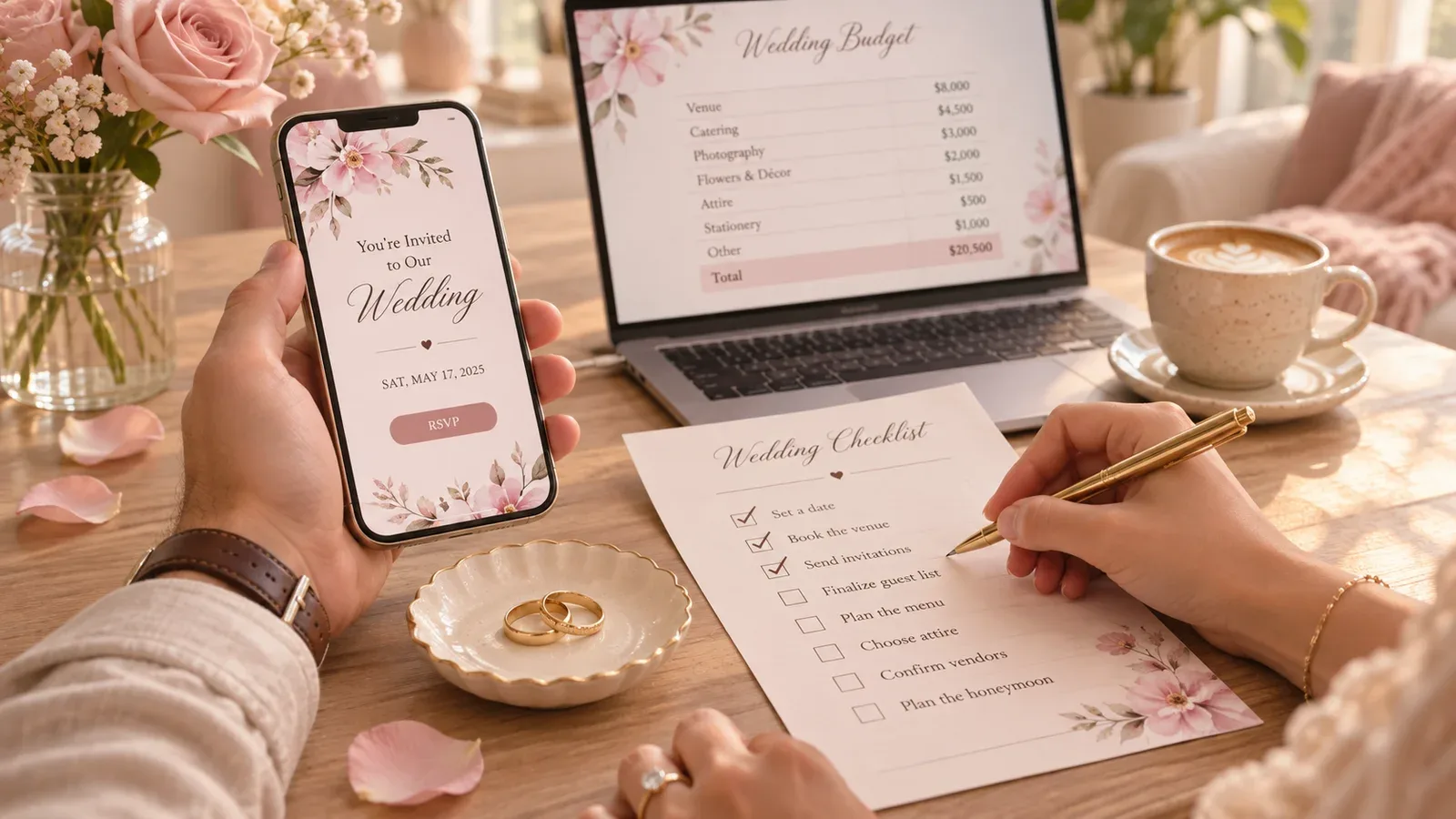
This makes it easier to organise invitation responses and monitor guest headcounts without relying on scattered conversations. Digital invitations are particularly helpful when you’re:
- Managing responses from guests in different locations
- Updating your estimated headcount
- Trying to reduce printing and postage costs
- Planning your wedding without a full-service planner
Of course, digital tools don’t replace a professional who manages vendors or handles problems at the venue. They simply make specific administrative tasks easier. Our guide on how to collect RSVPs online walks through the setup.
5. Book a one-time planning consultation
You don’t always need an ongoing planning contract. Some wedding professionals offer hourly consultations, planning reviews or limited services. You might hire someone to:
- Review your wedding budget
- Identify gaps in your timeline
- Evaluate vendor proposals
- Advise on venue logistics
- Help design a backup plan for an outdoor ceremony
This can be particularly useful when you’re comfortable doing most of the work but want expert input on specific decisions.
How to Plan a Wedding Without a Planner: Practical Checklist
Planning a wedding yourself is manageable when every important task has a deadline and a clear owner. Use this checklist to keep the process organised.
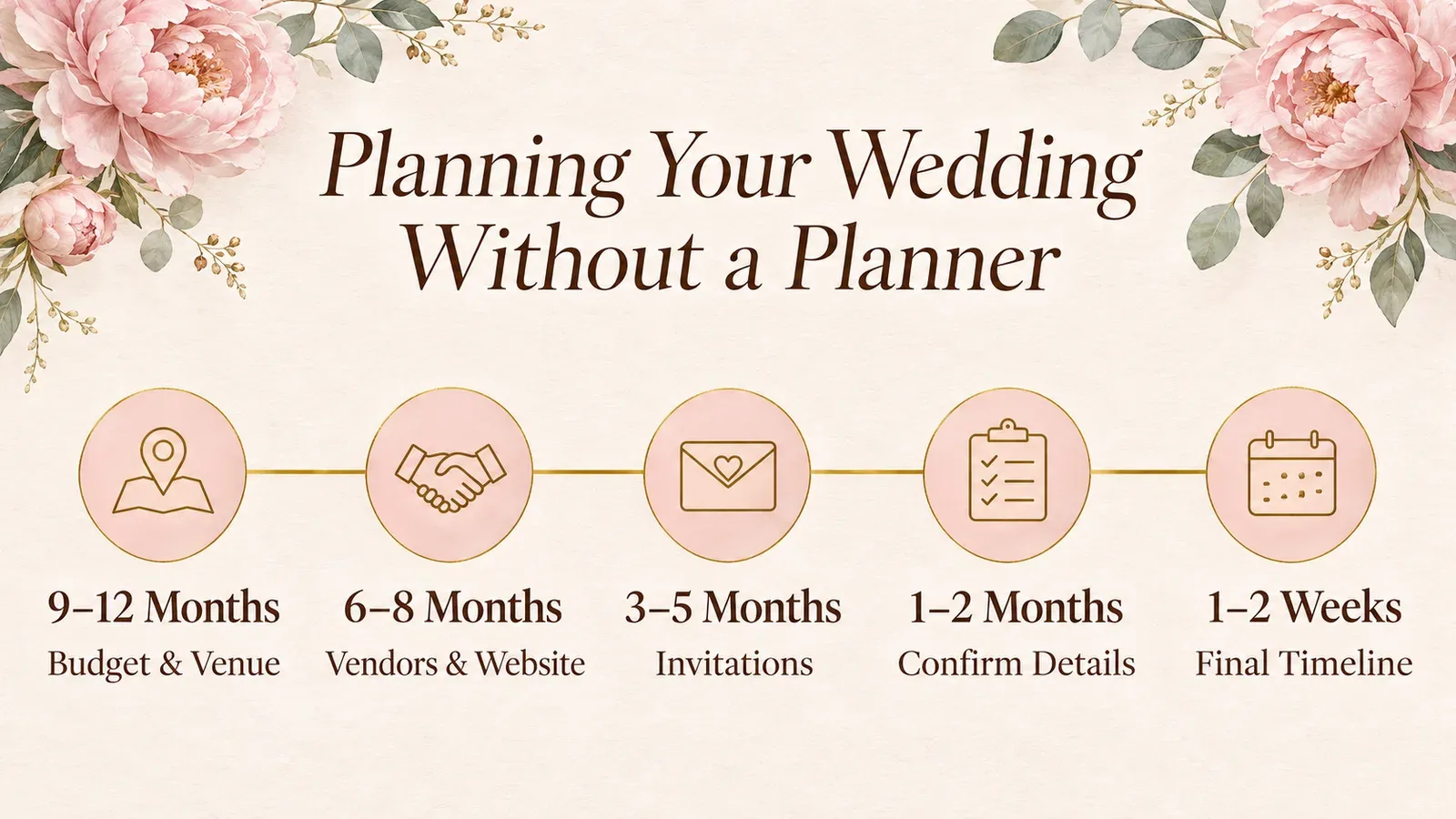
9–12 months before the wedding
0 of 6 readyUse this checklist while you read. Your selections reset when you leave this page.
6–8 months before the wedding
0 of 6 readyUse this checklist while you read. Your selections reset when you leave this page.
3–5 months before the wedding
0 of 6 readyUse this checklist while you read. Your selections reset when you leave this page.
1–2 months before the wedding
0 of 6 readyUse this checklist while you read. Your selections reset when you leave this page.
Final 1–2 weeks
0 of 6 readyUse this checklist while you read. Your selections reset when you leave this page.
One important tip: don’t assume a friend or family member can act as your coordinator without asking them first. If someone is helping, make sure they’re comfortable with the responsibility and have clear instructions. Otherwise, they may spend your wedding solving problems instead of enjoying it.
7 Questions to Ask Before Hiring a Wedding Planner
Before paying a deposit, ask these questions to understand exactly what you’re buying.
1. What services are included in your package? Request a written breakdown of responsibilities and deliverables. Clarify any services that cost extra.
2. Will you personally manage our wedding day? Some companies assign different staff members for planning and event coordination. Make sure you know who will be present.
3. How many weddings do you handle on the same weekend? Understanding their workload can help you assess availability, staffing and contingency arrangements.
4. Do you receive referral fees from vendors? Ask about vendor commissions and whether you can select suppliers outside their recommended network.
5. What happens if you’re unavailable? A professional should have a clear backup plan for illness or emergencies.
6. Are travel, overtime and additional staff included? These expenses can affect the final cost significantly.
7. How do you handle unexpected problems? Ask for examples of how they manage weather disruptions, vendor cancellations or last-minute scheduling changes.
A good planner should be able to explain their process clearly rather than simply promising that everything will be perfect.
Frequently Asked Questions
- Do I need a wedding planner for a small wedding?
- Not necessarily. If you’re hosting a small wedding at a venue with comprehensive services, you may be able to manage everything yourself. However, even a small wedding can require professional help if it involves a destination, multiple locations or complicated logistics.
- Is a wedding planner worth it for 50 guests?
- A full-service planner may not be necessary for a straightforward 50-guest wedding. If you’re using several independent vendors, a day-of coordinator could provide a more affordable alternative. Consider the complexity of your event rather than relying on guest count alone.
- Can I plan a wedding without a planner?
- Yes. Many couples successfully plan their own weddings using checklists, budget spreadsheets, vendor trackers and digital guest management tools. The most important part is assigning clear responsibilities, keeping deadlines organised and deciding who will coordinate the event itself.
- How far in advance should I hire a wedding planner?
- If you want full-service planning, consider contacting planners around the time you begin researching venues, often 9–12 months or more before the wedding. Day-of coordinators may become involved only weeks before the event, but booking early improves availability.
- What’s the difference between a wedding planner and a coordinator?
- A wedding planner helps organise the overall wedding, often including vendors, budgets, design and logistics. A coordinator focuses mainly on final preparations and managing the event itself. The precise responsibilities depend on the service agreement.
- Can digital wedding planning tools replace a wedding planner?
- Digital tools can replace some administrative work, such as tracking budgets, managing checklists and collecting RSVPs. They cannot fully replace a professional who coordinates suppliers, supervises venue setup or manages unexpected problems during the wedding.
Final Verdict: Should You Hire a Wedding Planner?
You don’t need a wedding planner simply because you’re getting married. You need a planning system that fits your wedding.
If your celebration is straightforward and you’re comfortable organising the details, planning it yourself can be a practical way to stay within budget.
If you’ve already handled most of the preparations but want to enjoy your wedding day without managing vendors, consider hiring a coordinator.
And if you’re organising a large, complex or destination wedding, professional planning support may be worth the investment.
Whatever you choose, start with a clear budget, a realistic timeline, and a reliable way to manage your guests and vendors.
Planning your wedding yourself?
Make one part of the process easier with Aurelia. Create a beautifully designed digital wedding invitation website, share your celebration details and keep guest responses organised with built-in RSVP tracking. Explore digital wedding invitations.
Sources & References
- Zola: How Much Does a Wedding Planner Cost? Updated 19 February 2026. US cost benchmarks and service differences.
- Zola: Do I Need a Wedding Planner? Updated 12 May 2026. Planning options, service scope and alternatives.
- The Knot: 2026 Real Weddings Study Research based on US couples who married in 2025.
Editor’s note: wedding planning costs are US estimates published in 2026, included to help couples preparing for 2027 set a preliminary budget. Actual prices vary by location, vendor and scope of service.
Part of our digital invitations guides. Start with What Is a Digital Wedding Invitation? Everything Couples Need to Know, or see every guide on this topic.