
Wedding Websites·6 min read
Wedding Vendor Checklist: Who to Book and When
Use a practical wedding vendor checklist, dependency-based booking order, copyable supplier enquiry and register for deadlines, costs and responsibilities.

By Aurelia Editorial Team · Wedding stationery & planning guides
Published

Decide which suppliers your wedding needs
Start by marking every service as included, separately needed or optional. A restaurant may provide furniture, catering and tableware; an empty site may require each separately. Check inclusions in writing rather than assuming all venues work alike. Use the table to identify gaps, not to create pressure to hire every vendor. Your priorities and event format should determine which extras belong in the plan.

| Service | What to establish before enquiring |
|---|---|
| Venue | Date range, guest count and usable spaces |
| Ceremony provider | Location, ceremony type and applicable process |
| Catering and drinks | Numbers, service format and venue facilities |
| Photography or video | Coverage priorities and locations |
| Planning or coordination | Work you need someone else to handle |
| Music and sound | Ceremony, meal and evening requirements |
| Flowers and styling | Budget, spaces and design direction |
| Clothing and beauty | Fittings, preparation locations and timing |
| Rentals or production | Items the venue does not supply |
| Transport | Routes, headcount and pickup windows |
| Invitations and website | Information guests need and reply method |
| Cake or other extras | Whether you actually want them |
Book around dependencies, not a universal month count
First: establish the date and essential availability. Confirm venue and ceremony arrangements together. If a particular photographer or musician is a genuine priority, check them while choosing the date. Record tentative enquiries separately from confirmed bookings. Do not send a date as settled to guests while it still depends on availability or an unresolved venue arrangement.
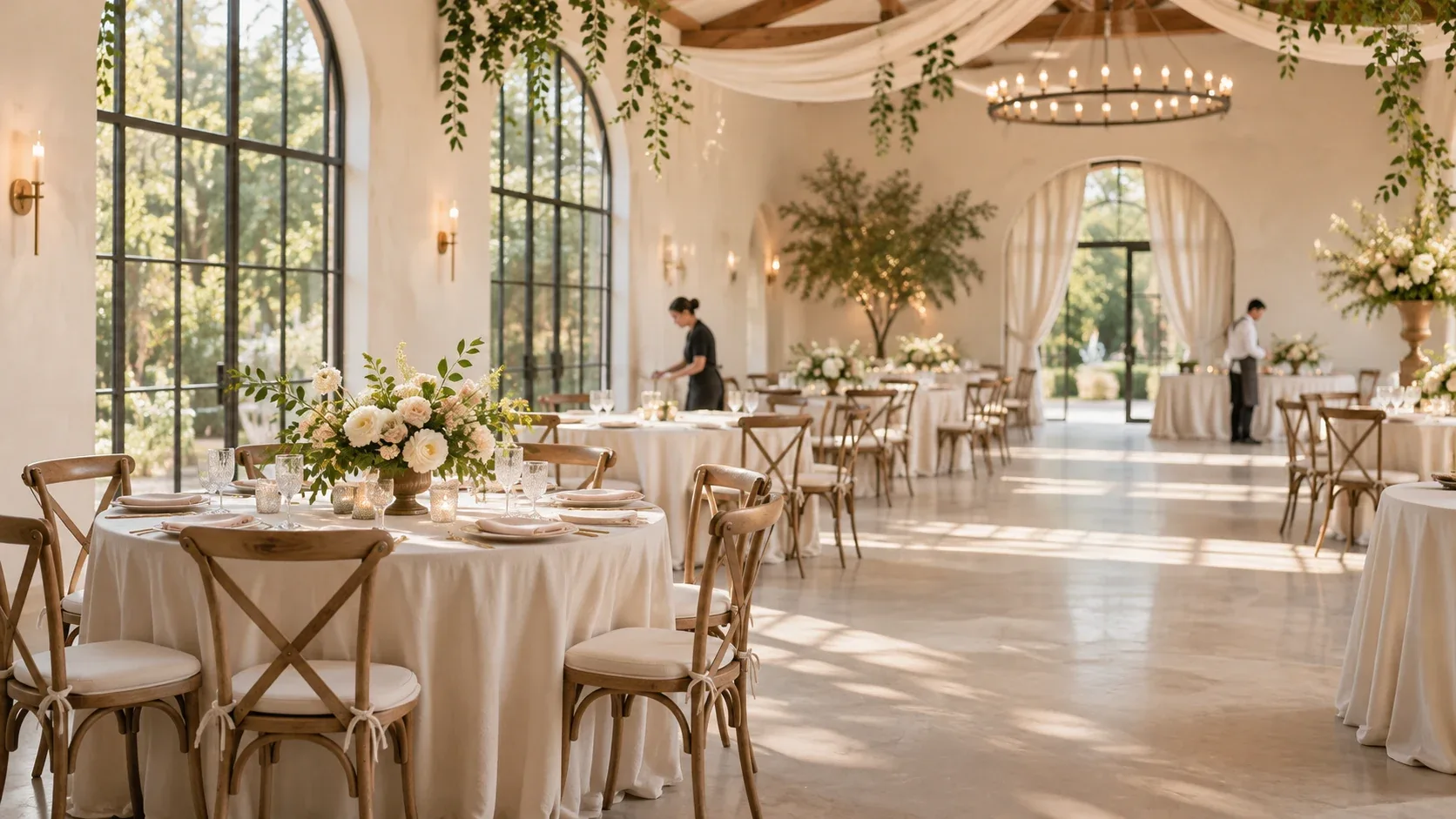
Next: book services that shape delivery. Catering, planning or coordination, music, transport and major rentals affect layout, access and timing. Ask what they need from the venue before approving a detailed schedule. For example, a band may need setup time in a room also used for dinner; that dependency is easier to solve before the room plan is fixed.
Then: refine design and communication. Choose floral scope, stationery and decor when the setting, budget and main logistics are clearer. Begin guest travel information once the facts are reliable rather than waiting for every design detail. Schedule custom work around the actual supplier lead times, proofing and production process; a generic month count cannot guarantee availability.
Use the 12-month checklist for a dated framework and adapt it to your remaining time. For a shorter plan, keep the same dependency order while reducing optional custom elements. Record each provider's actual booking and final-information deadlines so an example calendar does not accidentally override their requirements.
Send an enquiry that can produce a useful quote
Copy and adapt this enquiry: “Hello [name], we are planning our wedding on [date/date range] at [venue/location] for approximately [number] guests. We are looking for [service and hours/locations]. Our main priorities are [two points], with an approximate allowance of [amount and currency]. Could you confirm availability and send a proposal showing scope, exclusions, staffing, travel and payment schedule? Please also let us know what information you need next.”
For an accurate comparison, send the same core brief to shortlisted suppliers. Explain unusual requirements such as two sites, restricted access, an outdoor installation or late collection. Ask which assumptions the quote uses. A provider may be able to offer a simpler scope within your allowance, but only if the brief makes clear what matters and what can change.
Keep one supplier register
Keep one register with service, provider, named contact, status, scope, quoted/agreed total, paid, balance, due date, final-information deadline and agreement link. Use distinct statuses such as enquiry, proposal, confirmed and final details complete. “Booked” alone hides the work still required. Assign one person to follow up each outstanding question.

Add a dependency column and make the next action specific. “Florist awaiting venue fixing approval by Friday” is more useful than “flowers pending”. Link layouts and venue rules where relevant. When one decision changes, check the affected providers before updating the master plan. The planning tools guide helps keep this record usable without duplicating it across several apps.
Confirm boundaries before the final week
Confirm the full item lifecycle: who delivers, unloads, places, operates, removes, transports and returns it. These can be separate services. For 80 hired candleholders, the hire price might not include placing and collecting them. Record the physical work and timing alongside the booking so an attractive quote does not leave unassigned labour on the day.

Build a deadline map from the actual agreements: final meal numbers, menu confirmation, transport headcount, playlist requests and any site access approval. Work backwards to guest follow-ups and internal decisions. Ask each supplier to confirm receipt of the final information rather than treating “we emailed it” as completion. Resolve discrepancies before the final run sheet is circulated.
Give the day-of contact a current supplier directory, access plan, dated run sheet and collection inventory. Keep those private. Guests need the simpler website information checklist, not contract details and supplier mobile numbers. Use the timeline guide to connect bookings with the actions they must deliver.
Supplier booking questions
Who should you book first?
Start with decisions that establish the date and location, then services that are essential to your priorities or affect major logistics. The exact order depends on the venue package and event. Check important availability before locking the date where possible, and avoid booking optional extras while essential services remain unfunded.
Do you need a separate wedding coordinator?
Identify the responsibilities left after you compare venue support and other supplier scopes. If nobody owns the run sheet, independent-supplier arrivals or collection, decide who will. Read the planner versus coordinator guide to compare coverage rather than assuming every wedding needs the same package.
For invitations and guest information, preview Aurelia templates once the main arrangements are confirmed. Test the wording and reply process before sending, and assign someone to keep guest-facing details current.
Part of our wedding websites guides. Start with What Is a Wedding Website, and Do You Really Need One?, or see every guide on this topic.