Wedding Websites·6 min read
Wedding Day Timeline: Sample Schedules for Different Celebrations
Build your wedding day timeline with afternoon and lunchtime examples, realistic transition buffers and a private supplier run-sheet template.

By Aurelia Editorial Team · Wedding stationery & planning guides
Published
Start with the times you cannot move
Ask each team for its non-negotiable times before filling a generic template. Confirm venue opening, ceremony duration with your provider, caterer readiness and service windows, photographer coverage and music finish. If sunset portraits matter, ask the photographer about the actual date and location. A schedule built around another couple's sunset or ceremony length may fail even if its timings look familiar.

List every movement between those commitments. Guests may need to leave seats, find belongings, reach vehicles and settle at the next venue. Equipment and staff may be moving too. Distinguish the time an event ends from the time the next team is ready. If a room changes from ceremony to dinner, ask the venue how the changeover works and where guests spend that interval.
Sample afternoon wedding timeline
The afternoon example assumes ceremony and reception at one venue, a seated dinner and no separate ceremony requiring another time block. Preparation, supplier access and photography should be agreed separately. The guest arrival window is guidance for a comfortable entry, not the ceremony start. Share both clearly so guests do not mistake “arrive from 1.30 pm” for permission to arrive after 2 pm.
| Time | Guest-facing event | Private planning check |
|---|---|---|
| Morning | No guest event | Preparation, deliveries and setup |
| 13:30 | Guests may arrive | Welcome team and seating ready |
| 14:00 | Ceremony begins | Music, entrances and microphones checked |
| 14:30 | Drinks and congratulations | Family photographs in agreed groups |
| 16:00 | Guests invited to dinner | Seating, catering and access routes ready |
| 16:30 | Meal begins | Speeches coordinated with service |
| 18:30 | Evening celebration | Room change and entertainment setup |
| 22:30 | Last planned transport | Guests know the pickup point |
| 23:00 | Celebration ends | Collection and pack-down owners assigned |
Adapt the example by confirming the time needed for congratulations, the photo list and moving to dinner. Ask the caterer when guests must be seated for the agreed meal time. If speeches are included, agree their placement and estimated length with service rather than inserting them randomly. Remove traditions you do not want; do not fill an empty slot simply because a sample timeline contains it.
Sample morning ceremony and lunch
| Time | Event | What to allow for |
|---|---|---|
| 10:30 | Guest arrival | Travel and a comfortable waiting area |
| 11:00 | Ceremony | Your officiant's actual format |
| 11:30 | Congratulations and photographs | A short, prioritised photo list |
| 12:30 | Guests seated for lunch | Movement between spaces |
| 13:00 | Lunch | Catering and any speeches |
| 15:00 | Cake, conversation or a short activity | Optional, with clear expectations |
| 16:00 | Farewell | Transport and belongings |
For the morning ceremony and lunch example, tell guests that this is a daytime celebration and state the planned farewell. Confirm preparation access and travel before approving an early ceremony. You do not need to add an evening reception to make the schedule feel complete. A clear, well-paced lunch can be the whole event when that is the celebration you want.
Adapt the schedule for two venues or several ceremonies
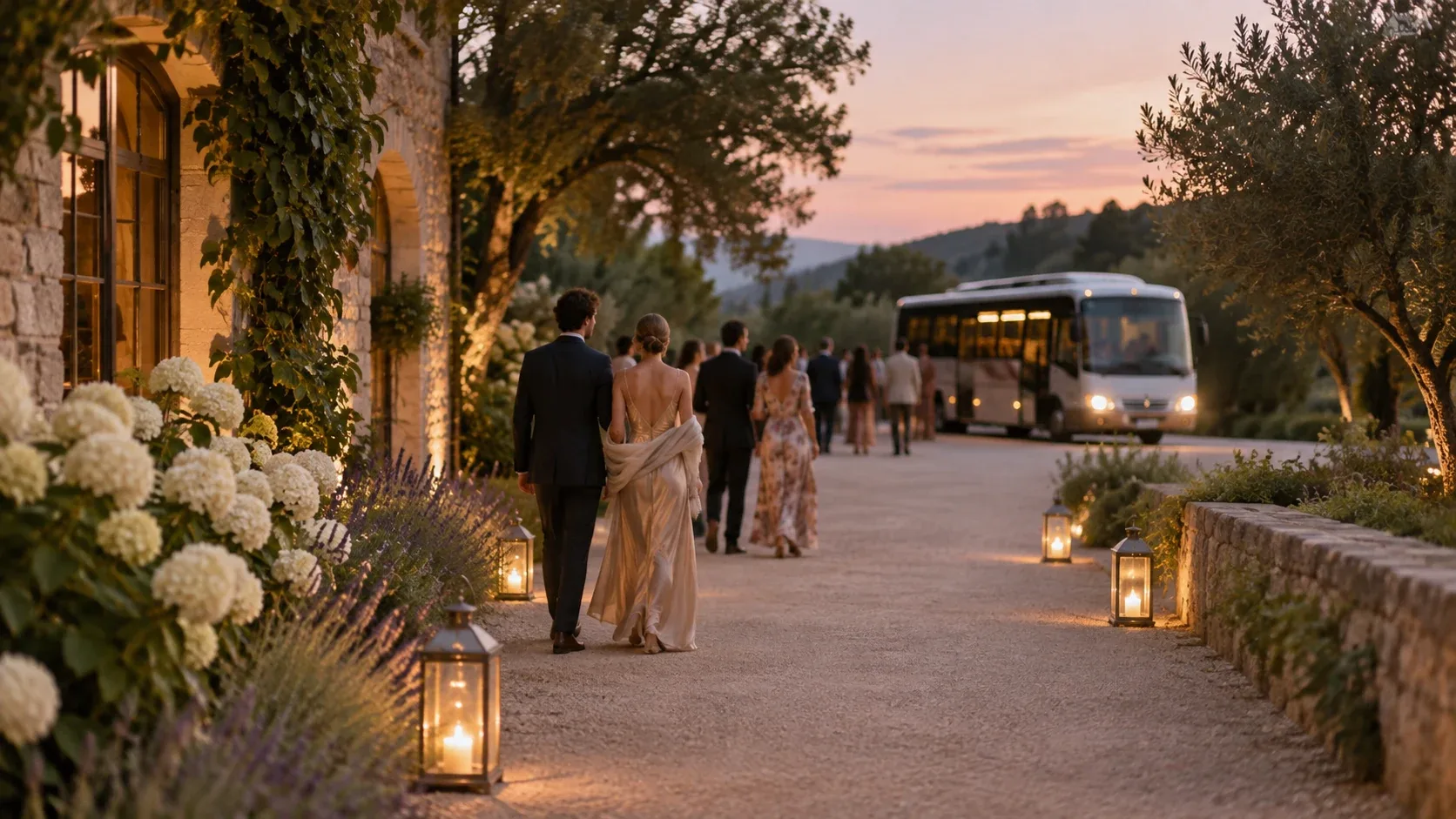
For two venues, calculate the transfer as stages. An invented example might allow 10 minutes to reach transport, 10 minutes to board, 25 minutes travelling and 10 minutes to unload and enter: 55 minutes before any additional allowance. Ask your transport provider to review the actual route, access and traffic conditions. Publishing only the driving time gives guests an unrealistic picture of the move.
For multiple ceremonies, ask the relevant providers and families about actual durations, preparation, clothing changes and rest. Identify the people who must attend both and any equipment that needs relocating. Do not impose a standard 30-minute slot on a ceremony with different requirements. Agree the fixed sequence first, then place photography and social time where they do not compete with it.
If events span several days, use the wedding weekend itinerary for the broad structure. Keep this page focused on the main day. Guests should be able to distinguish the required ceremony arrival from optional welcome drinks or the next morning's gathering without reading the full supplier schedule.
Make a separate supplier run sheet
Use these run-sheet columns: time, location, action, owner, dependency and contact. An illustrative entry is “1.15 pm; ceremony entrance; open guest arrival; welcome lead; seating and sound checks complete”. Record decisions as well as events: the weather-plan decision may happen long before guests arrive. Give the sheet a version date and name who can authorise changes.
Run a short rehearsal of the plan with the venue or coordinator. At each transition ask: who cues it, who moves, what must be ready and what happens if the previous stage is late? Protect the caterer's service and venue finish constraints. If the schedule slips, remove or shorten optional items under an agreed plan rather than compressing every remaining transition to zero.
What should guests see?
Publish arrival guidance, ceremony time, reception or meal timing, addresses and confirmed transport departures. Guests rarely need the exact floral delivery or speech-microphone check. Keep the private run sheet separate from the public schedule so internal changes do not make the invitation confusing.
Use the wedding website checklist to arrange that information. In an Aurelia invitation, preview the itinerary with your real details and make sure guests can find the current address and reply route. For a material time or location change, contact affected guests directly as well as updating the page.
Wedding timeline questions
How much buffer should you include?
Use buffers where delays can spread: preparation finishing, loading transport, group photographs and room changes. Ask the people responsible for those tasks about realistic allowances instead of inserting the same number everywhere. A 15-minute gap may be generous for a short walk but inadequate for boarding a coach and crossing town.
When should you finalise the timeline?
Work backwards from the earliest deadline for final supplier information. Share a dated version, collect confirmations and resolve conflicting requirements before distributing the final sheet. Keep a small change log afterwards and tell affected teams directly. The plan is final enough when the people delivering it have the information they need, not merely when it looks complete on paper.
Part of our wedding websites guides. Start with What Is a Wedding Website, and Do You Really Need One?, or see every guide on this topic.