Wedding Websites·7 min read
Wedding Guest List Planning: How to Decide Who to Invite
Build a workable wedding guest list with a capacity example, household tracker, plus-one decisions and kind wording for difficult requests.

By Aurelia Editorial Team · Wedding stationery & planning guides
Published

Agree your working guest limit
Start with the lower of the usable venue capacity and the guest count your budget can support. Check what the venue's capacity figure includes and ask for the actual dinner layout. As an invented planning example, a room seating 90 guests is not a reason to invite 110 people and hope 20 decline. Build a plan that works if every named invitee accepts, then review additions only when genuine space exists.

Make your lists independently before combining them. Mark people you both see as essential, then discuss wider family, friendships and colleagues using the same questions: is this an active relationship, does their presence matter to us, and are we including their established partner? Equal numbers for each partner are not the only fair approach. A partner with a larger family may need a different allocation; agree the reasoning rather than silently creating competing quotas.
Count every named partner, invited child and open plus-one in the working total. Keep event scopes separate: someone invited to an evening reception is not automatically included in the ceremony meal. If your first list is too large, revisit the event scope or wider circles before sending anything. Do not create an unofficial list of promises that is absent from the tracker; verbal invitations can still create expectations.
Use households for administration and names for headcount
Use one household ID for communication and one row per person for headcount, or a structure that clearly distinguishes the two. For example, household C12 might contain Maya, Daniel and an invited child: one invitation, three people, with separate attendance responses where needed. Record which events each person is invited to. A single “yes” beside the household is insufficient if family members attend different gatherings.

| Field | What to record |
|---|---|
| Household | A reference that groups the invitation |
| Named guests | Each person actually invited |
| Event scope | Ceremony, reception or other specific event |
| Contact | Preferred way to receive information |
| Invitation sent | Date and channel |
| Reply | Attending, declining or pending |
| Confirmed number | Actual people attending |
| Follow-up owner | Who will clarify missing information |
Keep contact details and practical requirements private. For planning, collect only information with a purpose and share it with the team that needs it. A transport provider may need pickup numbers without the complete guest directory. A public wedding website can explain how to reply but should not display personal guest data. The planning tools guide helps assign one reliable record for each job.
Decide your partner and plus-one approach
Decide your approach to established partners, open plus-ones and guests who know few others before addressing invitations. A consistent principle is easier to explain than rules that emerge one request at a time. Discuss meaningful exceptions together and count them immediately. Avoid using only a broad label such as “no plus-ones” when you actually intend to invite named partners; the invitation should show clearly who is included.
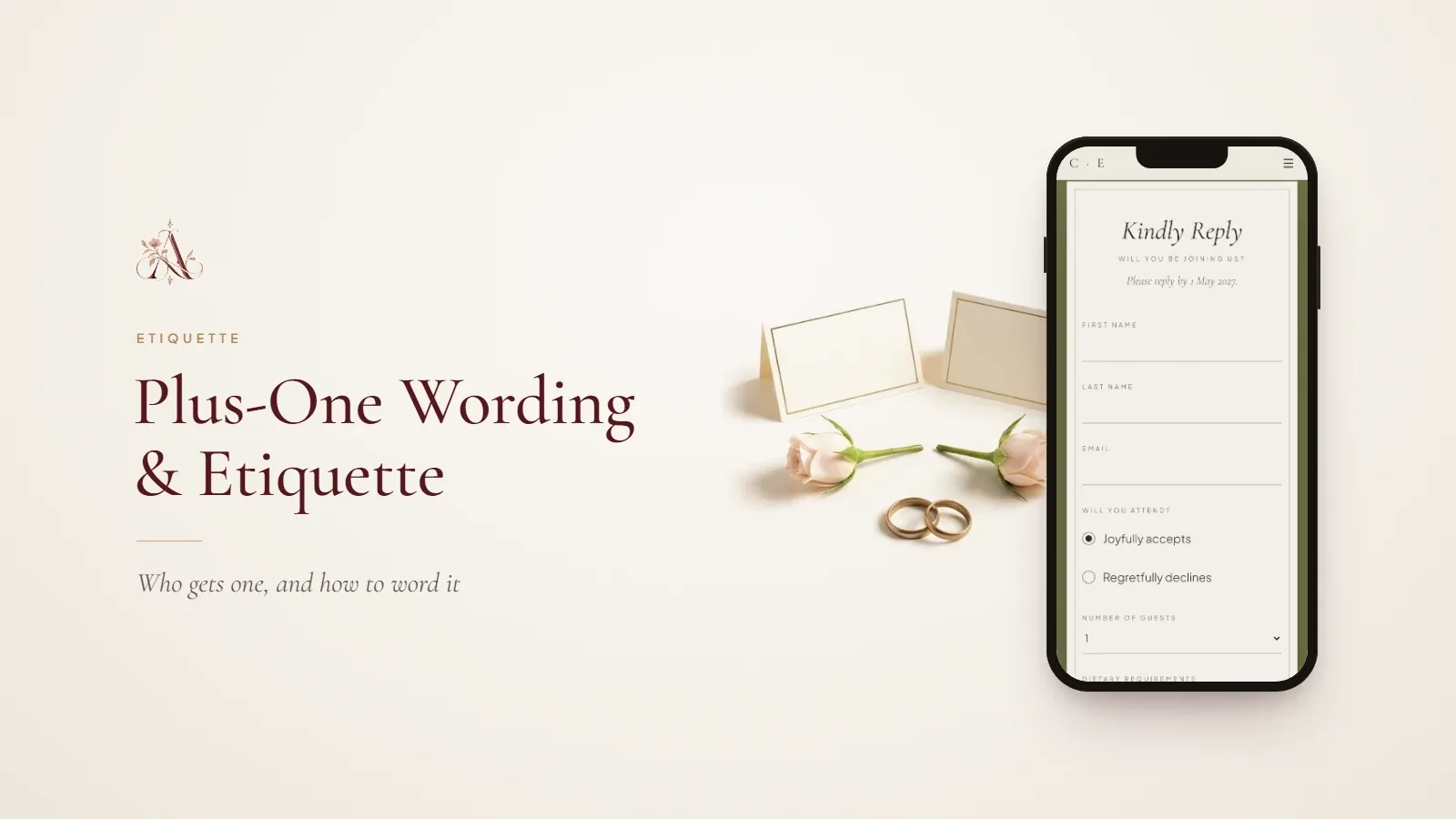
Use named wording for a known partner, or explicitly offer an open guest place where that is your choice. For example: “We have reserved two places for Maya and Daniel” differs from “Maya and guest”. If someone asks, you can say: “We are keeping to the people named on each invitation, so we cannot add another guest.” Adapt the tone to the relationship and see the plus-one wording guide for more examples.
Agree how children will be included
Decide whether children are included in the ceremony, reception or particular events, and identify any exceptions before invitations go out. Count children within the layout and catering discussion rather than treating them as invisible places. Ask the venue and caterer what the arrangements require, then explain your actual decision. Families need enough information to consider childcare, travel and whether attendance is possible.
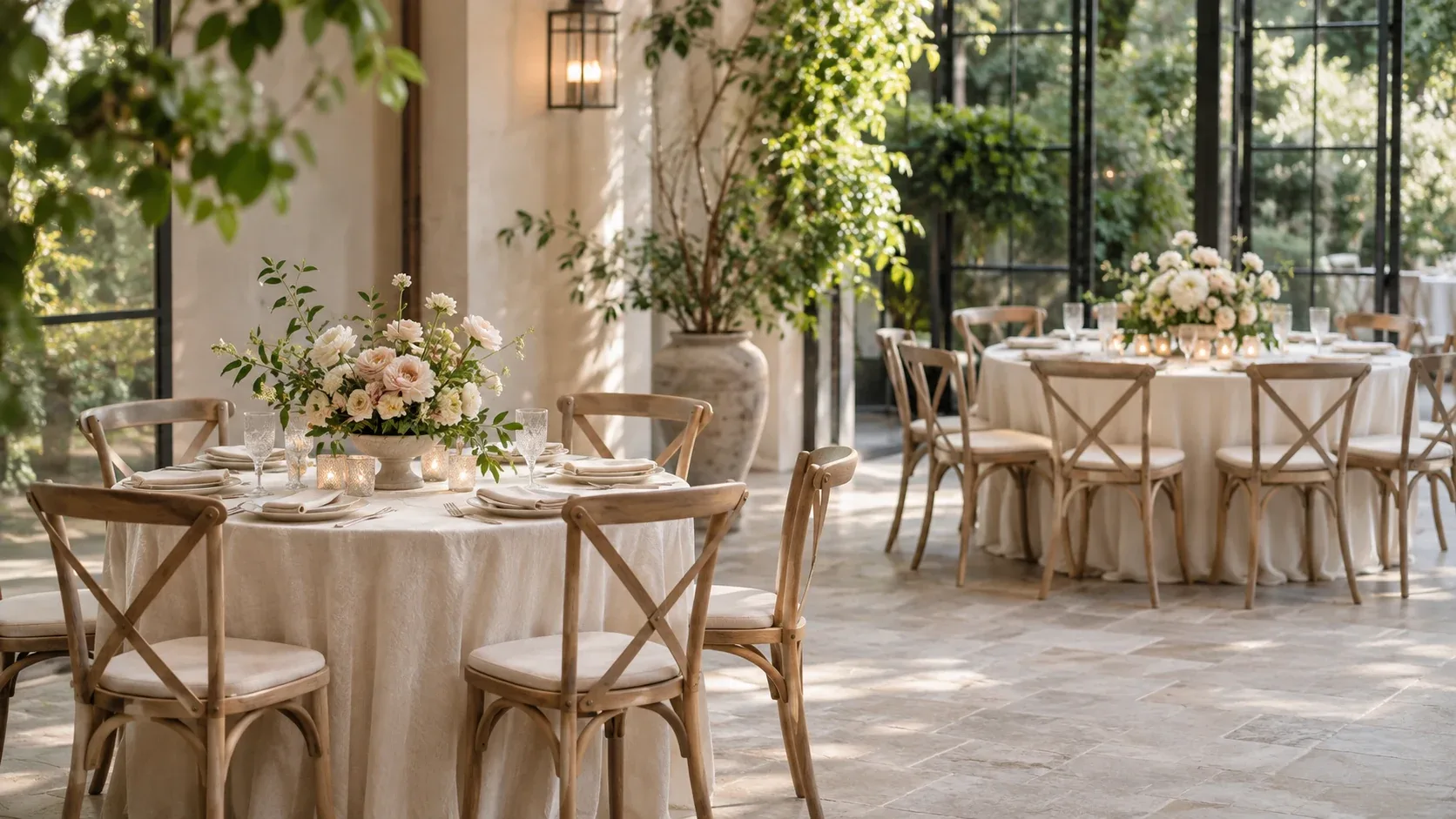
For an adults-only invitation, name the adults and add a warm direct note such as: “Our reception will be an adults-only celebration. We understand this may affect your plans.” If some children are included, do not claim that the venue prohibits them. Use the adults-only wording guide to communicate the scope without inventing a restriction or making guests guess.
Discuss family contributions before invitations go out
Discuss family contributions and invitation expectations before you accept assumptions about the guest list. Ask whether relatives want to suggest names, host an additional event or make a contribution without conditions. Put the proposed guests in the shared list and review their effect on capacity and cost. A contribution should not silently create invitations that the couple learn about after the venue is booked.
Try: “We have room for 80 people in the plan we can host. Please send the names that matter most to you, and we will go through them together before invitations are promised.” If the suggestions exceed the space, discuss a specific number or another gathering instead of asking vaguely for a shorter list. Keep the conversation about the actual event constraints, not whose relationships matter more.
Handle difficult requests without negotiating publicly
Respond to requests privately and avoid negotiating in a group chat. You might say: “We would love to include everyone, but we can only host the people named on the invitation.” If you choose an exception, update the tracker before confirming it. This prevents one partner agreeing informally while the other sends an outdated count to suppliers.
Maintain an invitation matrix for separate gatherings: ceremony, reception, welcome dinner and farewell brunch as needed. Send each household only the events intended for them. Check that a general website page does not imply an invitation to a smaller private meal. Clear event scope is kinder than expecting guests to infer that an attractive itinerary item excludes them.
Move from invitations to confirmed attendance
Set reply deadlines backwards from the earliest supplier deadline, with time for follow-up and clarification. Count attending, declined and pending responses separately. Resolve ambiguous replies such as “we should both be there” before using them for final catering or seating. Keep a dated version of the numbers supplied to each team so later changes can be traced.

The online RSVP guide covers the next stage once invitations are defined. Preview an Aurelia invitation with your named guest wording and check the reply journey before sending it widely. A convenient reply method supports a clear guest list; it does not decide who is invited.
Guest list questions
Must you invite someone who invited you?
A past invitation need not create an automatic place at a different-sized wedding. Consider your current relationship and the event you can host. If the subject arises, explain the small scope kindly rather than debating the value of the other person's invitation. Apply the same reasoning across comparable relationships.
Should you invite more people as others decline?
Only when you can offer a sincere invitation with useful notice and the revised plan works with supplier deadlines. Avoid assuming a decline immediately releases spend or accommodation commitments. Update the named list and event scope first, then invite the person directly rather than issuing a rushed generic request.
Part of our wedding websites guides. Start with What Is a Wedding Website, and Do You Really Need One?, or see every guide on this topic.