Etiquette·5 min read
Wedding Invitation Etiquette: The Complete Modern Guide
Wedding invitation etiquette for modern couples: when to send, who to name, plus-ones, children, evening guests, digital invitations and guests from abroad.

By Aurelia Editorial Team · Wedding stationery & planning guides
Published ·Updated
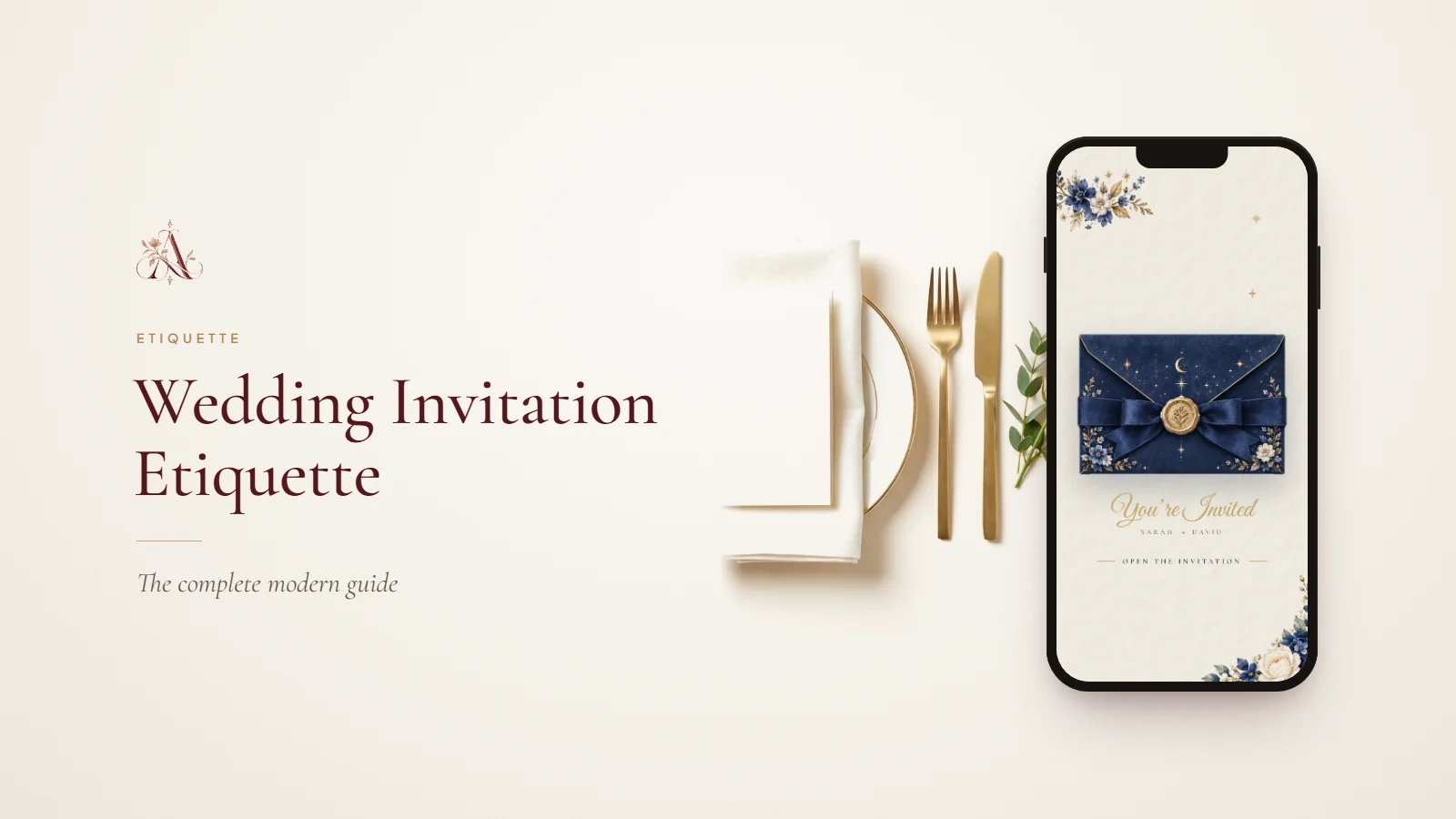
The traditions still matter, but many now have modern answers, especially for digital wedding invitations and weddings that bring guests together from different countries. This guide covers both.
When to send invitations and save the dates
- Save the dates: six to eight months before, or nine to twelve for a destination wedding.
- Invitations: eight to twelve weeks before, or three to four months for a destination wedding. Many UK couples send them six to eight weeks ahead for a local wedding.
- RSVP deadline: three to four weeks before the day.
Our wedding invitation timeline explains each step, including peak-season dates and evening guests.
What every invitation must include
- Who is hosting.
- The couple’s names.
- The date and time.
- The venue.
- How and by when to reply.
Our wedding invitation wording examples show how to put these together for every style.
Who is named, and in what order
The hosts are named first. Traditionally that was the bride’s parents; today many couples host together, or name both families. When the couple are named, the bride traditionally comes first; same-sex couples often choose alphabetical order or whichever reads best. Formal UK invitations use “honour” and “favour”, and “Mr and Mrs” without full stops.
Making it clear who is invited
| Situation | A warm, direct way to say it |
|---|---|
| Adults-only celebration | “We look forward to celebrating with you at our adults-only reception.” |
| No additional plus-one | “We’ve reserved one seat in your name and are keeping our celebration to the guests named on the invitation.” |
| Evening reception only | “Please join us for our evening reception from 7pm at [venue].” |
These are wording suggestions, not universal rules. Family and cultural expectations differ. If someone may misunderstand who is invited, a personal conversation is kinder than expecting them to infer it from the names alone.
Plus-ones
Married, engaged and long-term couples are usually invited together. Beyond that, a plus-one is your choice. Name the people invited, or add “and guest” when a plus-one is welcome, so nobody has to guess.
Children and adults-only weddings
The names on the invitation are the guest list: if children are invited, name them. For an adults-only celebration, say so once and warmly, for example: “We love your little ones, but our celebration will be adults only.”
Evening guests
If some guests are invited only to the evening reception, send their invitations at the same time as the day guests’, with the evening start time. Sending them later can feel like an afterthought.
Dress code, gifts and other details
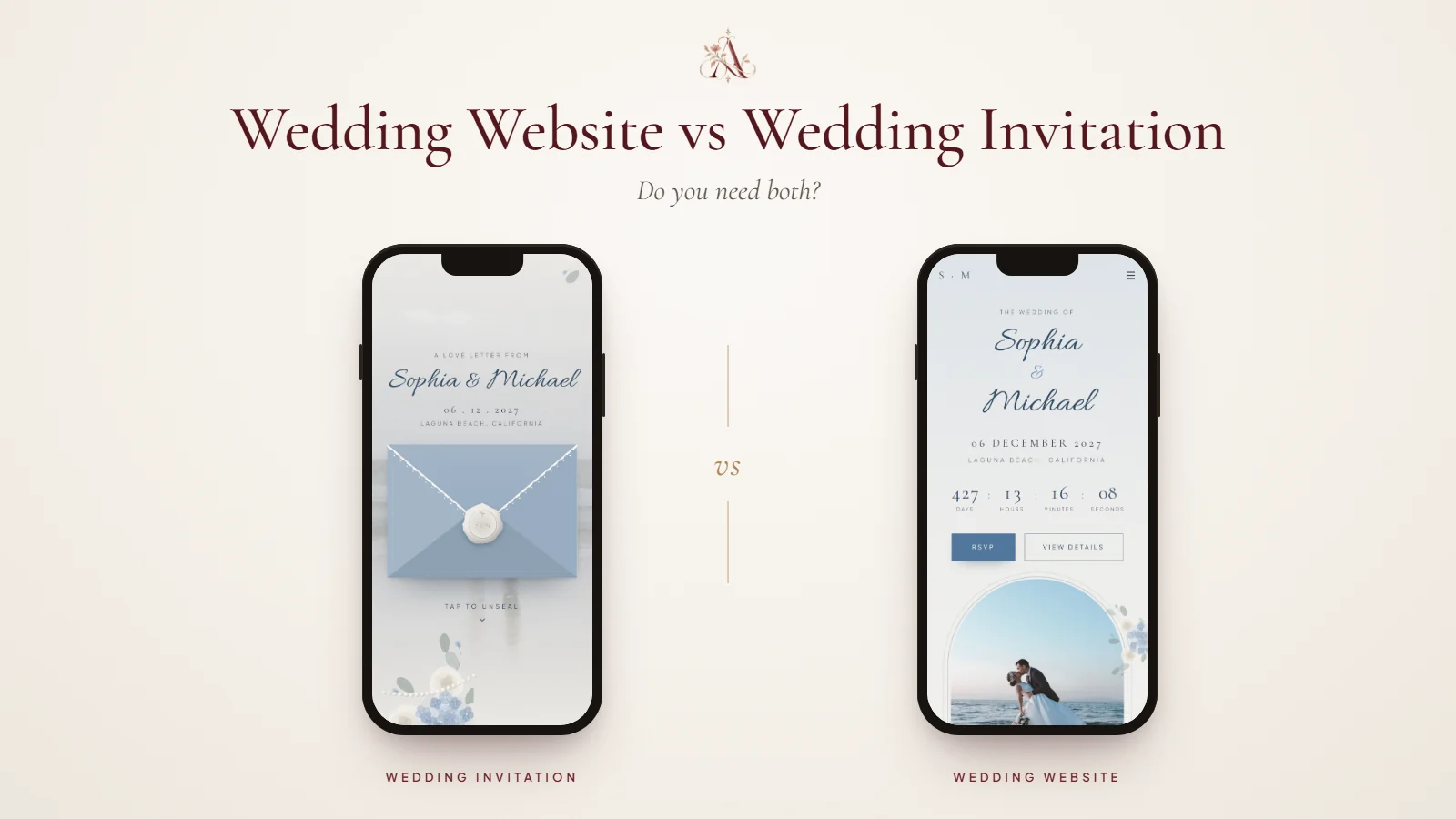
A formal dress code can go on the invitation. Gifts, travel, accommodation and the full schedule belong on your wedding website. Our guide to wedding websites vs wedding invitations explains what goes where.
Digital invitation etiquette
- Send to each household individually, never to a group chat.
- Add a short personal message before the link.
- Make sure the invitation is complete before you send it.
- Offer a printed card to relatives who would prefer one.
- Use updates sparingly: change details when you must, and tell guests when something important moves.
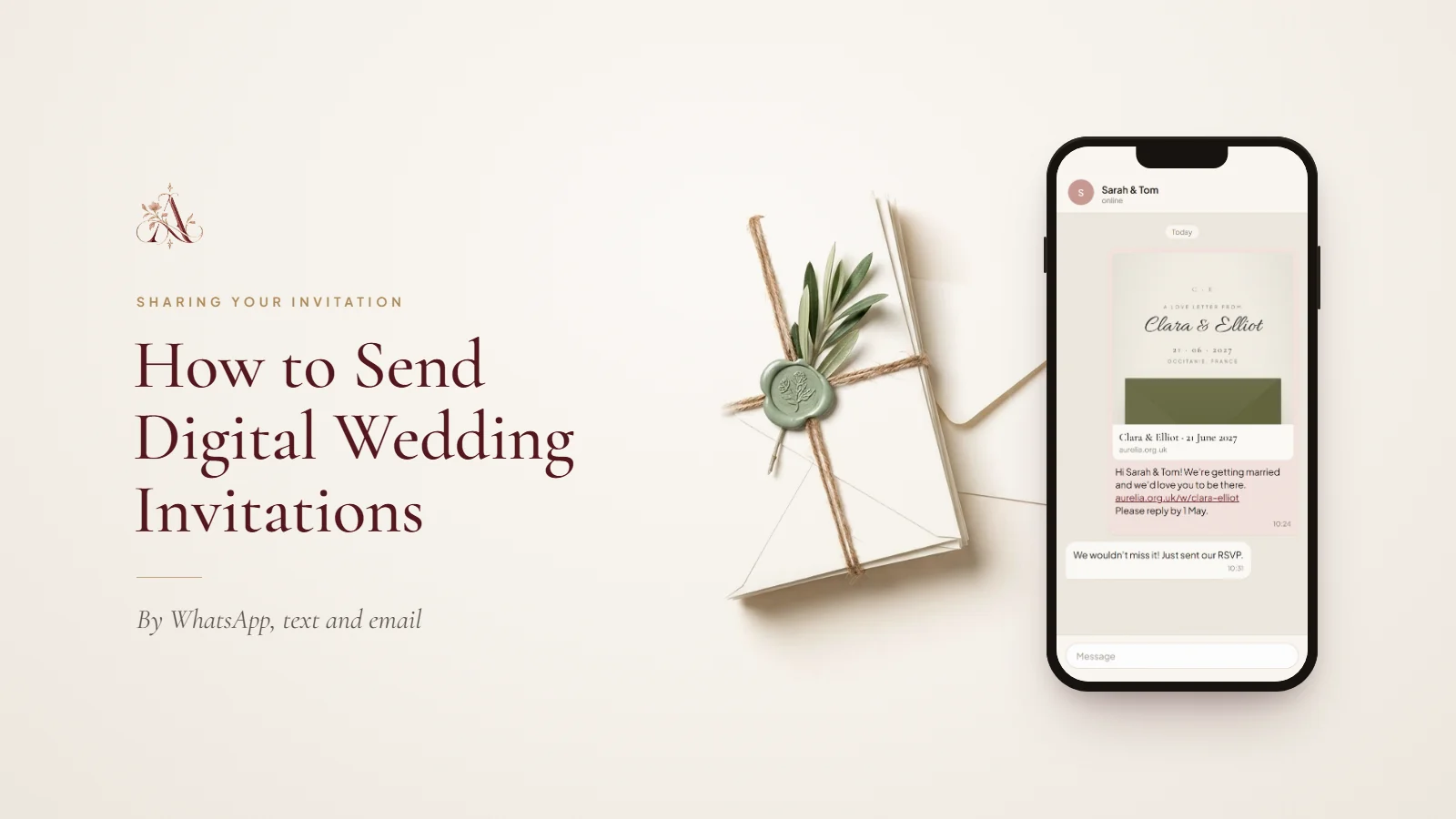
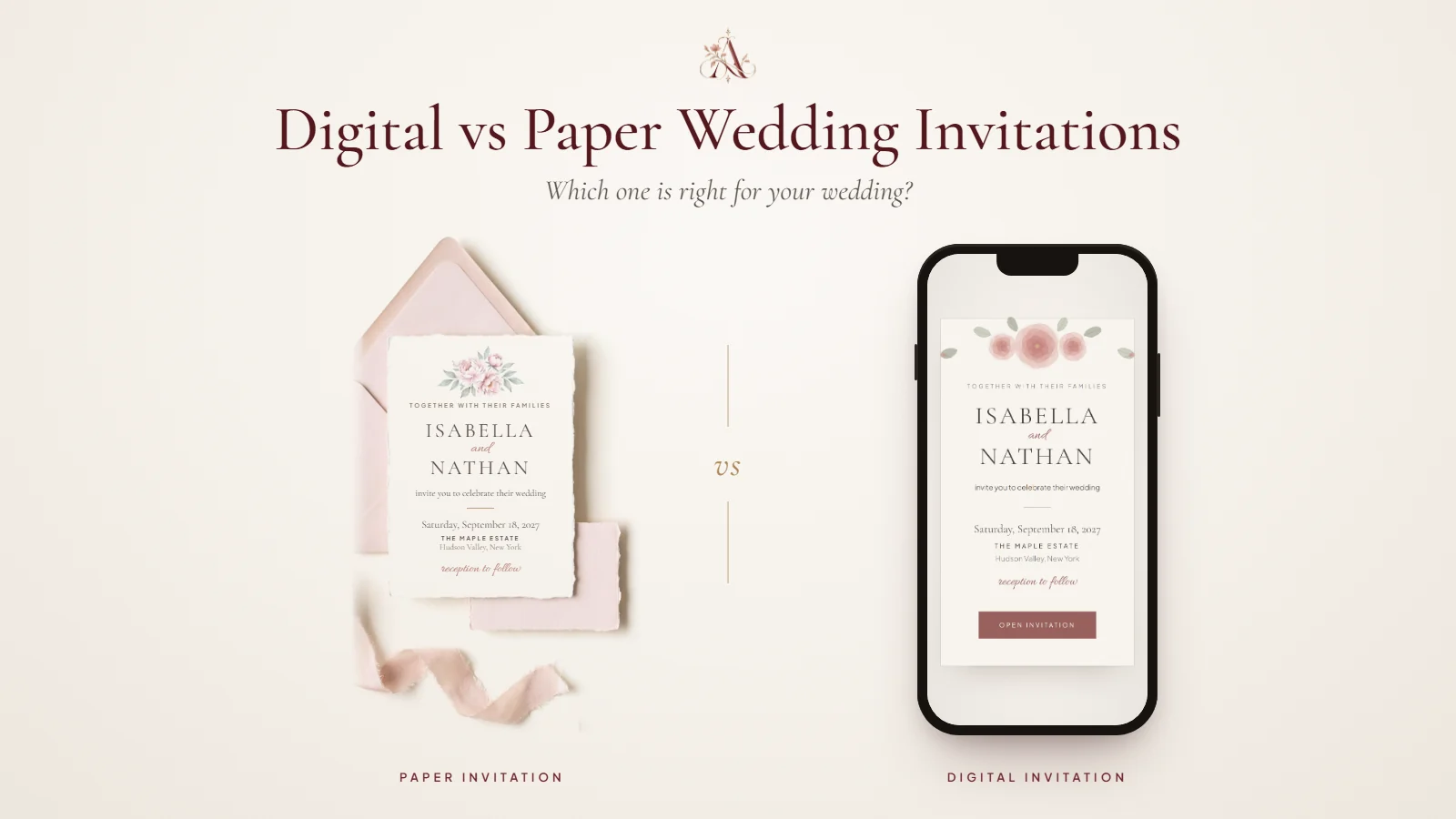
See how to send digital wedding invitations for example messages, and our digital vs paper comparison for when a mix of both is best.
Inviting guests from abroad
- Give more notice: save the dates nine to twelve months ahead, invitations three to four months.
- Mention whether guests may need a visa, and how long it can take.
- Share travel and accommodation details early, on your website.
- Write dates in words or as “12 June 2027” to avoid day and month confusion.
- Consider wording in two languages if your families speak different ones.
RSVPs and follow-ups
Give one reply-by date and one main reply method, offer a phone or email alternative if needed, and remind guests a week before the deadline. Our wedding RSVP guide covers deadlines, questions and tricky replies.
Etiquette mistakes to avoid
- Sending invitations too late for guests to plan travel.
- Leaving it unclear who is invited.
- Putting gift requests on the invitation itself.
- Posting the invitation in a group chat or on social media.
- Forgetting the RSVP deadline, or leaving guests unsure which reply method to use.
- Inviting evening guests after the day guests.
- Writing dates in a format guests abroad might misread.
Questions about wedding invitation etiquette
- Is it rude to send wedding invitations by text or WhatsApp?
- Not when the invitation is complete and the message is personal. A short note in your own words with the link feels warm; a bare link in a group chat does not.
- Do you have to give every guest a plus-one?
- No. Couples who are married, engaged or living together are usually invited together; beyond that it is your choice. Name exactly who is invited so there is no confusion.
- Should children’s names go on the invitation?
- Yes, if they are invited. Naming them makes it clear; if the invitation is adults only, say so clearly rather than relying on guests to infer it.
- Do evening guests get the same invitation?
- They usually receive a separate evening invitation with the reception start time, sent at the same time as the day invitations.
- Can you say “no gifts” on a wedding invitation?
- It is kinder to put it on your wedding website, phrased warmly, for example: “Your presence is the only gift we need.”