Etiquette·5 min read
UK vs US Wedding Invitation Etiquette: The Differences That Matter
UK vs US wedding invitation etiquette: spelling, dates and times, hosts, evening guests, reply cards and dress codes, for families on both sides.
By Aurelia Editorial Team · Wedding stationery & planning guides
Published
If your families sit on both sides of the Atlantic, you do not have to pick one rulebook. Choose the convention of the country where the wedding takes place, keep it consistent, and make sure every guest can read the date the same way. With digital wedding invitations you can even adjust the wording for each version without reprinting.
The differences at a glance
| Convention | UK | US |
|---|---|---|
| Spelling | honour, favour, colour | honor, favor, color |
| Titles | Mr and Mrs (no full stops) | Mr. and Mrs. |
| Date | Saturday the twelfth of June | Saturday, the twelfth of June or June twelfth |
| Time | at half past four | at half after four o’clock |
| Year | often left out, or in numerals | often written in words on formal cards |
| Guests | day guests and evening guests are common | usually one guest list for the whole day |
| Replies | traditionally a written reply; now cards or online | a reply card with its own envelope, or online |
| Gifts | gift list | registry |
Spelling and titles
A British invitation “requests the honour of your presence”; an American one “requests the honor of your presence”. Both are correct in their own country, so follow the wedding’s location and use the same spelling throughout. In the UK, titles such as Mr, Mrs, Ms and Dr have no full stop; in the US they usually do.
Dates and times
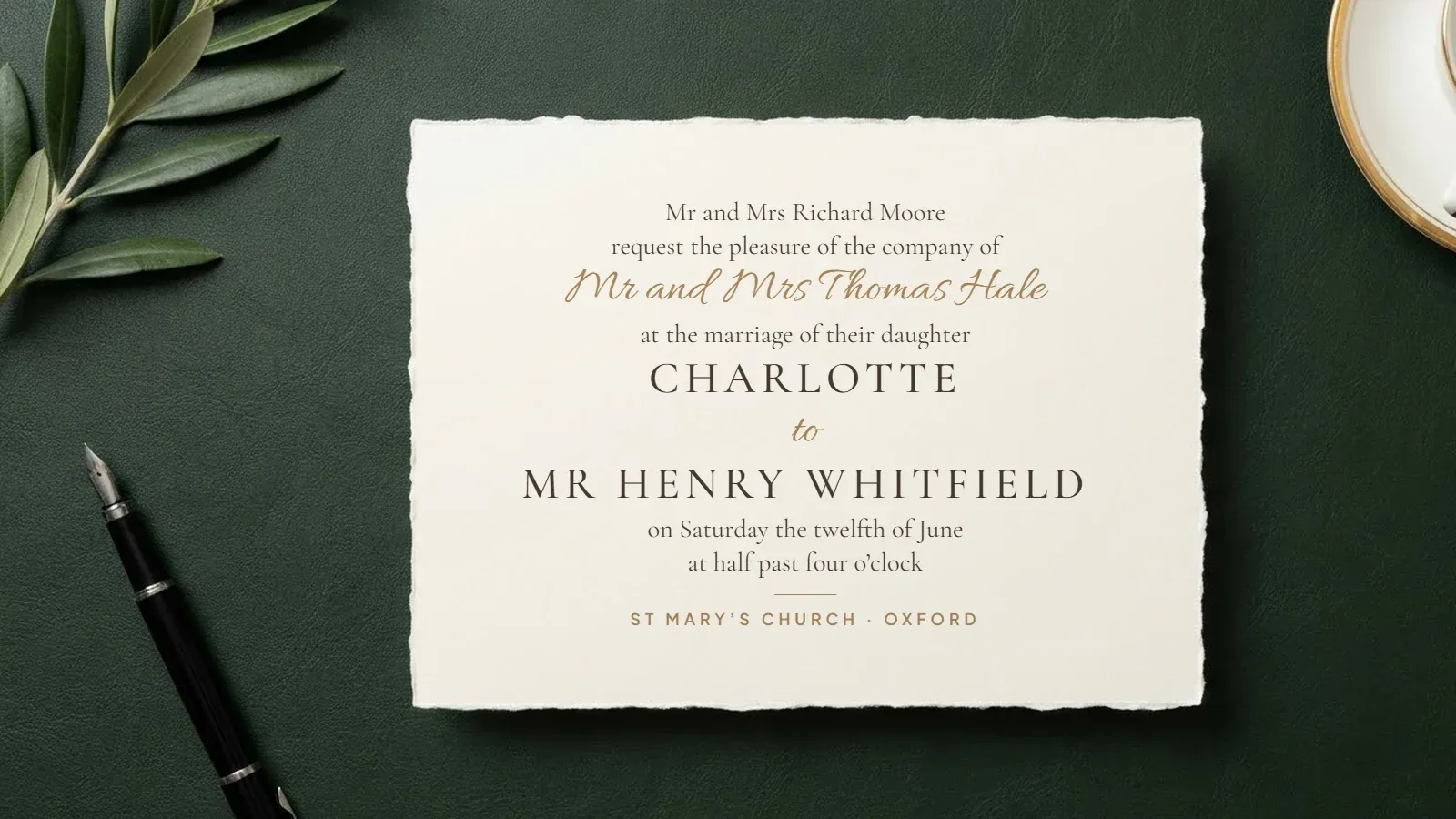
Saturday the twelfth of June at half past four o’clock
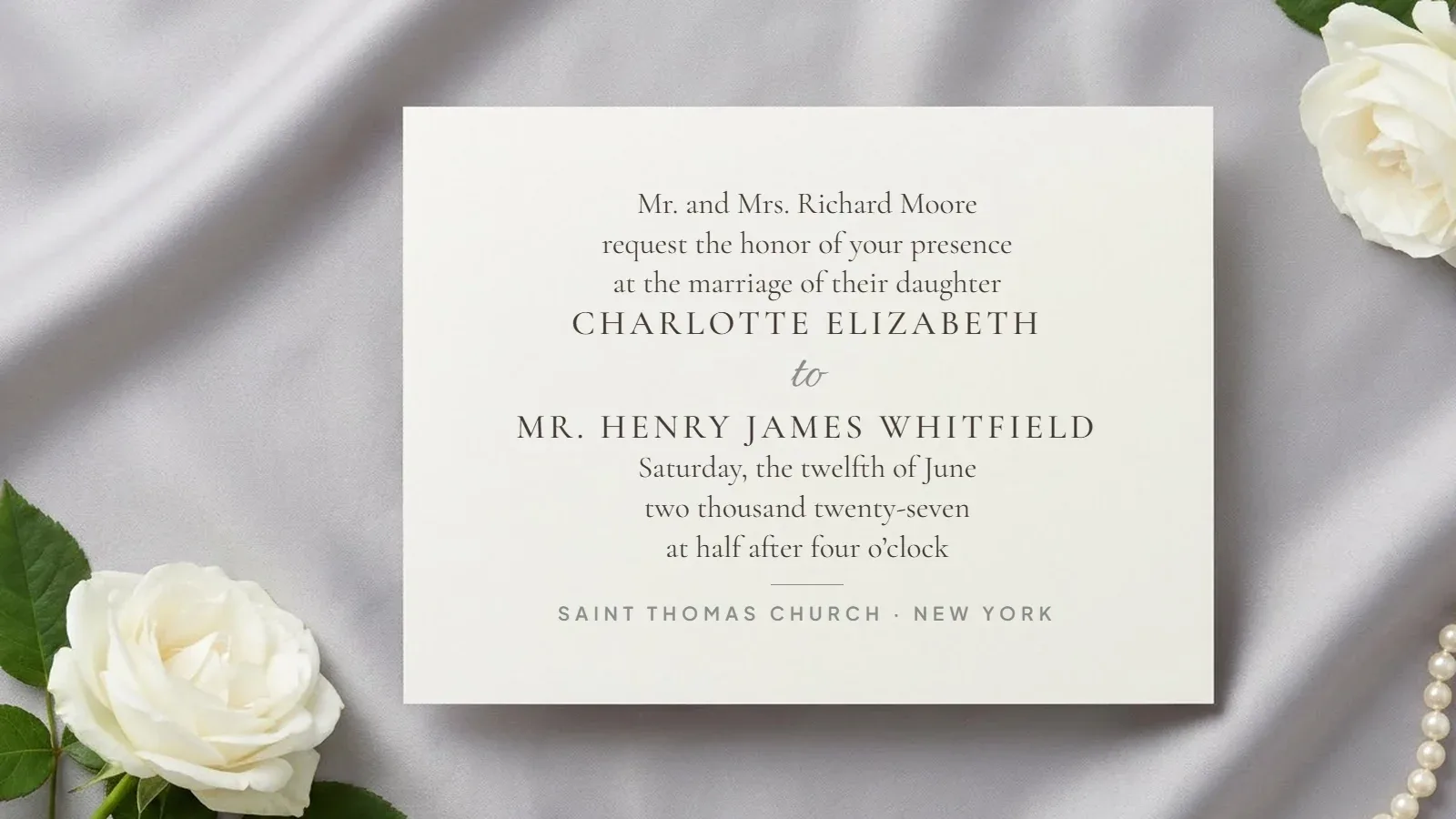
Saturday, the twelfth of June two thousand twenty-seven at half after four o’clock
On anything less formal, write the month in words. “12/06/2027” means 12 June to a British guest and December 6 to an American one, so “12 June 2027” or “June 12, 2027” is safer than numerals alone.
Who hosts and how guests are named
In both countries the hosts come first, traditionally the bride’s parents and now often the couple or both families. A traditional British card leaves a space after “request the pleasure of the company of” for the guest’s name to be written by hand; an American formal invitation addresses guests on the envelope instead. Our hosting wording examples cover both sets of parents, divorced parents and more.
Day guests and evening guests
British weddings often have a smaller day guest list and a larger evening party, with separate invitations for evening guests. American weddings usually invite everyone to the ceremony and reception. If American relatives receive an evening invitation, add a line so it does not read as a mistake.
Amelia and James invite you to join them for their evening reception from 7.30pm, Saturday 12 June 2027
Replies, gifts and dress codes
- Replies: American invitations traditionally include a reply card and stamped envelope; British guests once replied by letter. Online RSVP now works for both.
- Gifts: the UK says “gift list”, the US “registry”. Either way, details go on the wedding website, not the invitation.
- Dress codes: “Morning dress” is a British daytime formal code with no common American equivalent; “black tie optional” is far more common in the US.
- The meal: a British “wedding breakfast” is the main meal after the ceremony, whatever time it is served.
Mixing both traditions
For a transatlantic family, pick the conventions of the host country, then smooth the edges: write the month in words, explain any British terms such as the evening reception or morning dress, and give both an online RSVP and a contact number. Our wedding invitation etiquette guide and formal wedding invitation wording go further, and guests flying in will appreciate the tips in inviting guests from abroad.
Questions about UK and US invitations
- Should a UK wedding invitation say “honour” or “honor”?
- A wedding in the UK uses British spelling: “honour” and “favour”. Use American spelling for a wedding in the United States, and keep one spelling throughout.
- Why do British invitations leave a blank line for the guest’s name?
- Traditional British cards say “request the pleasure of the company of”, followed by the guest’s name written by hand. It makes each card personal and shows exactly who is invited.
- What is an evening invitation?
- In the UK, some guests are invited only to the evening reception, after the ceremony and meal. They receive a separate invitation with the evening start time.
- How should dates be written for UK and US guests?
- Write the month in words, for example “12 June 2027”, so nobody confuses the day and the month.
Writing for families in two countries? Explore Aurelia’s digital wedding invitations.
Part of our etiquette guides. Start with Wedding Invitation Etiquette: The Complete Modern Guide, or see every guide on this topic.