Invitation Wording·6 min read
Formal Wedding Invitation Wording: Traditional Examples and Etiquette
Formal wedding invitation wording examples for couples, parents and both families, with the traditional rules for names, dates, times and replies explained.
By Aurelia Editorial Team · Wedding stationery & planning guides
Published
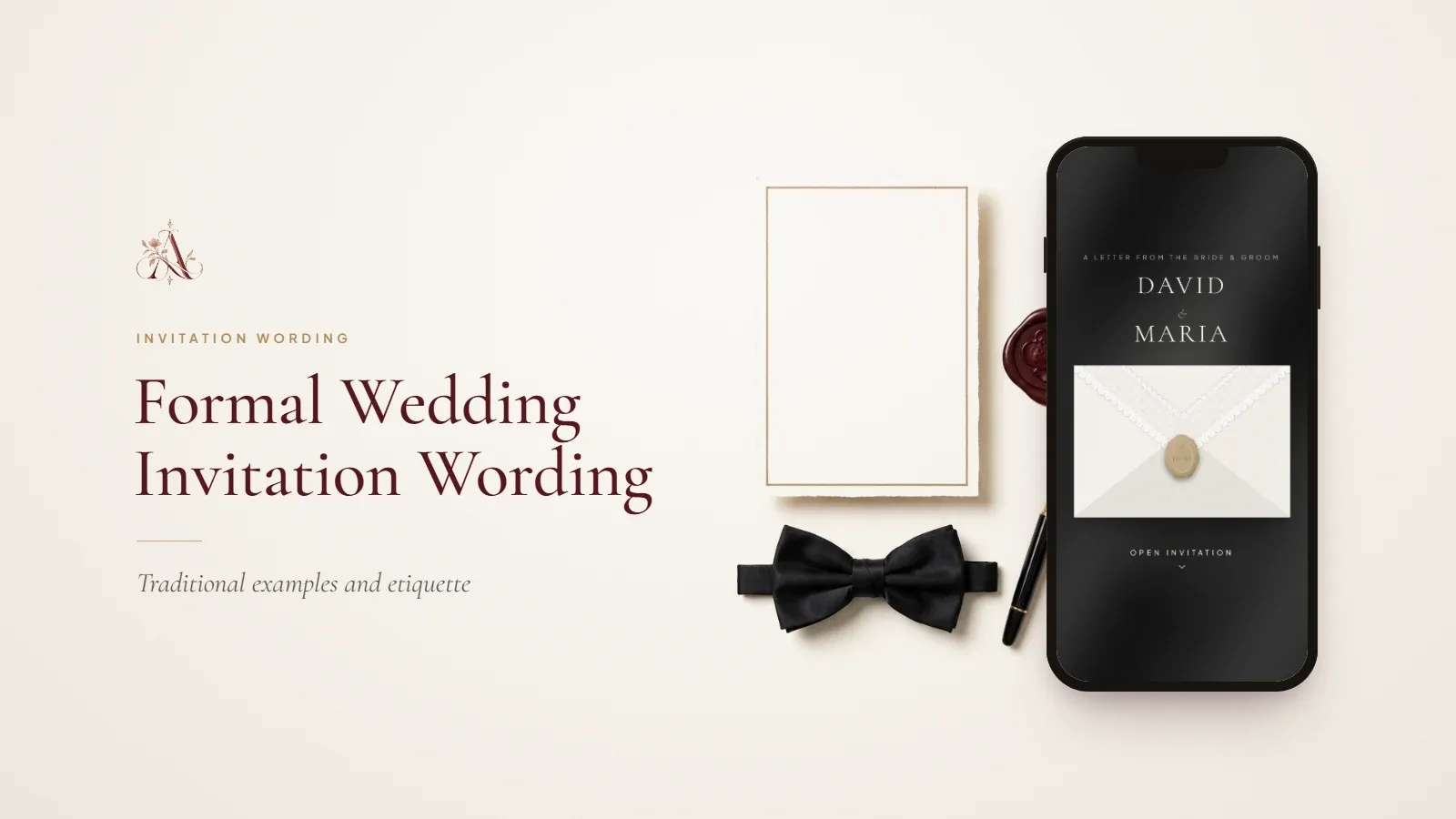
Formal wording looks its best on a design with the same sense of occasion. Our luxury wedding invitation templates pair traditional lines with lace, monograms and gilded detail, and every one works as a digital wedding invitation your guests can open anywhere in the world.
The rules of formal wedding invitation wording
Traditional invitations follow a fixed order. Learn it once and every example below will make sense.
- Hosts first: the people paying for or giving the wedding are named at the top.
- “The honour of your presence” for a ceremony in a place of worship; “the pleasure of your company” for every other venue.
- Full names, including middle names if you like. Avoid nicknames and initials.
- Date and time written in words: “Saturday the twelfth of June”, “at four o’clock”.
- The year is optional; if you include it, write “two thousand and twenty-seven”.
- No “pm” or “in the afternoon” at four o’clock unless the time could be misread. “Half past four” rather than “four thirty”.
- Use British spelling on a UK invitation: “honour” and “favour”.
These conventions come from printed stationery, but they translate directly to a digital invitation. The difference is that the address, map, dress code and full schedule move off the card and onto your wedding website, so the formal wording can stay uncluttered.
Formal wording when the couple are hosting
Many couples now host their own wedding. “Together with their families” keeps the formal tone while acknowledging everyone who helped.
Together with their families Charlotte Elizabeth Moore and Henry James Whitfield request the honour of your presence at their marriage on Saturday the twelfth of June two thousand and twenty-seven at two o’clock St Mary’s Church, Oxford
Charlotte Elizabeth Moore and Henry James Whitfield request the pleasure of your company at the celebration of their marriage on Saturday the twelfth of June at four o’clock Cliveden House, Berkshire and afterwards for dinner and dancing
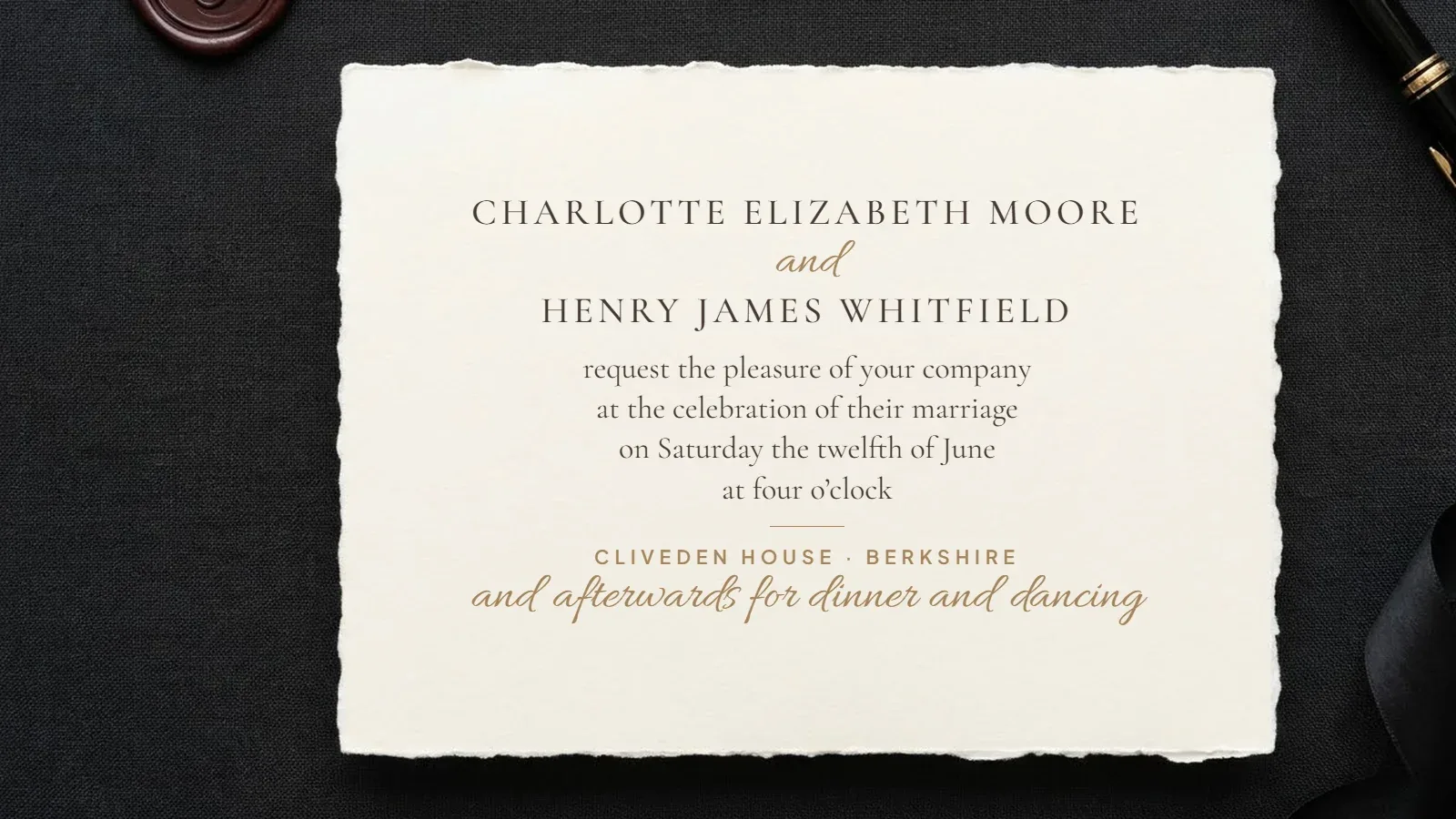
See this wording on a finished design: Ivory Lace Monogram was made for black-tie celebrations like this one.
Formal wording when parents are hosting
When parents host, their names open the invitation and the bride’s surname is omitted because it is already given. Use the parents’ names as they prefer to be addressed.
Mr and Mrs Richard Moore request the honour of your presence at the marriage of their daughter Charlotte Elizabeth to Mr Henry James Whitfield on Saturday the twelfth of June at two o’clock St Mary’s Church, Oxford
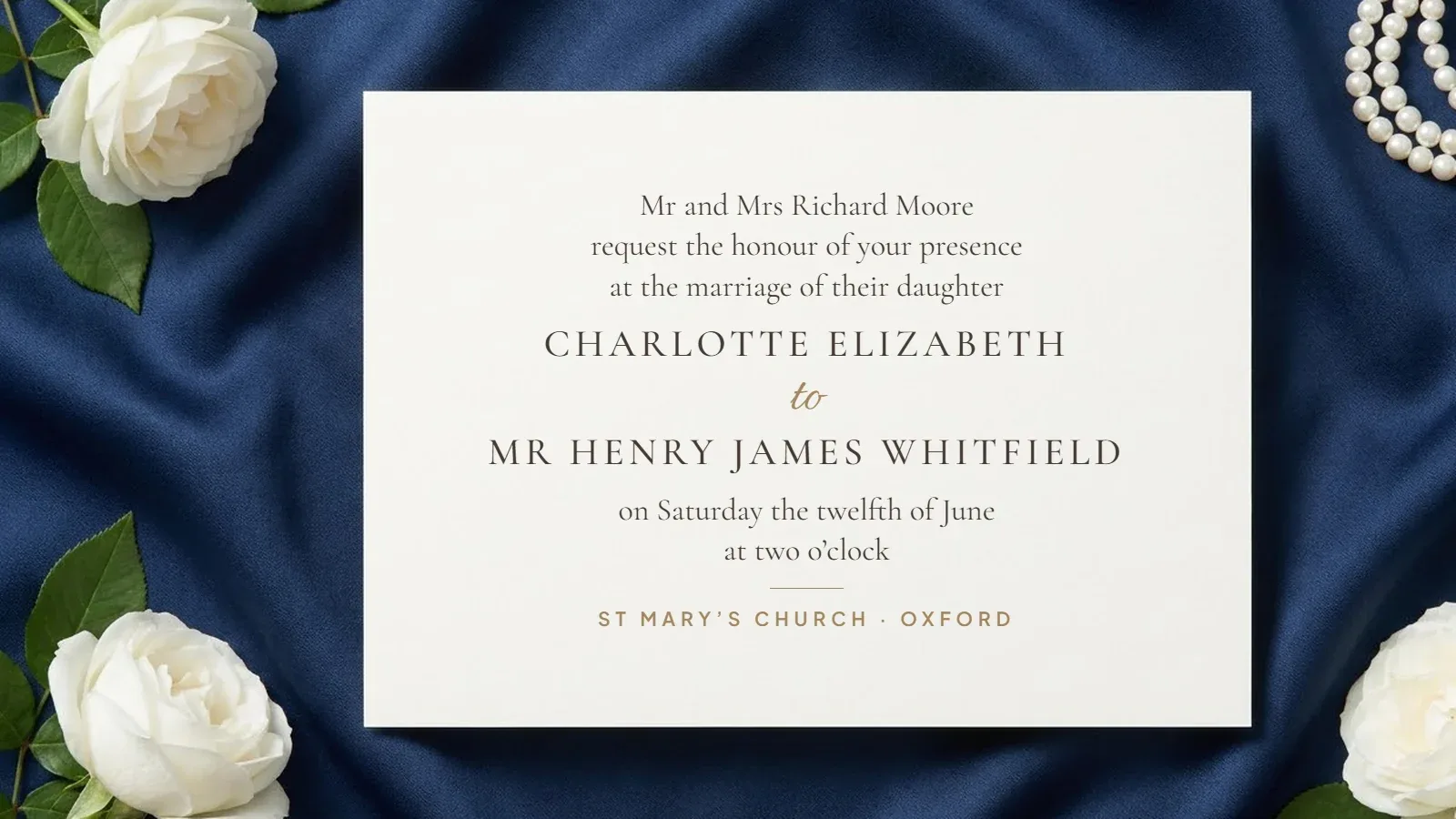
Mr and Mrs Andrew Whitfield request the pleasure of your company at the marriage of Miss Charlotte Elizabeth Moore to their son Henry James Whitfield on Saturday the twelfth of June at four o’clock Cliveden House, Berkshire
Mr and Mrs Richard Moore and Mr and Mrs Andrew Whitfield request the pleasure of your company at the marriage of their children Charlotte Elizabeth and Henry James
Divorced, remarried or single parents need slightly different lines. Our guide to who’s hosting and how to word it covers every combination.
See this wording on a finished design: Ivory Lace Letter opens like a sealed lace envelope, a natural home for traditional lines.
Formal reception and evening wording
If the ceremony and reception are at different places, add a reception line. Some UK weddings also invite extra guests to the evening only; they receive their own invitation.
and afterwards at The Randolph Hotel, Oxford
Mr and Mrs Richard Moore request the pleasure of your company at the evening reception to celebrate the marriage of their daughter Charlotte Elizabeth to Mr Henry James Whitfield on Saturday the twelfth of June from half past seven The Randolph Hotel, Oxford
Formal RSVP and dress code lines
Keep these short and place them at the bottom. On a digital invitation the RSVP button sits right under them. For more reply lines, see our wedding RSVP wording examples.
- “The favour of a reply is requested by the first of May.”
- “Répondez s’il vous plaît by the first of May.”
- “Black tie.”
- “Black tie optional.”
- “Morning dress.”
Formal wording mistakes to avoid
- Mixing tones: “request the honour of your presence” followed by “let’s party!” jars. Keep one register throughout.
- Writing “honor” on a UK invitation, or mixing “honour” and “color” in one card.
- Leaving out the reply date. Formal does not mean vague.
- Adding gift or registry details to the invitation itself. They belong on your website.
- Using “the honour of your presence” for a civil venue. It is not wrong, but traditionalists will notice.
Formal wording also works well alongside vintage designs. Browse vintage wedding invitation templates or try Burgundy Lace and Celestial Midnight for an evening celebration.
Formal wedding invitation wording questions
- What is the most formal wedding invitation wording?
- The most formal version names the hosts first, uses “request the honour of your presence” for a religious ceremony, gives full names with titles for the groom, and writes the date, year and time in words: “on Saturday the twelfth of June, two thousand and twenty-seven, at two o’clock”.
- Do you write the year on a formal wedding invitation?
- It is optional. Traditionally the year was included only on the most formal invitations. If you include it, write it in words: “two thousand and twenty-seven”.
- Is “the honour of your presence” or “the pleasure of your company” correct?
- Both are correct. “The honour of your presence” is traditionally reserved for ceremonies in a church or other place of worship; “the pleasure of your company” is used for civil ceremonies, venues and receptions.
- Can a digital invitation use formal wording?
- Yes. The wording rules are the same whether the invitation is printed or opened on a phone. A digital invitation simply moves the practical details, such as maps and travel, onto a linked page.
- Do you use titles such as Mr and Mrs on a formal invitation?
- Parents hosting are usually named with titles (“Mr and Mrs Richard Moore”). The bride is traditionally named without a title and the groom with one (“Mr Henry James Whitfield”). Many couples now drop titles for themselves.
Ready to see your formal wording on a finished invitation? Browse luxury templates and start designing for free.
Part of our invitation wording guides. Start with Wedding Invitation Wording: Examples for Every Kind of Celebration, or see every guide on this topic.