Design Ideas·21 min read
How to Create a Wedding Mood Board: A Step-by-Step Guide
Turn scattered Pinterest saves into one clear wedding vision. Seven simple steps cover colour palettes, flowers, stationery and sharing your board with vendors.
By Aurelia Editorial Team · Wedding stationery & planning guides
Published
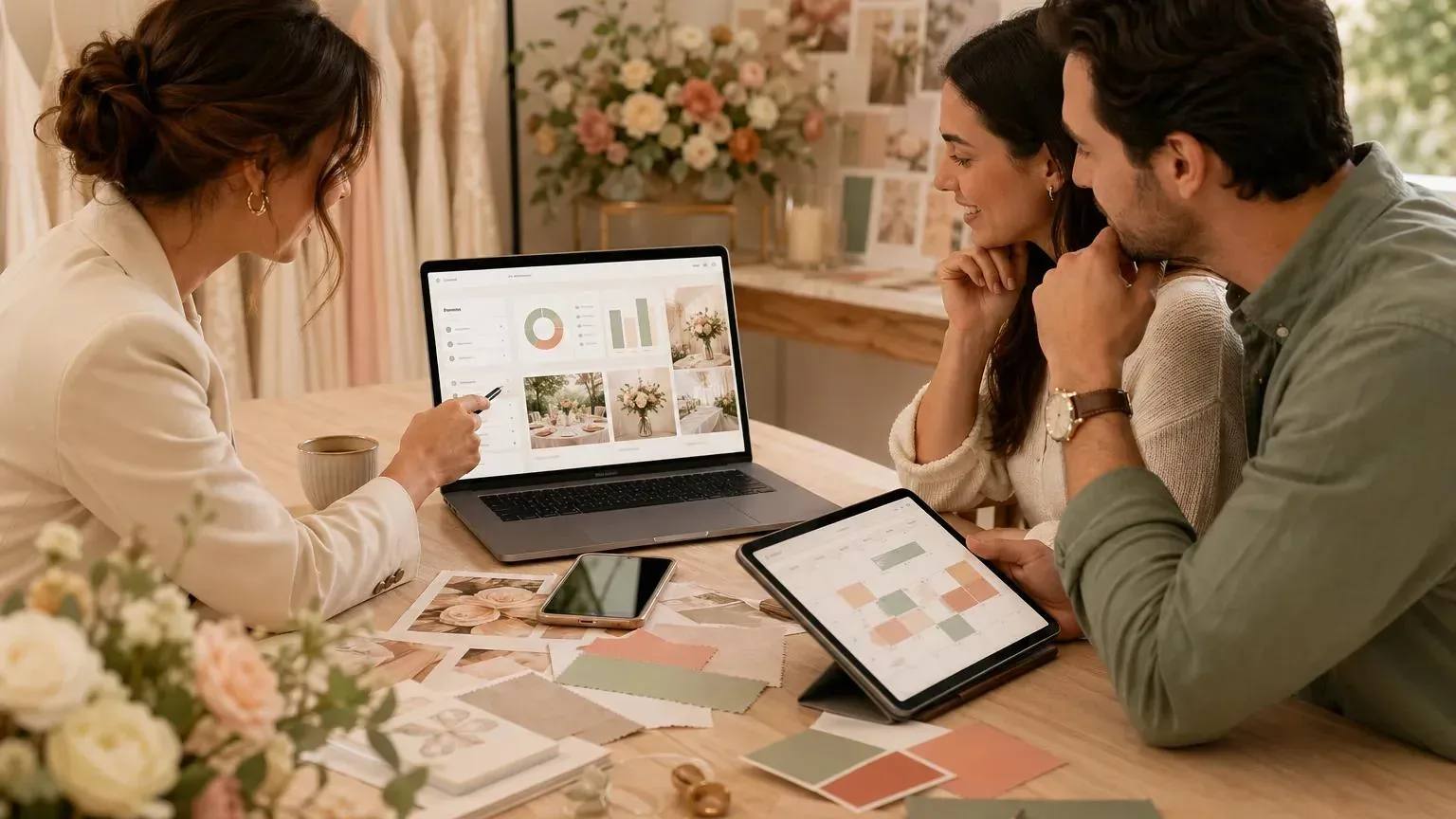
You love them all, but how do you bring these different inspirations together into one cohesive wedding?
That’s where a wedding mood board comes in.
A wedding mood board helps you turn scattered inspiration into a clear creative vision. From your colour palette and floral arrangements to your wedding invitations and venue styling, it serves as a visual guide for every design decision.
The best part? You don’t need to be a professional designer or hire a wedding planner to create one.
In this guide, we’ll walk you through how to create a wedding mood board in seven simple steps, share beautiful wedding aesthetic ideas, and show you how to turn your inspiration into a celebration that feels uniquely yours.
What Is a Wedding Mood Board?
A wedding mood board is a curated collection of images, colours, textures and design elements that represent the overall atmosphere and aesthetic of your wedding.
Think of it as a visual story of your wedding day.
Instead of trying to explain that you want something “romantic but modern, elegant but not too formal”, you can show exactly what you mean through carefully selected images.
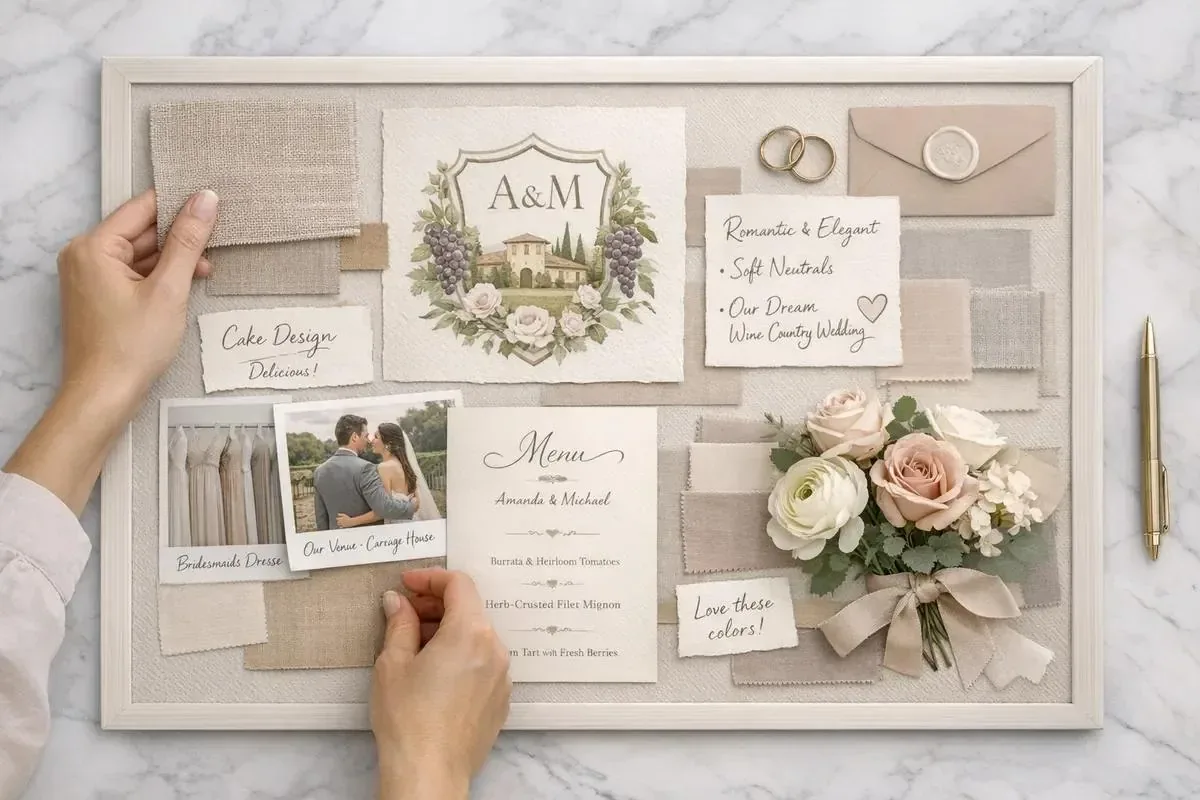
Your wedding mood board might include:
- Wedding colours: your primary, secondary and accent colours.
- Venue inspiration: gardens, historic estates, coastal villas or contemporary spaces.
- Floral arrangements: bouquets, centrepieces, ceremony arches and botanical details.
- Wedding stationery: invitations, save-the-dates, menus and place cards.
- Fashion inspiration: wedding dresses, suits, accessories and bridesmaid outfits.
- Decor and styling: tablescapes, candles, furniture, linens and lighting.
- Photography style: editorial portraits, candid moments, film photography or soft natural light.
- Textures and materials: silk ribbons, handmade paper, linen, velvet or antique metallic finishes.
When these elements work together, they create a consistent visual identity for your wedding.
Wedding Mood Board vs Pinterest Board: What’s the Difference?
Although the two are closely related, they serve slightly different purposes.
A Pinterest wedding board is usually a collection of everything that inspires you. It might contain hundreds of images representing different styles, colours and ideas.
A wedding mood board, on the other hand, is a refined selection of your favourite ideas, organised around a specific creative direction.
Pinterest is where you explore possibilities. Your mood board is where you make decisions.
For example, you might save 50 different floral arrangements on Pinterest, but select only three or four that truly represent the atmosphere you want for your wedding. That selection becomes part of your final mood board.
Why Should You Create a Wedding Mood Board?
Planning a wedding involves countless decisions, and it’s surprisingly easy to lose sight of your original vision. Creating a mood board early in the planning process can make those decisions easier.
1. Discover Your Personal Wedding Style
You may love several wedding aesthetics without knowing which one suits you best.
A mood board helps you identify recurring patterns in the images you’re drawn to, whether that’s soft pastel flowers, dramatic candlelight, vintage architecture or minimalist styling.
2. Keep Your Wedding Design Consistent
Your wedding invitation, ceremony decor, reception styling and floral arrangements should feel like parts of the same celebration.
They don’t need to match perfectly, but they should share a recognisable atmosphere.
3. Communicate Clearly With Wedding Vendors
Words like “romantic”, “luxurious” and “modern” can mean different things to different people.
Sharing a mood board with your wedding planner, florist, photographer and stationery designer gives everyone a clearer understanding of your preferences.
4. Make Wedding Planning Decisions Easier
When you’re choosing between two floral arrangements or table settings, you can return to your mood board and ask: which option fits the wedding we’re trying to create?
Having a visual reference helps you stay focused without getting distracted by every new trend.
How to Create a Wedding Mood Board in 7 Easy Steps
Ready to bring your wedding vision together? Follow these seven steps to create a mood board that’s both beautiful and practical.
Step 1: Define Your Wedding Vision and Aesthetic
Before you start collecting pictures, think about how you want your wedding to feel.
Forget specific flower varieties or table decorations for a moment. Instead, focus on the overall experience.
Ask yourselves:
- Do we want our wedding to feel intimate and relaxed or grand and sophisticated?
- Are we drawn to timeless elegance or colourful, playful details?
- Do we imagine an outdoor garden celebration, a destination wedding or a formal ballroom reception?
- What season are we getting married in?
- Are there cultural traditions or personal details we want to celebrate?
- What atmosphere do we want our guests to remember?
Try choosing three to five words that describe your ideal wedding. For example:
| Wedding style | Three to five words |
|---|---|
| Romantic garden wedding | Dreamy, soft, intimate, botanical, timeless |
| Modern black-tie wedding | Elegant, minimal, editorial, sophisticated, dramatic |
| Mediterranean destination wedding | Relaxed, sun-kissed, organic, romantic, effortless |
These words will become your creative foundation.
Wedding planning tip: if you’re struggling to define your aesthetic, look at your home, wardrobe, favourite travel destinations and the places you enjoy spending time together. Your everyday preferences can reveal more about your style than the latest wedding trends.
Step 2: Gather Wedding Inspiration
Now comes the fun part: collecting beautiful ideas.
Pinterest is one of the easiest places to begin, but it’s not your only source of inspiration. You can also explore:
- Wedding photography portfolios
- Wedding planning magazines and editorial websites
- Instagram accounts of wedding florists and designers
- Real wedding galleries
- Architecture and interior design websites
- Fashion editorials
- Travel photography
- Art, textiles and botanical illustrations
If you’re still searching for a direction, our guide to 2027 wedding trends is a good place to start.
How to Use Pinterest for Your Wedding Mood Board
Create a private Pinterest board called something like “Our Wedding Vision” and start saving images that genuinely excite you.
Don’t worry too much about whether everything matches at first. This is the discovery phase.
Once you’ve gathered enough inspiration, organise your pins into sections:
- Wedding Colours
- Venue & Architecture
- Ceremony Inspiration
- Reception & Tablescapes
- Wedding Flowers
- Bridal Fashion
- Invitations & Stationery
- Photography & Details
After collecting your ideas, review the board and identify recurring themes.
Are you consistently saving ivory roses and candlelit tables? Do you gravitate towards European villas, sage-green details and handwritten stationery? Those patterns can help you narrow your wedding aesthetic.
Pro tip: save the original source whenever possible. If you plan to share an image with a vendor, knowing who created the design makes it easier to request permission, give credit or discuss a similar interpretation.
Step 3: Choose Your Wedding Colour Palette
Your wedding colour palette is one of the most important elements of your mood board. It influences everything from flowers and bridesmaid dresses to invitations, table linens and decor.
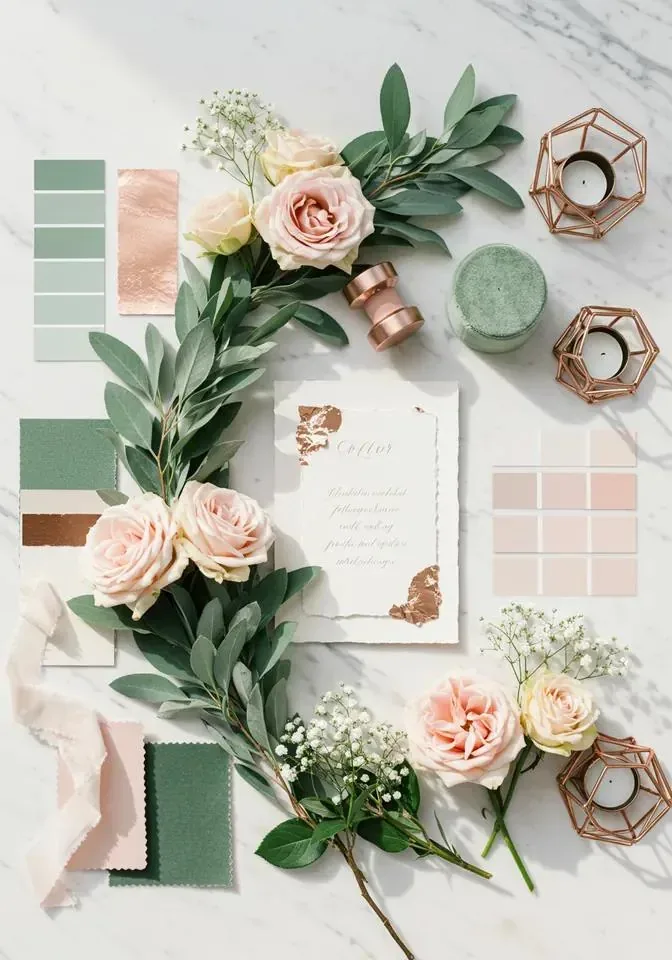
A good starting point is to select three to five complementary colours, including:
- One dominant colour that defines the overall atmosphere
- One or two secondary colours that add depth
- One or two accent colours used in smaller details
You don’t need to use every colour equally. For example, an ivory-and-sage wedding might feature mostly neutral linens and stationery, with sage foliage and subtle champagne accents.
Wedding Colour Palette Ideas
| Wedding style | Suggested colour palette |
|---|---|
| Romantic garden | Blush pink, ivory, sage, champagne |
| Modern black-tie | Black, ivory, champagne gold |
| Mediterranean romance | Olive green, cream, lemon yellow, sea blue |
| Vintage château | Burgundy, antique gold, dusty rose, ivory |
| Whimsical wildflower | Lavender, butter yellow, soft green, cream |
| Coastal elegance | Dusty blue, sand, white, soft coral |
Consider Your Venue and Wedding Season
Before finalising your colours, think about the natural surroundings of your wedding venue.
A rustic countryside venue might work beautifully with warm neutrals and earthy greens. A grand historic ballroom could complement deeper colours, candlelight and metallic accents.
Seasonality matters, too, especially for floral availability. However, don’t feel obliged to follow traditional seasonal colour rules. A winter wedding can be filled with soft pastels, and a summer celebration can look beautiful with deep burgundy accents.
The goal is to choose colours that reflect your personal style while working with your venue.
Step 4: Select Your Key Wedding Design Elements
Once you’ve identified your aesthetic and colours, begin selecting the design details that will bring everything together. Rather than including every beautiful image you find, focus on a few essential categories.
Venue and Architecture
Choose images that represent the setting and atmosphere of your celebration. This might be a garden courtyard, a historic château, an oceanfront terrace or an elegant modern venue.
If you’ve already booked your venue, use actual photographs of the space as part of your mood board.
Flowers and Botanical Details
Flowers often play a major role in establishing a wedding aesthetic.
Think about whether you prefer structured floral arrangements, loose garden-style bouquets, minimalist branches or abundant romantic blooms. Consider both the colours and shapes of the arrangements.
Tablescapes and Reception Styling
Include a few images that communicate your preferred dining atmosphere. Look at table linens, candles, glassware, centrepieces, chairs and table settings.
Do you prefer long banquet tables with abundant flowers or intimate round tables with understated styling?
Wedding Stationery and Invitations
Your invitations are often the first visual introduction guests receive to your wedding. Consider typography, colours, illustrations and decorative elements that reflect your aesthetic.
For a romantic garden wedding, you might prefer delicate floral illustrations and elegant serif typography. For a modern black-tie celebration, a minimal ivory design with refined typography could feel more appropriate.
Digital invitations and wedding websites can also carry these same visual details, creating a consistent experience before guests arrive.
Wedding Photography
Don’t forget to consider how you want your wedding memories to look.
Would you prefer bright, airy photography, warm film-inspired tones, dramatic editorial portraits or natural documentary-style moments? Include a few images that communicate the atmosphere you’re drawn to.
Remember: your mood board should guide your decisions, not restrict your creativity. The most beautiful weddings often combine influences in ways that feel personal rather than perfectly coordinated.
Step 5: Create Your Wedding Mood Board Using Pinterest or Canva
Now it’s time to turn your inspiration into an actual mood board. You don’t need advanced graphic design skills: several free tools make the process simple.
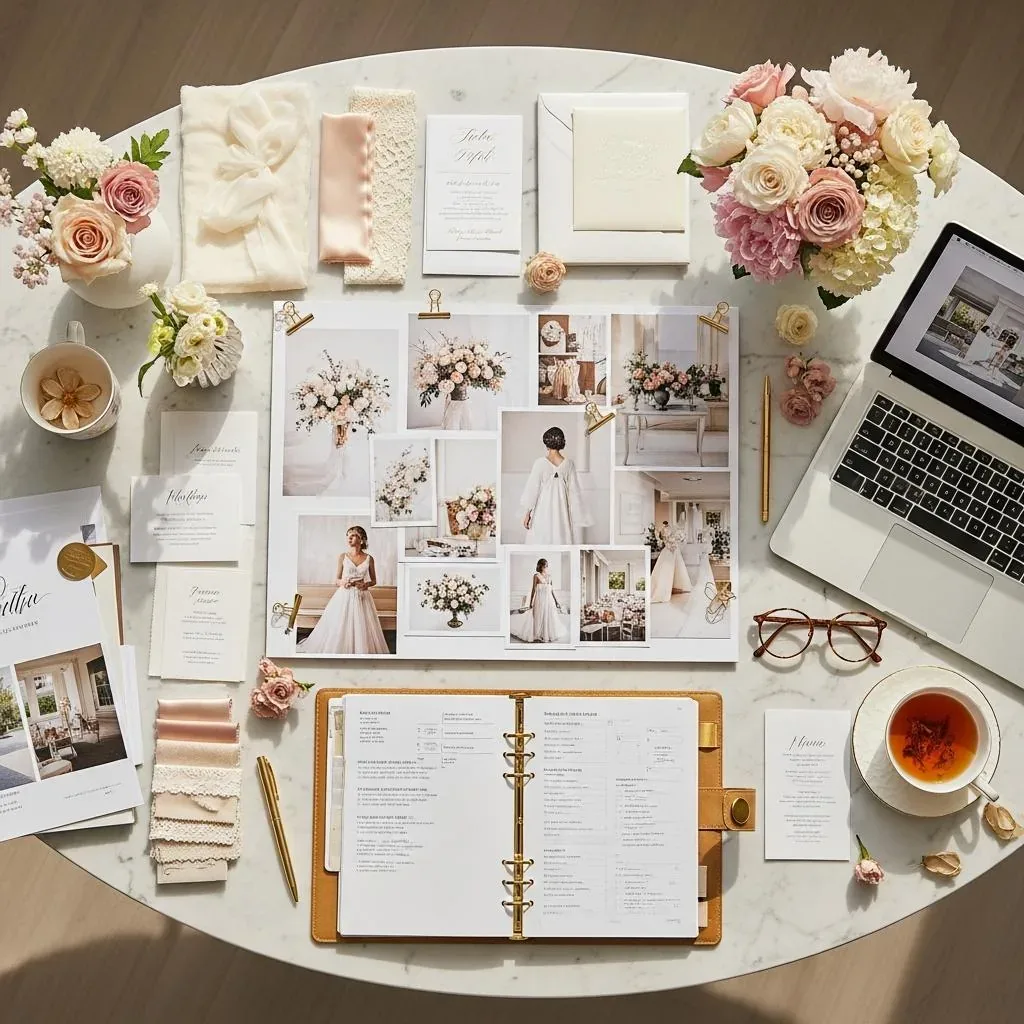
Option 1: Create a Wedding Mood Board on Canva
Canva is useful if you want a polished visual layout that you can download or share with your vendors. Here’s how:
- Open Canva and create a new presentation or custom design.
- Choose a blank canvas or a mood board layout.
- Upload your favourite wedding inspiration images.
- Arrange the images into a balanced collage.
- Add your wedding colour palette using small colour blocks.
- Include a few keywords describing your aesthetic.
- Save your final board as a PDF or image.
Try to include approximately 10 to 20 carefully selected inspiration images on your main board. You can create additional boards for individual categories, such as flowers, reception styling or wedding stationery, if necessary.
Option 2: Create a Wedding Mood Board on Pinterest
Pinterest is convenient if you prefer to keep everything in one place.
Create a dedicated board and organise it into sections. Once you’ve narrowed your choices, keep only the strongest references or create a second board for your final selections.
This approach works especially well when collaborating with your partner or wedding planner.
Option 3: Create a Simple Digital Collage
You can also use Google Slides, PowerPoint or another design application to arrange images into a single visual presentation. The tool matters less than the clarity of your final design.
How to Arrange Your Wedding Mood Board
For a cohesive layout, try the following structure:
- Centre: one or two hero images that communicate your overall wedding atmosphere.
- Top section: venue and architecture inspiration.
- Side sections: floral arrangements, decor and fashion details.
- Bottom section: wedding colour palette, stationery, materials and typography.
Leave enough space between elements so the board doesn’t feel overcrowded. Your mood board should communicate a clear feeling at a glance.
Step 6: Refine Your Wedding Mood Board
This is one of the most important steps, and it’s often overlooked.
Your first mood board might contain beautiful images that don’t necessarily belong together. For example, you could have a minimalist black-and-white invitation beside a colourful tropical tablescape and a traditional ballroom setting.
Each image might be lovely individually, but the overall direction could feel disconnected. To refine your mood board, ask:
- Does every image support our chosen aesthetic? Look for consistent colours, materials, architectural influences and overall atmosphere.
- Are there too many competing ideas? If your board includes five very different floral styles, narrow them down to the two or three that best represent your vision.
- Will these ideas work in our actual venue? A dramatic hanging floral installation might look beautiful in photographs but may not be practical in every space.
- Are our ideas realistic for our budget? Use your mood board to identify priorities rather than treating every inspiration image as a must-have.
If elaborate floral installations are beyond your budget, you might recreate a similar romantic atmosphere with candles, smaller arrangements and thoughtful lighting.
A successful wedding mood board is not simply a collection of beautiful pictures. It’s a creative direction that you can realistically bring to life.
Step 7: Share Your Wedding Mood Board With Your Vendors
Once you’re happy with your mood board, share it with the professionals helping to create your wedding. Your board can be especially helpful for:
- Wedding planners and coordinators
- Florists and event stylists
- Wedding photographers and videographers
- Stationery and invitation designers
- Venue coordinators
- Cake designers
- Lighting and decor vendors
Include a few notes explaining what you love about the images. For example: “We love the soft, garden-inspired floral arrangements in this image, especially the natural shapes and muted colours. We don’t necessarily need the exact flowers.”
This prevents confusion and gives vendors room to suggest alternatives based on your budget and venue.
It’s also helpful to explain what you don’t want. If you prefer understated elegance, for instance, you might clarify that you want to avoid oversized centrepieces or overly saturated colours.
The clearer your vision, the easier it becomes for your wedding team to interpret it.
5 Beautiful Wedding Mood Board Ideas to Inspire You
Not sure where to begin? Here are five wedding aesthetics that offer plenty of inspiration for creating your own mood board.
1. Romantic Garden Wedding Mood Board
Colour palette: blush pink, ivory, sage green and champagne.
Imagine an intimate garden ceremony surrounded by delicate flowers, soft candlelight and flowing fabrics.
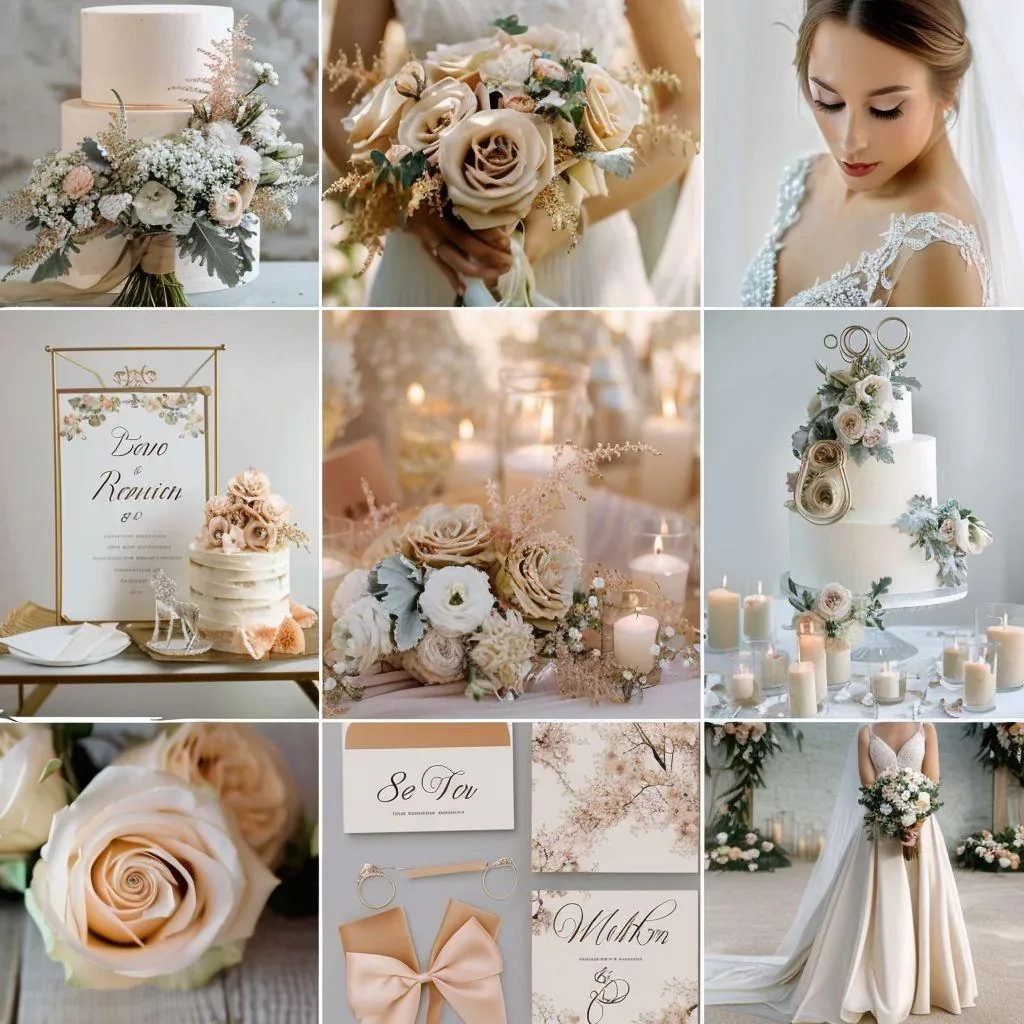
A romantic garden mood board might include:
- Garden roses, peonies and seasonal blooms
- Delicate floral illustrations
- Soft ivory table linens
- Silk ribbons and handmade paper
- Antique-inspired details
- Natural, dreamy wedding photography
For invitations, consider elegant typography, subtle botanical illustrations and a soft colour palette, like our romantic wedding templates. This style works beautifully for countryside estates, botanical gardens and intimate outdoor weddings.
2. Modern Black-Tie Wedding Mood Board
Colour palette: black, ivory and champagne gold.
A black-tie wedding aesthetic is defined by sophisticated simplicity and elegant details. Think dramatic photography, classic architecture, understated floral arrangements and carefully chosen materials.
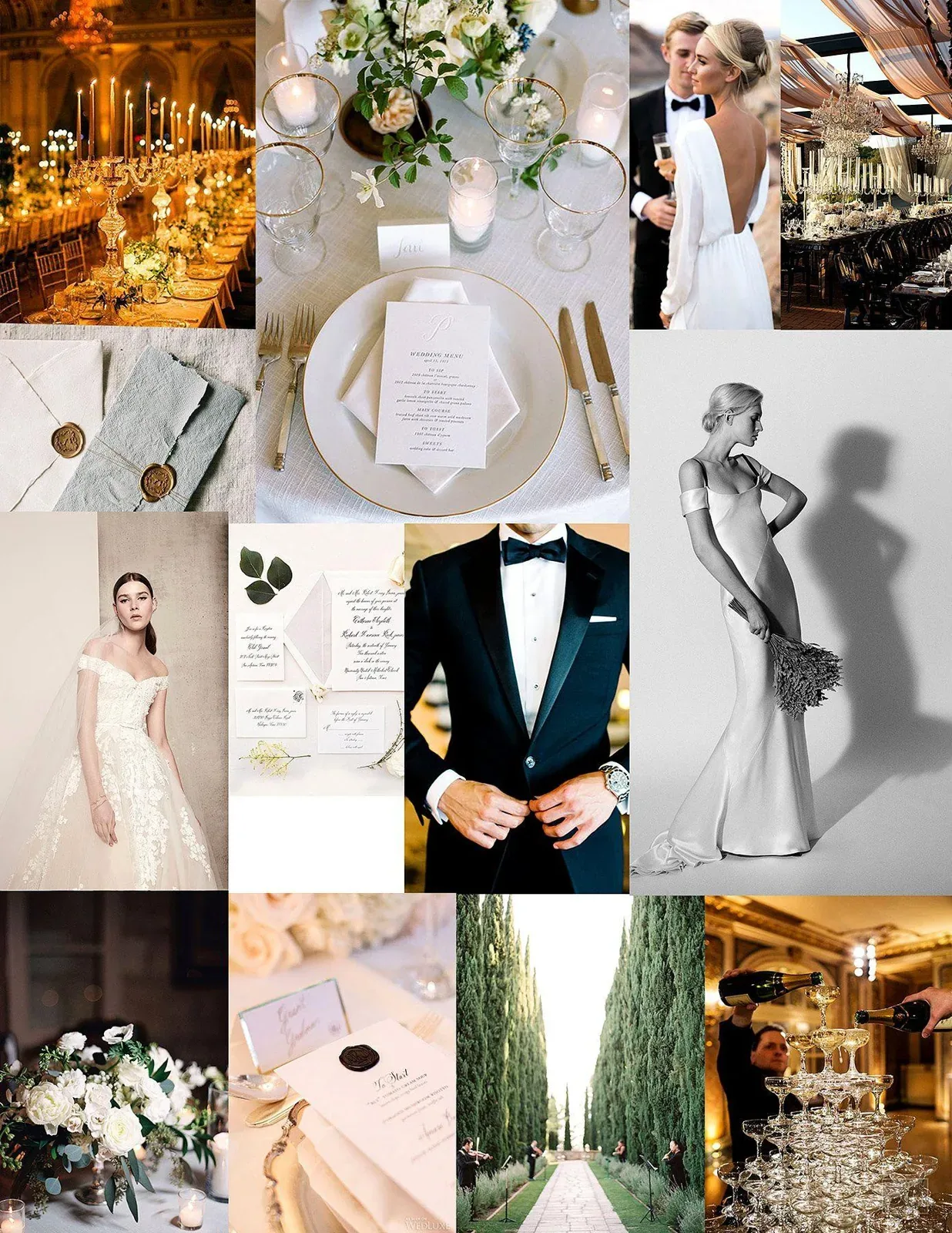
Your mood board could feature:
- Minimal black-and-white stationery
- White roses or calla lilies
- Elegant champagne coupes
- Sculptural floral centrepieces
- Formal wedding fashion
- Refined serif typography
- Candlelit reception spaces
The key is to make every detail feel intentional. Rather than filling the mood board with decorations, focus on strong visual contrasts and beautiful materials. Our luxury wedding templates follow the same restrained approach.
3. Mediterranean Wedding Mood Board
Colour palette: olive green, cream, sea blue and lemon yellow.
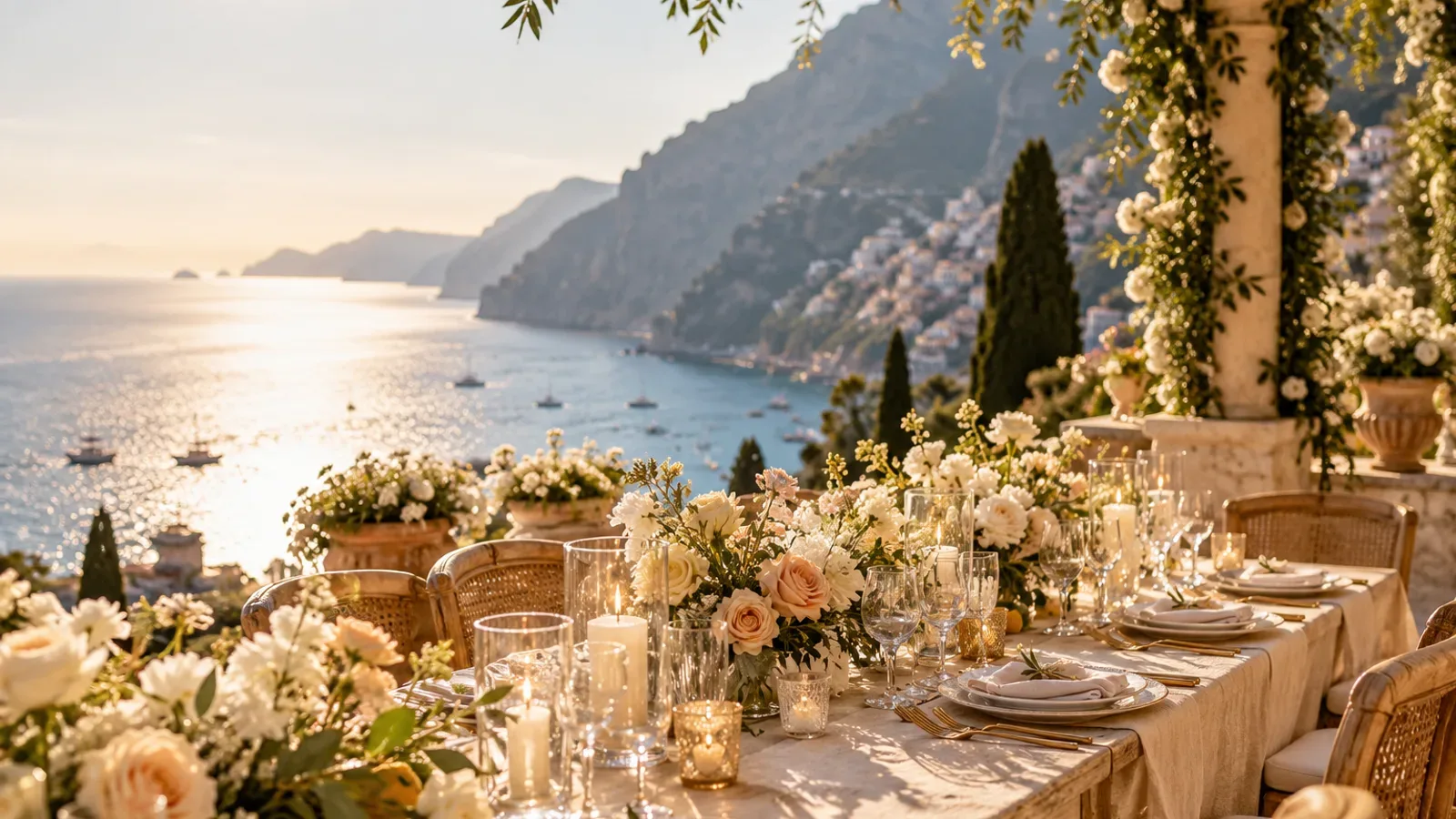
Dreaming of a wedding in Italy, Greece, Mallorca or the French Riviera? A Mediterranean-inspired mood board captures the relaxed beauty of sun-drenched destinations.
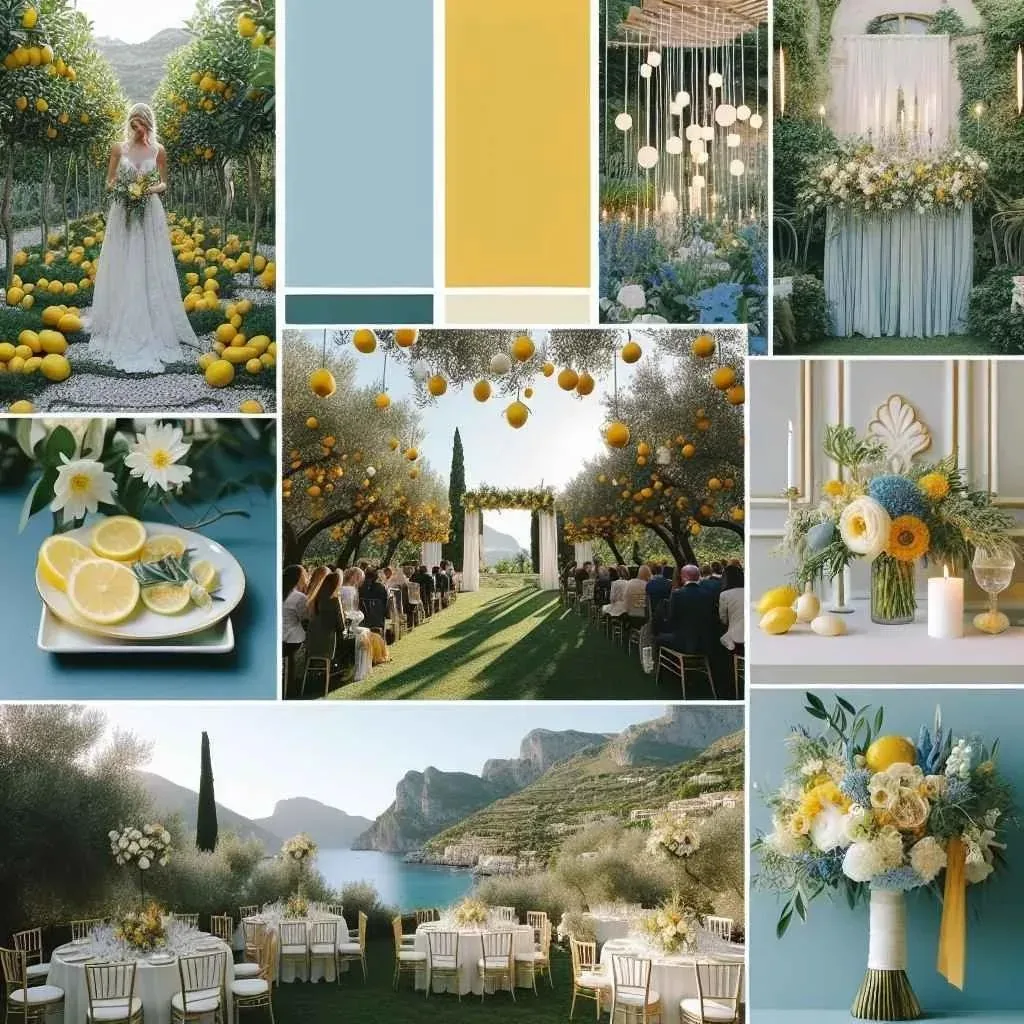
Include imagery such as:
- Historic stone villas
- Olive branches and citrus fruits
- Coastal landscapes
- Linen tablecloths
- Ceramic plates and textured glassware
- Romantic outdoor dining
- Hand-painted botanical illustrations
For wedding stationery, olive branches, citrus illustrations and elegant typography can create a beautiful introduction to the celebration. This aesthetic is particularly suited to destination weddings and outdoor summer receptions.
4. Vintage Château Wedding Mood Board
Colour palette: burgundy, antique gold, dusty rose and ivory.
For couples who love historic architecture and European romance, a château-inspired wedding offers a timeless atmosphere.
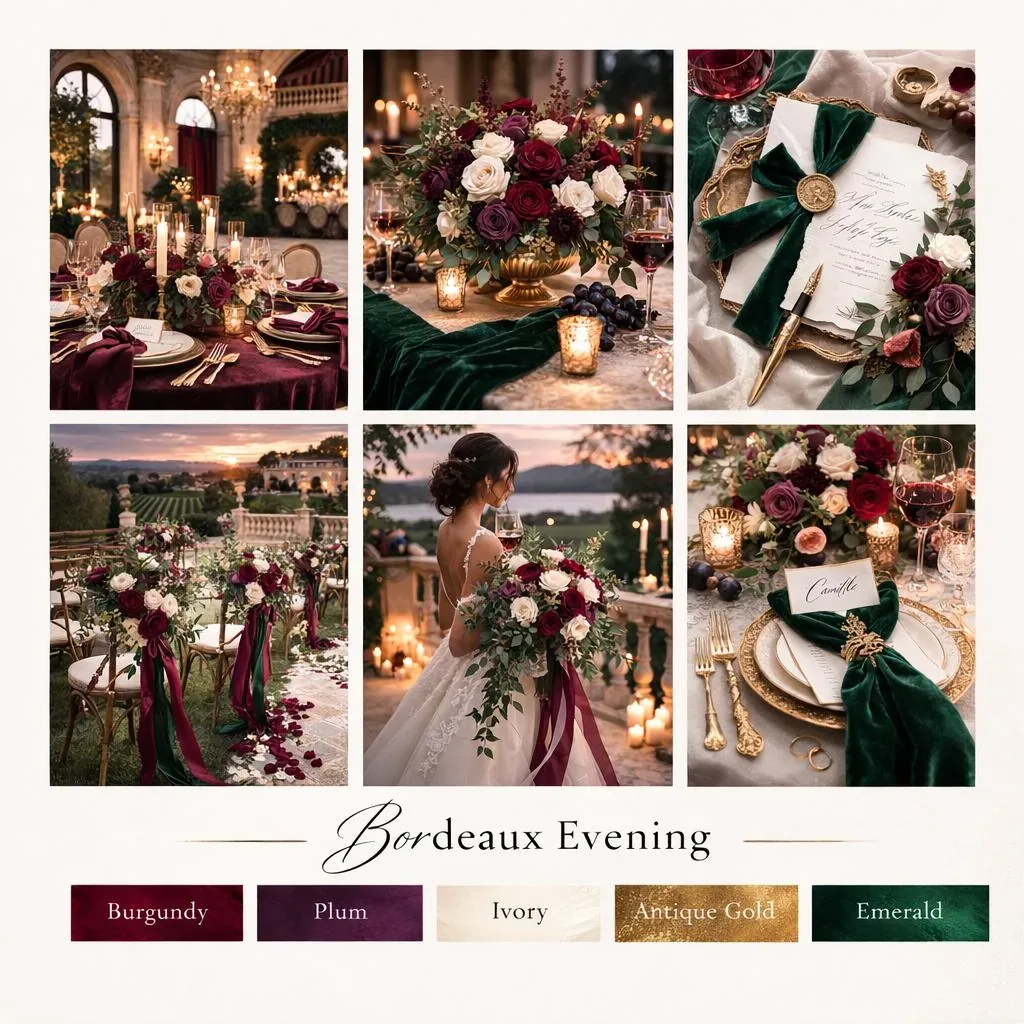
Your mood board might feature:
- Historic French estates
- Burgundy roses and romantic floral arrangements
- Antique gold frames
- Taper candles and ornate candelabras
- Velvet ribbons
- Vintage-style stationery
- Fine-art wedding photography
The overall look can feel dramatic and luxurious without becoming overwhelming. Balance rich colours and decorative details with neutral backgrounds and soft lighting. See our vintage wedding templates for stationery in this spirit.
5. Whimsical Wildflower Wedding Mood Board
Colour palette: lavender, butter yellow, soft green and cream.
A whimsical wildflower wedding celebrates natural beauty, creativity and a relaxed atmosphere. It’s a lovely choice for couples who prefer something playful and personal.
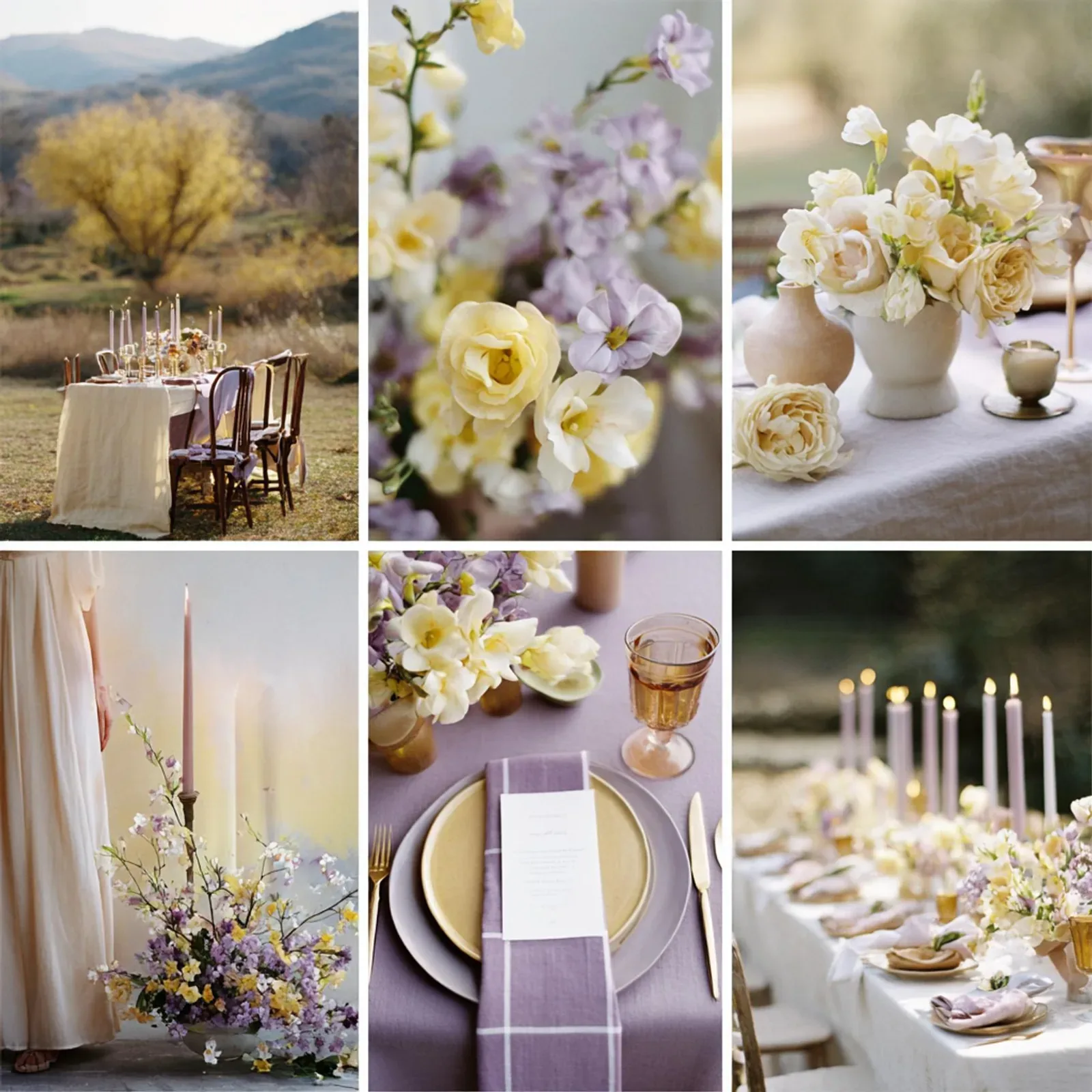
Look for inspiration featuring:
- Daisies and seasonal wildflowers
- Hand-painted botanical artwork
- Soft pastel colours
- Outdoor garden tables
- Organic floral arrangements
- Delicate ribbons
- Informal, joyful wedding photography
Wedding invitations with hand-drawn flowers, playful details and refined typography, like our floral wedding templates, can help establish this aesthetic from the beginning.
How to Turn Your Wedding Mood Board Into a Real Wedding
Once you’ve created your wedding mood board, the next step is bringing it into the real world.
Start by identifying the design elements that matter most to you. Perhaps your priorities are a beautiful ceremony setting, romantic floral arrangements and meaningful guest experiences. Use your mood board to guide those decisions first.
Start With Your Venue and Major Design Elements
Your venue establishes the foundation for your wedding atmosphere. Work with its existing architecture, natural surroundings and lighting rather than trying to transform every detail.
Then prioritise flowers, furniture and other major styling elements.
Carry Your Wedding Aesthetic Into Your Invitations
Your wedding design doesn’t have to begin on the wedding day. Invitations introduce your celebration to guests months in advance.
The colours, artwork, typography and overall atmosphere of your wedding mood board can inspire your stationery and wedding website.
For example, if your mood board features romantic garden flowers and soft ivory tones, consider invitations featuring delicate botanical illustrations and elegant typography. If your style is minimalist and editorial, choose a cleaner design with refined layouts and understated details.
Create a Wedding Website That Reflects Your Vision
Your wedding website is another opportunity to bring your aesthetic to life. Beyond sharing practical information, it can create a beautiful first impression and help guests feel connected to the celebration.
At Aurelia, we believe your wedding website should feel like an extension of your wedding story. Our digital wedding website templates offer different visual aesthetics, from romantic botanical designs to sophisticated, editorial-inspired layouts.
You can explore designs that complement your mood board while sharing important wedding details and collecting guest RSVPs in one place.
Explore Aurelia’s wedding website templates →
Common Wedding Mood Board Mistakes to Avoid
Creating a wedding mood board should feel inspiring, not overwhelming. Here are a few common mistakes to watch out for.
Including Too Many Images
Hundreds of images can make it difficult to identify your actual preferences. Focus on a smaller selection of images that clearly communicate your chosen style.
Mixing Too Many Different Aesthetics
It’s perfectly fine to combine styles, but make sure they share a common visual direction. A romantic garden wedding can include modern elements without losing its overall atmosphere.
Ignoring Your Wedding Venue
A mood board should work with your actual wedding setting. Consider the venue’s architecture, colours, scale and natural light.
Forgetting About Budget and Practicality
A beautiful installation might require extensive labour, equipment or out-of-season flowers. Share your inspiration with vendors early so they can suggest realistic alternatives.
Following Trends Instead of Your Personal Style
Wedding trends can provide wonderful inspiration, but they shouldn’t define your entire celebration. The most memorable weddings feel authentic to the people getting married.
Choose details that reflect your relationship rather than trying to recreate someone else’s wedding.
Wedding Mood Board Checklist
Before sharing your final board, make sure you’ve included the essentials.
Your wedding mood board checklist
0 of 11 readyUse this checklist while you read. Your selections reset when you leave this page.
You don’t need every detail finalised before you begin wedding planning. Your mood board is a starting point that can evolve as your plans become more defined.
Frequently Asked Questions About Wedding Mood Boards
- What is the difference between a wedding mood board and a vision board?
- A wedding mood board focuses primarily on the visual design and aesthetic of your celebration, including colours, flowers, decor and stationery. A wedding vision board may be broader, including personal goals, experiences, traditions and the emotions you want your wedding day to evoke. The two can overlap, and many couples use the terms interchangeably.
- How many pictures should be on a wedding mood board?
- A good starting point is approximately 10 to 20 carefully selected images for your main wedding mood board. The goal is to communicate a clear creative direction without making the layout overwhelming. For larger weddings, you can create additional boards dedicated to flowers, ceremony styling, reception decor and stationery.
- Can I make a wedding mood board for free?
- Yes. You can create a wedding mood board using free tools such as Pinterest, Canva’s free features or Google Slides. Simply collect inspiration images, arrange them into a visual layout, and add your preferred colour palette and styling notes. Some templates and design assets may require a paid subscription, but buying one isn’t necessary to create a useful mood board.
- Is Pinterest or Canva better for wedding mood boards?
- Pinterest is excellent for discovering and organising wedding inspiration. Canva is useful for arranging selected images into a polished, cohesive layout that you can share with vendors. For many couples, the easiest approach is to collect ideas on Pinterest and then assemble their final mood board in Canva.
- Should I create a wedding mood board before choosing a venue?
- You can begin gathering inspiration before booking your venue, and an early mood board may even help you identify which types of venue suit your preferred wedding aesthetic. However, it’s best to refine your final board after choosing your venue so your styling ideas complement the space and remain practical.
- How do I share a wedding mood board with my wedding planner?
- You can share your mood board as a PDF, image file, Google Slides presentation or Pinterest board. Include brief notes describing your favourite elements, preferred colours and priorities. It’s also helpful to explain which images are general inspiration and which represent specific details you’d like to recreate.
Final Thoughts: Your Wedding Mood Board Is the Beginning of Your Story
Your wedding mood board doesn’t need to be perfect. It simply needs to reflect what feels meaningful and beautiful to you.
Whether you’re dreaming of an intimate garden celebration, a grand château wedding or a relaxed seaside ceremony, creating a visual direction can make your wedding planning journey more enjoyable and intentional.
Start with the images you love. Notice the colours, textures and details that keep appearing. Gradually refine those ideas until your mood board begins to tell a consistent story.
Most importantly, remember that your wedding is about the two of you. The best wedding aesthetic isn’t necessarily the most elaborate or fashionable. It’s the one that feels genuinely yours.
And when you’re ready to carry that vision into your wedding invitations and guest experience, we’re here to help.
Discover beautifully designed digital wedding websites at Aurelia →
Timeless Romance. Beautifully Digital.