Design Ideas·6 min read
Garden Wedding Ideas: 20 Romantic Details for an Outdoor Celebration
Explore 20 garden wedding ideas, plus a site-visit checklist, a practical rain-plan brief and guest wording for outdoor ceremonies and receptions.

By Aurelia Editorial Team · Wedding stationery & planning guides
Published
Use the garden as the starting point
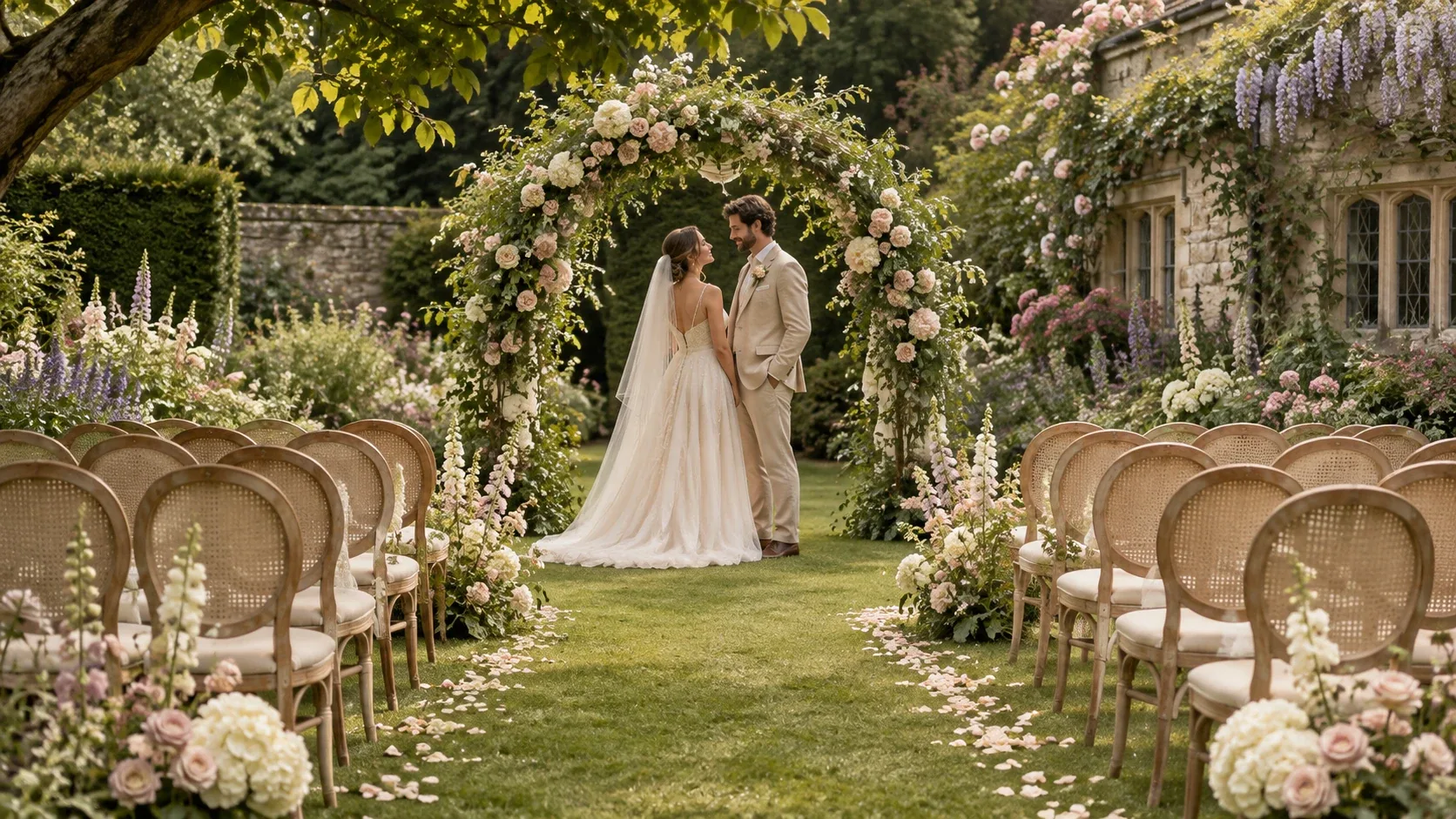
Visit at approximately your ceremony time and follow the route from guest drop-off to seating, drinks, dinner and toilets. Photograph shaded and exposed areas, note steps and loose surfaces, and ask what the planting normally looks like in your wedding month. Check where suppliers unload and where a vehicle can turn. A terrace that looks spacious without guests may feel very different once chairs, service tables and a music setup are included. Record findings on the venue plan rather than relying on memory.
Choose the palette after that visit. If the garden already has deep green foliage and pale stone, cream linen, dusty pink flowers and dark text may be enough. If the planting is colourful, use a quieter table scheme and let the site provide the colour. Avoid buying flowers to match an old photograph of a different season. Ask the florist which areas need visual support and which already have a strong backdrop; that is often a better use of the styling allowance.
20 romantic garden wedding ideas
Ceremony details
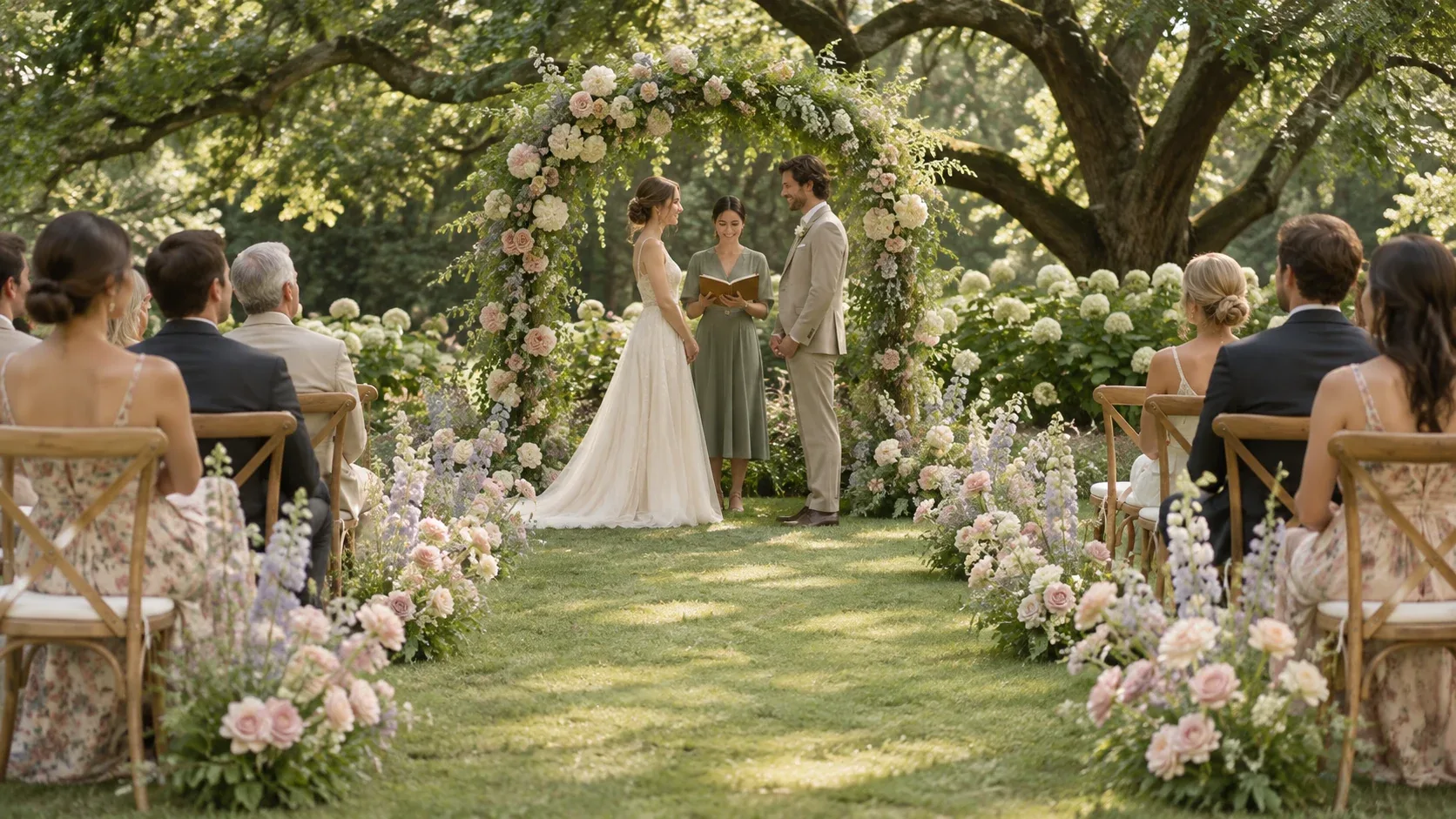
- 1. Frame an existing view. Position the ceremony so guests can see and hear comfortably; the view should support the arrangement, not dictate an awkward layout.
- 2. Use a single floral focal point. Ask the florist to design within the site's access, fixing and weather restrictions.
- 3. Add short aisle arrangements. Keep enough clear space for guests, clothing and mobility aids.
- 4. Choose comfortable ceremony seating. Check the surface beneath chairs, not just the appearance of the chair itself.
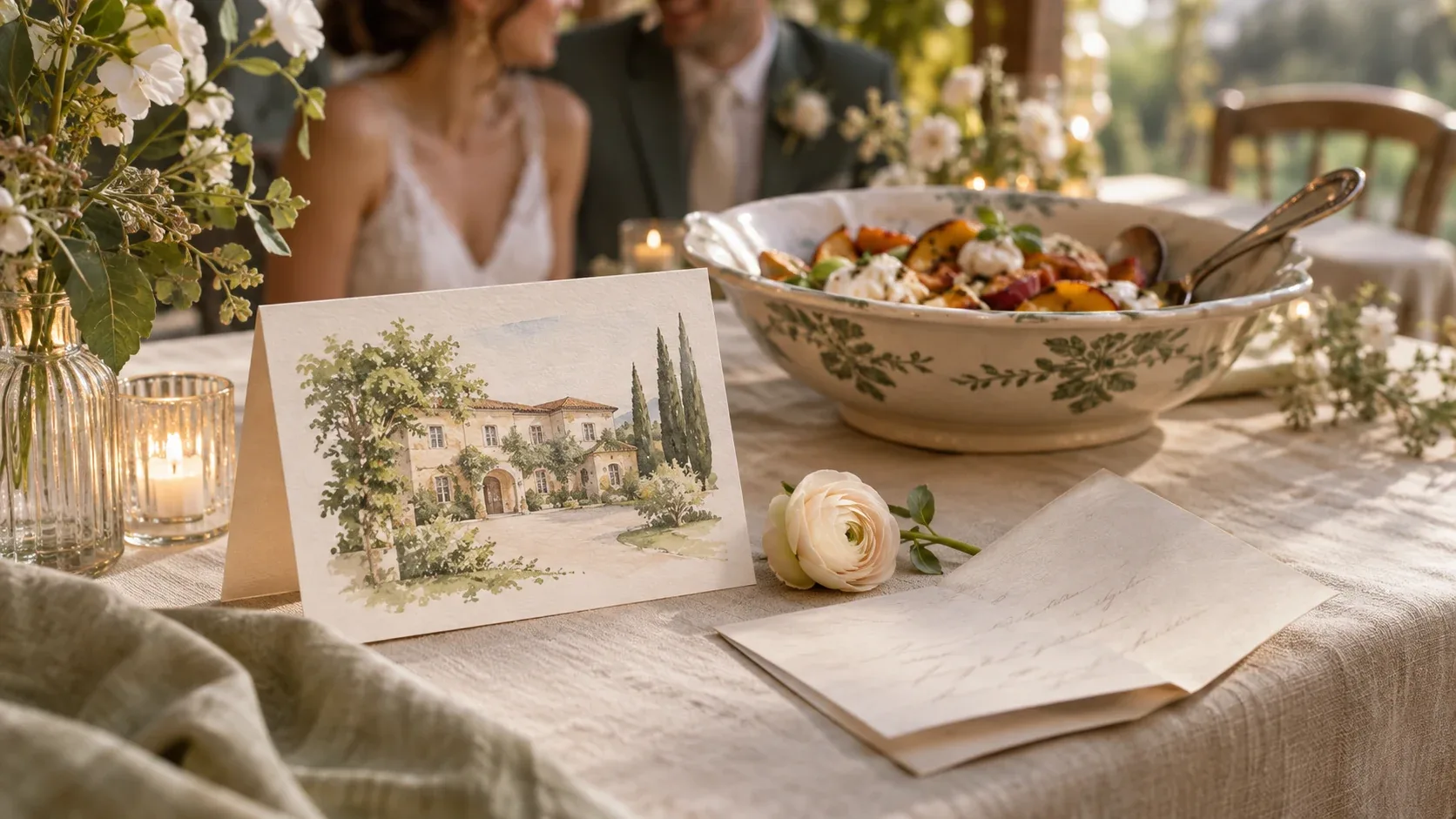
- 5. Introduce a botanical invitation. Use artwork to set the mood, with practical footwear and weather notes on the website.
Tables and flowers
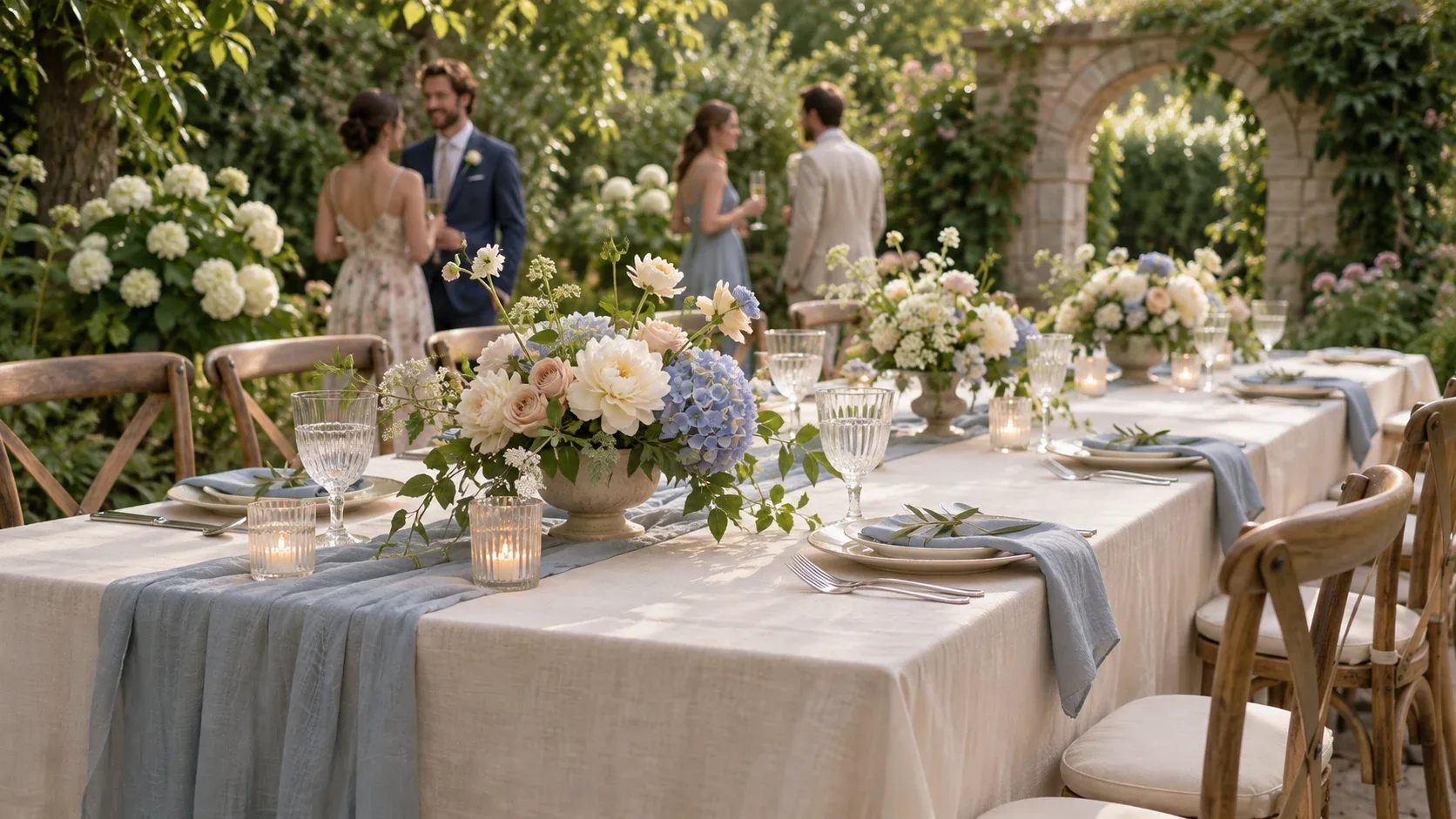
- 1. Use low table flowers. Keep conversation and service space in mind when agreeing dimensions.
- 2. Repeat one garden colour. Carry a colour from the surroundings into napkins or stationery rather than adding several competing palettes.
- 3. Mix simple vessels deliberately. Agree who supplies, fills, places and collects them; a small vase still creates work.
- 4. Let greenery provide structure. Ask the florist about appropriate materials and the intended installation rather than cutting from the venue's planting.
- 5. Reuse a movable arrangement. Confirm the second location, lifting requirements, labour and timing before counting on it serving two spaces.
Lighting and atmosphere
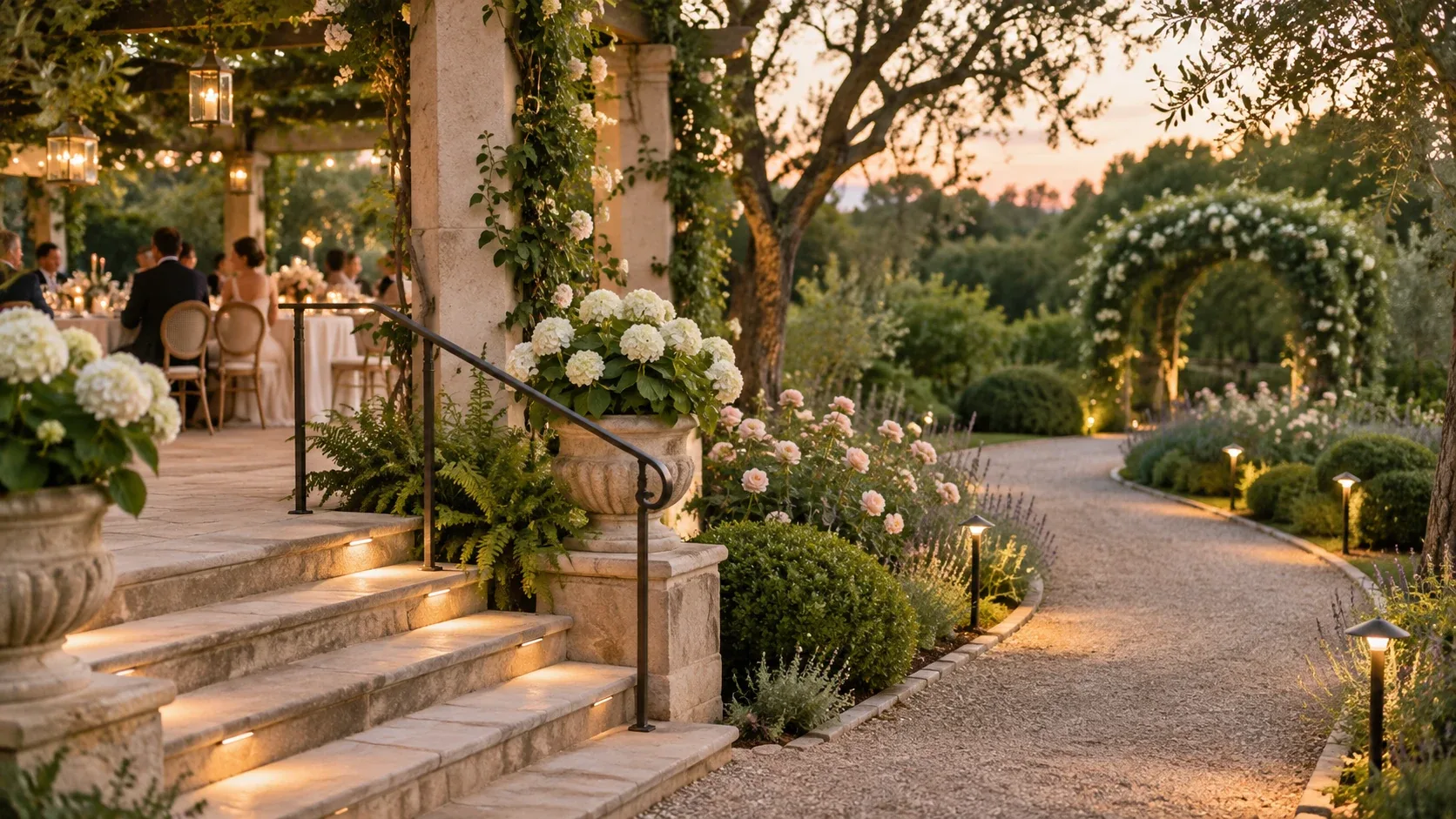
- 1. Plan a warm evening glow. Have the venue or lighting supplier confirm equipment, power and outdoor suitability.
- 2. Light the practical routes. Toilets, steps and departure points need attention alongside the reception tables.
- 3. Use candle alternatives where needed. Ask about flame restrictions before purchasing candles or holders.
- 4. Create a small conversation area. Check that guests can reach it and that it does not obstruct service routes.
- 5. Keep sound appropriate to the space. Agree microphones and music limits; outdoor surroundings do not remove the need for a sound plan.
Guest comfort
- 1. Show where shelter is available. A beautiful garden still needs a usable alternative for unsuitable weather.
- 2. Make water easy to find. Coordinate provision with the caterer and venue rather than assuming another team will handle it.
- 3. Explain suitable footwear. “The ceremony is on grass; please choose shoes you will find comfortable” is more useful than a vague garden dress code.
- 4. Provide readable directional signs. Place them where decisions happen and keep the design clear at the distance guests will view them.
- 5. Give the arrival team a current plan. They should know the ceremony location, backup arrangements and who to contact with a problem.
Make the weather plan part of the design
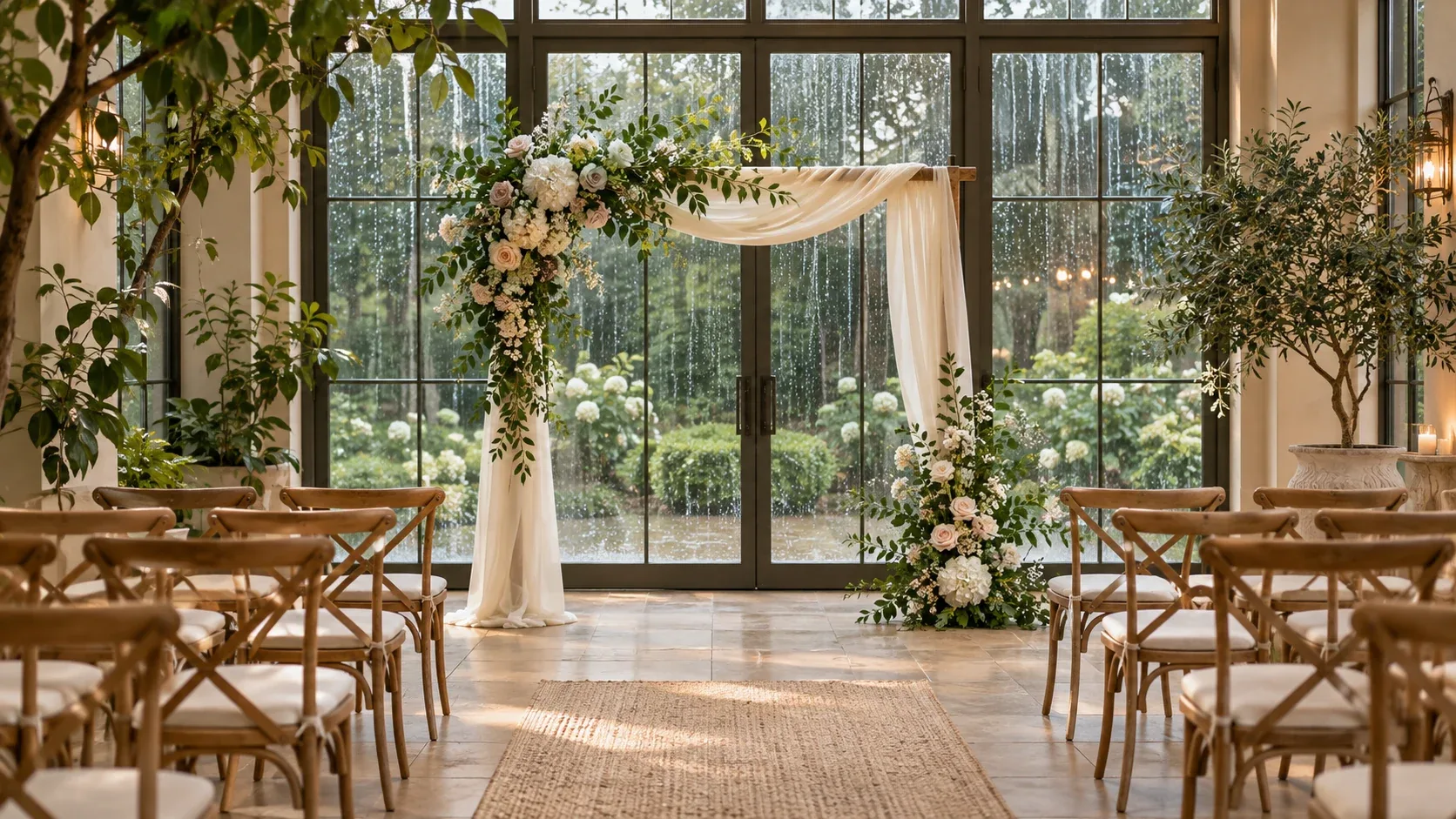
Your rain plan should name the alternative space, its usable seated capacity, the decision deadline and the person authorised to switch. Add a simple changeover list: chairs, ceremony flowers, sound equipment, signage and guest directions. Ask who physically moves each item and whether the work fits the access window. As an illustrative plan, a coordinator might decide at 10 am for a 2 pm ceremony; the correct deadline for your event must come from the venue and suppliers. Confirm the alternative before treating an outdoor layout as settled.
For a garden wedding at home, compare a complete temporary-event quote with an existing venue before assuming it is cheaper. Ask suppliers to account for suitable toilets, power, water, waste, catering preparation, deliveries, lighting and reinstatement. A marquee quote may cover only the structure. Give the caterer and relevant site suppliers a plan of the actual ground and access route, and ask them to identify what they need. The resulting requirements should appear in the budget and setup schedule, not arrive as final-week discoveries.
Spend where guests will notice the difference
Spend first on the parts guests use: seating, comfortable movement, a meal that can be served properly and a sheltered alternative. Then choose one design feature for each main space. Ceremony meadow arrangements might provide the focal point while reception tables use simple vessels and linen. Before planning to reuse flowers, confirm the move, the people carrying them and the second position. Reuse only saves work or money if it fits the transition; it should not leave staff rebuilding the room while guests wait.
Tell guests what the garden setting means for them. For example: “Our ceremony is on the lawn, followed by dinner on the terrace. Please choose footwear you find comfortable on grass and bring a layer for the evening. If the ceremony moves indoors, our welcome team will direct you on arrival.” Add confirmed parking, drop-off and transport details to your wedding website FAQs. Use a weekend itinerary if there are several gatherings.
Garden wedding questions
Can you plan for rain without losing the atmosphere?
Yes. Design the backup at the same time as the outdoor ceremony. Use the same palette and identify a few genuinely movable features, such as a welcome sign or freestanding arrangement. Check that the indoor layout works with the full guest count rather than planning for a smaller group. Share the final switch decision directly with the arrival team and suppliers.
Do garden weddings always cost less?
Use a venue with established facilities, simplify the number of spaces and borrow the garden's existing visual character. Compare the full cost of outdoor equipment before adding small decorative purchases. A garden with toilets, furniture and an indoor room may offer better overall value than a cheaper empty lawn that requires every service separately.
Introduce the setting with a floral invitation template, then use the wedding website for the practical notes. Guests should be able to enjoy the botanical design and quickly find arrival, footwear and weather information.