Design Ideas·7 min read
Wedding Flower Trends 2027: Statement Florals and Practical Styling Ideas
Explore five wedding flower directions for 2027, with a florist brief, sourcing questions and a worked plan for reusing ceremony arrangements.
By Aurelia Editorial Team · Wedding stationery & planning guides
Published
Start with the direction, not a must-have stem
The Knot's 2027 report identifies monofloral installations and whimsical florals as forecast directions. Those findings describe interest within its research audience; they do not establish a worldwide rule or guarantee flower availability. We use them as a starting point, then separate the reported directions from our own suggestions for applying them.
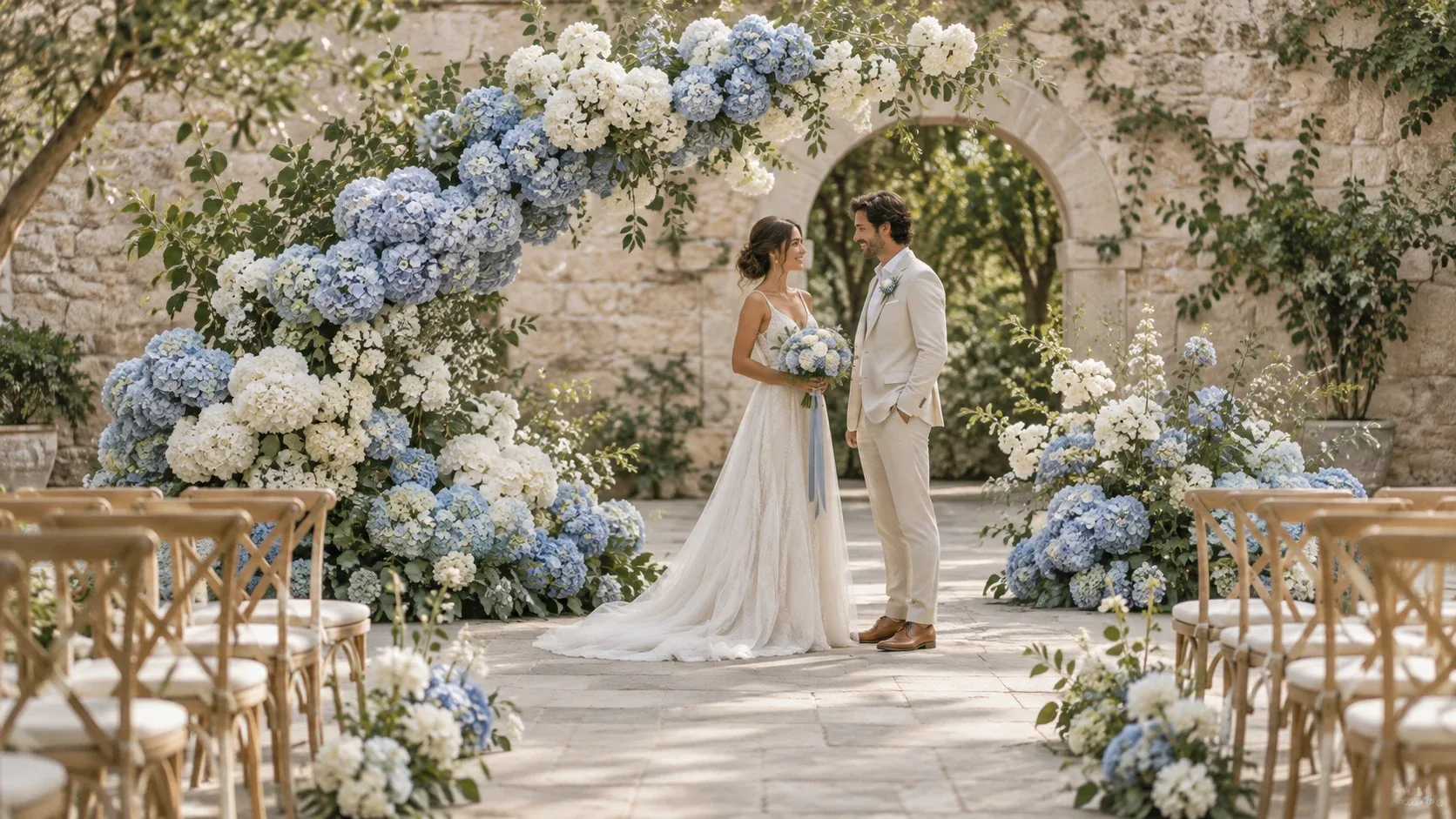
Annotate three reference images with the feature you want to preserve: “rounded pale-blue volume”, “visible sculptural stems” or “flowers growing around the ceremony space”. Tell the florist which matters most: the exact variety, the shade or the overall silhouette. If all three are fixed, alternatives may be limited. A clear priority lets the florist propose substitutions without replacing the part of the design you actually care about.
Five floral approaches to discuss
1. One variety used at scale
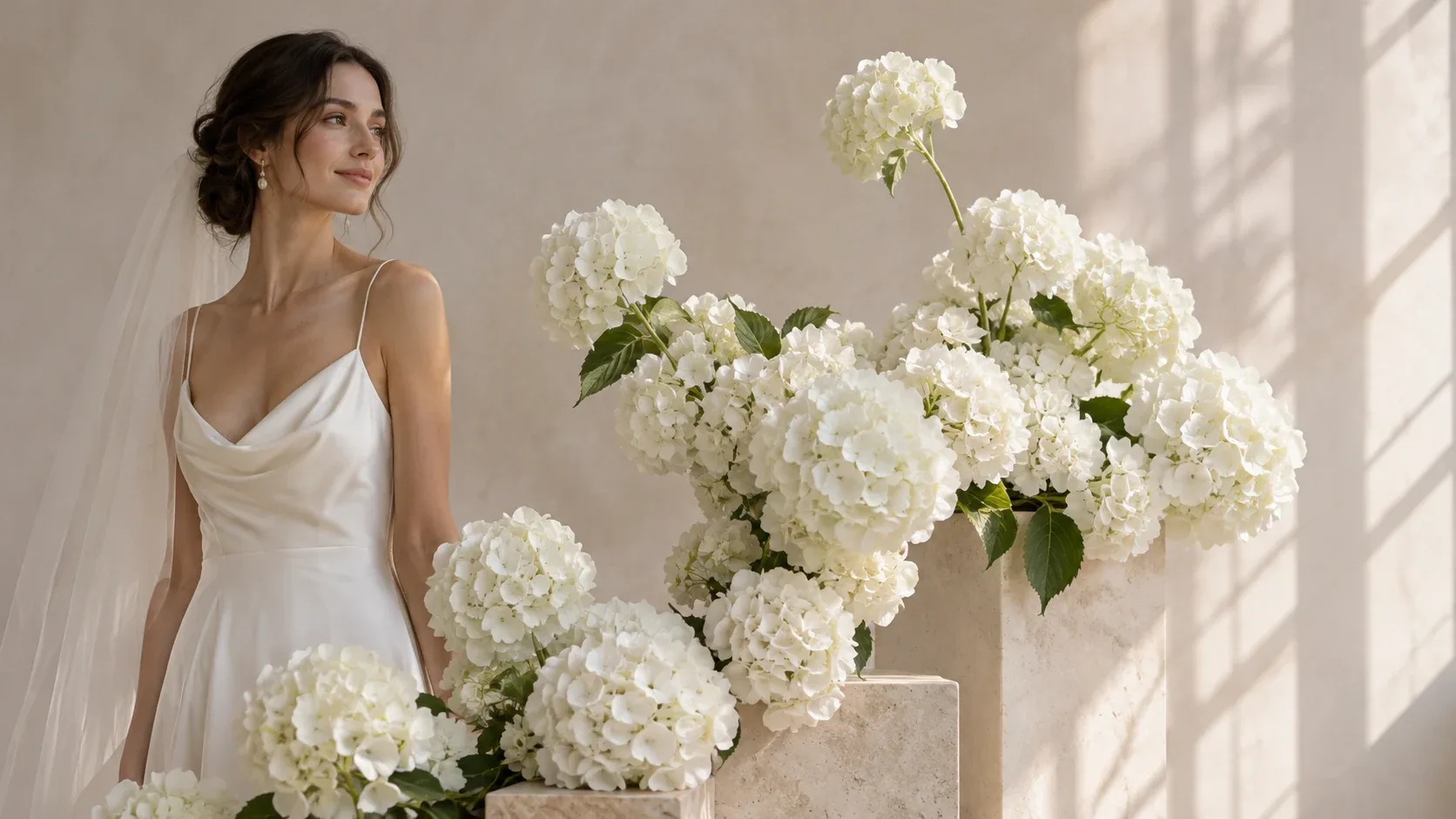
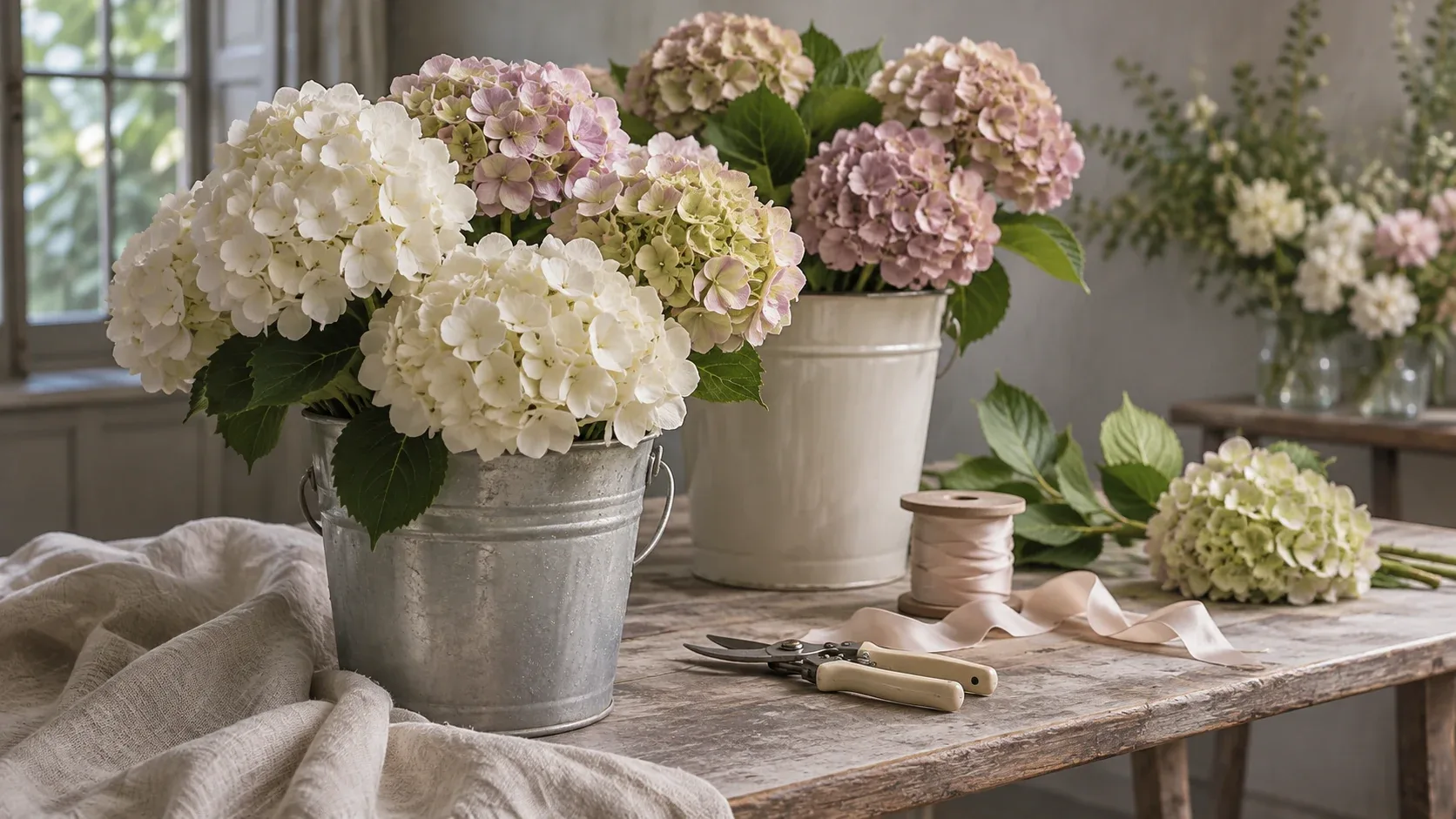
A monofloral arrangement repeats one main variety so shape and texture carry the design. Hydrangea-style volume, for example, creates a different effect from sparse sculptural callas. Ask for an itemised description of the size, vessels, mechanics and installation, not simply a price per stem. One variety can simplify the appearance while still requiring substantial quantities and labour. Compare a concentrated focal piece with smaller repeated arrangements before deciding where the effect has the most value.
2. A sculptural focal point
Use a statement arrangement where it has a clear job: framing the ceremony, marking the entrance or backing the couple's table. Draw its footprint on the layout and discuss sightlines with the venue and photographer. A dramatic piece should not block a doorway or hide the people it is meant to frame. Ask who approves fixing points and who handles installation and removal; those services belong in the quote.
3. Colour repeated through different arrangements
Instead of ordering identical arrangements everywhere, set a palette with a dominant colour and an acceptable shade range. You might choose burgundy, old rose and cream, then let bouquets carry more texture while tables remain restrained. Show the florist the linen and invitation references alongside flower images. Compare samples in the venue's likely lighting so the colour relationship is assessed as a complete setting.
4. Flowers close to the setting
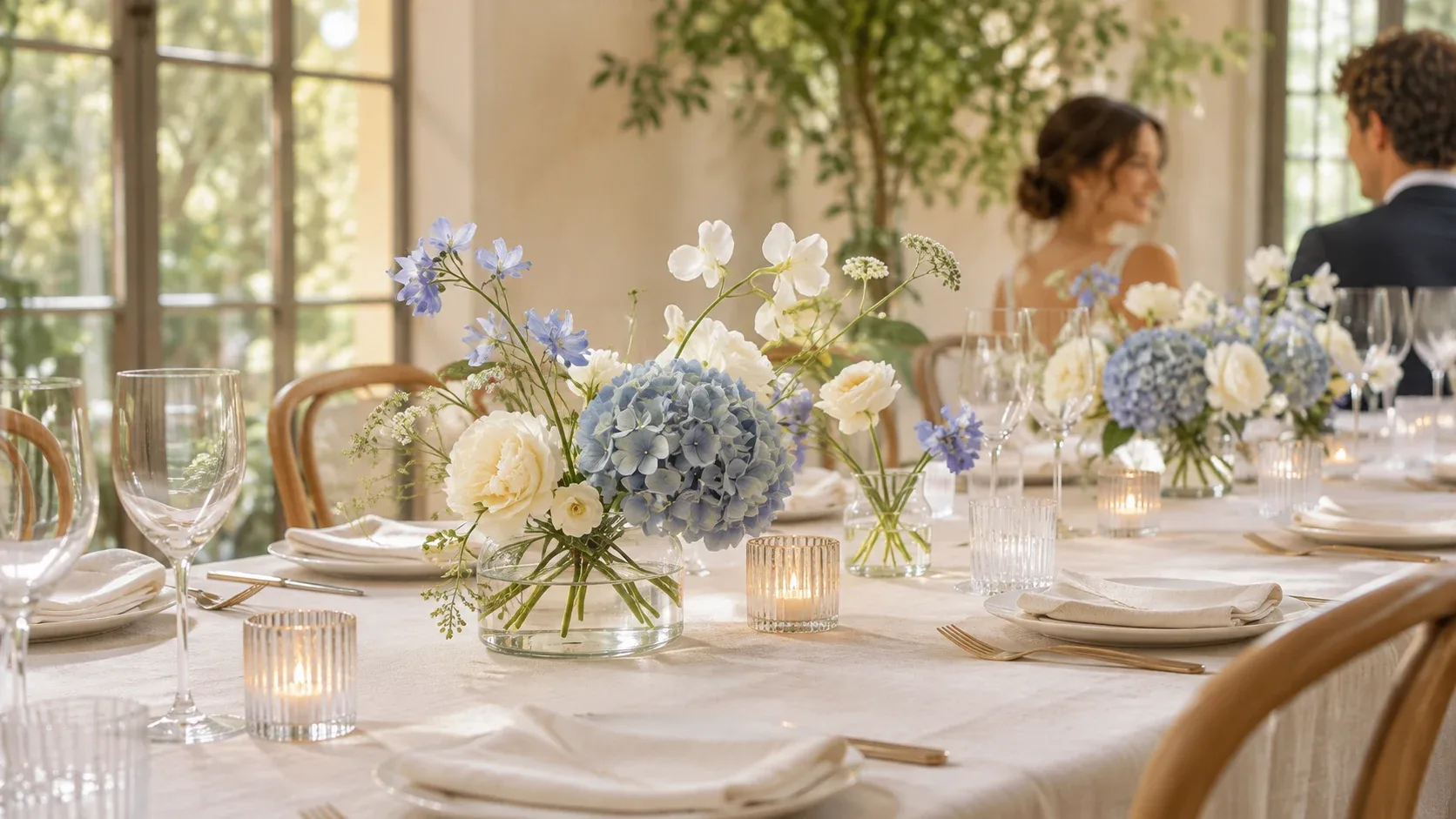
Low meadow-style arrangements can connect the ceremony to a garden, but their position matters more than a photograph's apparent abundance. Agree the clear route before adding flowers at aisle edges. Ask whether the pieces are freestanding, which vessels remain visible and where they go afterwards. On reception tables, check space for glasses, dishes and service. Natural-looking placement still needs a deliberate layout.
5. A deliberate mix of statement and simple pieces
A statement-and-simple plan gives the design a hierarchy: one installation provides the main image, while smaller table pieces repeat its palette. Ask for two versions of the same brief at different scopes. For instance, compare a full entrance feature with a smaller ceremony pair plus modest tables. Do not compare unrelated pictures at different prices; keep the effect and included services clear enough to judge the trade-off.
Hydrangeas, wisteria and alternatives
Use hydrangea or trailing wisteria images to explain volume and movement, then ask what material is proposed. A reference may show fresh, artificial or mixed flowers, and the difference affects the quotation and appearance. Ask for the likely finished dimensions, the visible structure and an alternative if a particular colour cannot be sourced. This is more useful than requiring a stem because it appeared in a trend gallery.
| Desired effect | Question to ask your florist |
|---|---|
| Soft, cloud-like volume | Which materials achieve this in our conditions and budget? |
| A hanging or trailing outline | What structure, fixing points and labour are required? |
| A particular hydrangea colour | What shade range can you source, and what is the alternative? |
| A garden feel around the aisle | How do we preserve the required clear route? |
| A reusable ceremony feature | Who can move it, when and at what cost? |
Sourcing depends on your date and location. A UK garden flowering month does not translate directly to an Australian season or Singapore supply chain. Ask your florist to distinguish locally available choices, imports and substitutions for the effect you want. Record any agreed flexibility in the proposal. That gives you a shared decision framework if the preferred material is unavailable rather than a vague promise to “find something similar”.
Treat conditioning and installation as part of the design
The RHS cut-flower guidance explains why conditioning and placement affect flower life. For your wedding, ask who prepares the arrangements, how they reach the venue and what storage or water provision they need. Leave the technical method to the florist, but make sure the event timetable allows them to use it.
Show the florist the actual installation position and exposure: indoor air conditioning, direct sun, an open courtyard or a covered terrace. Ask which designs are suitable there and whether a later installation is needed. A reference photograph captures one moment; it does not show how long the flowers had been standing or what support was hidden. Plan for the hours guests will see them, not only the first photograph.
Reuse flowers only when the logistics work
Treat reuse as a small logistics project. Name the starting position, second position, move time, access route and responsible team. For example, two freestanding ceremony arrangements might move beside the reception entrance during drinks. That works only if the florist confirms they can be moved and the reception position is ready. A suspended installation is a different proposition; do not assume every feature is reusable.
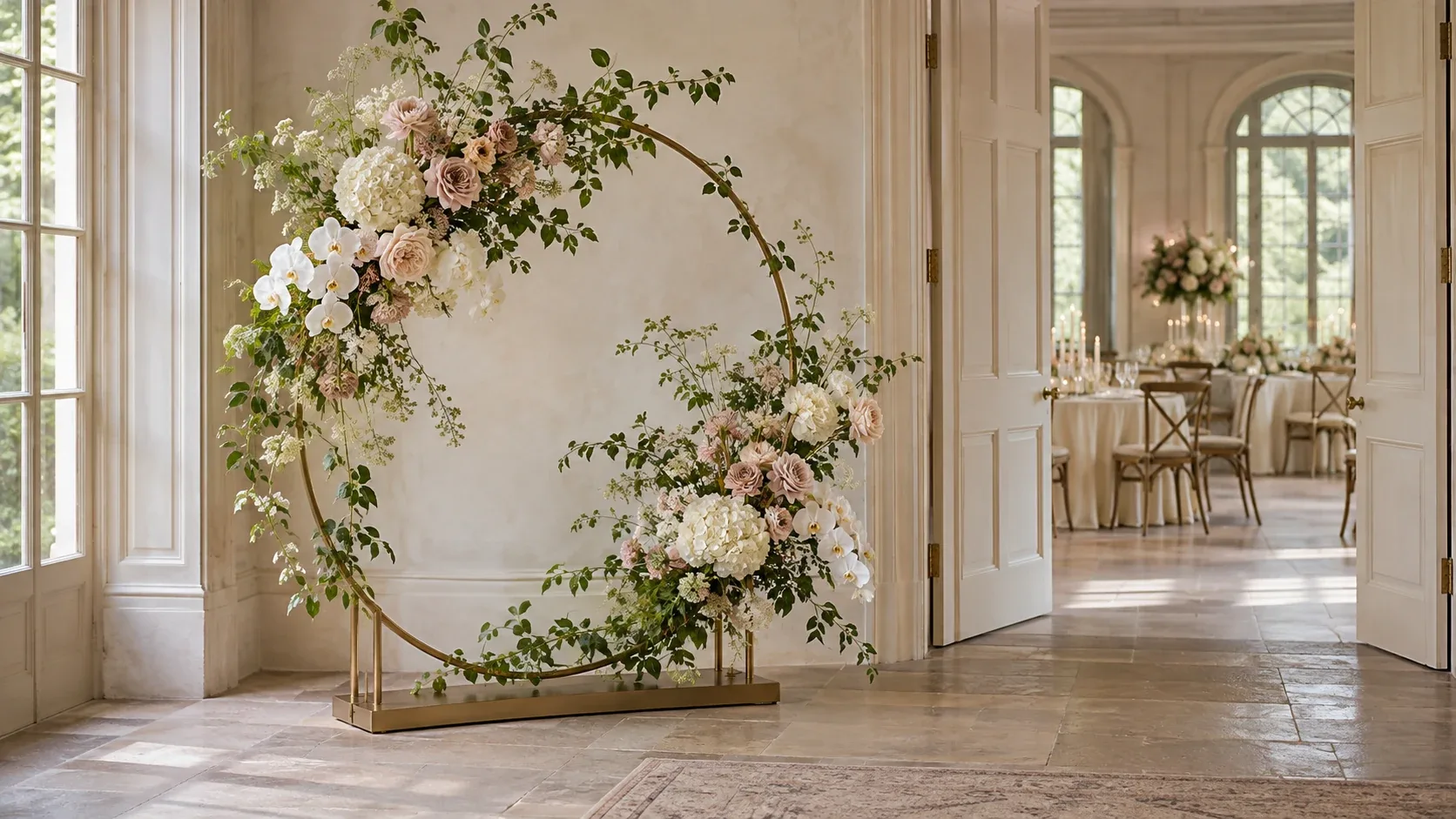
Ask for the move to appear in the quote and run sheet, including additional labour if needed. Decide what happens if the ceremony runs late and guests reach the reception before the flowers. A simpler reception that is complete on time may be better than an elaborate plan dependent on a rushed changeover. Reuse should improve the total event design, not merely make one arrangement appear twice.
Prepare for the florist consultation
Take this brief to the consultation: date and venue; indoor/outdoor locations; approximate guest and table numbers; total floral allowance; three annotated references; preferred palette; any essential variety; areas to prioritise; and acceptable substitutions. Add access times and who supplies vessels. Ask the florist to return a proposal showing each arrangement, approximate scale, installation, collection and any reuse responsibilities.
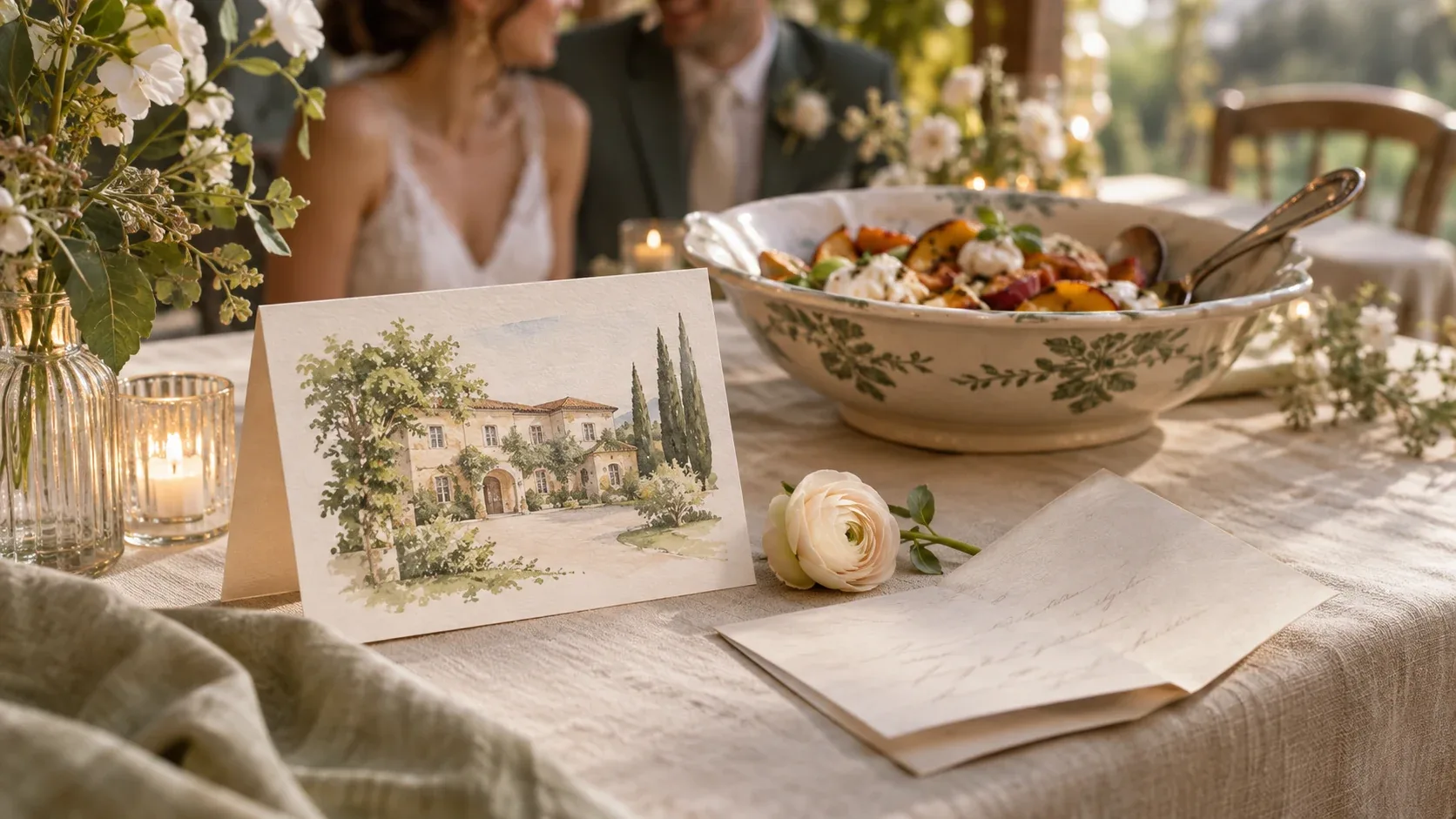
Coordinate flower artwork with the invitation's feeling rather than promising an exact bouquet. A botanical frame can introduce a garden celebration even if the live stems change. Compare floral templates with your chosen colour palette, then keep maps, schedules and replies clear on the wedding website.
Wedding flower questions
Are statement flowers always expensive?
A statement arrangement is not automatically better value than several smaller ones. Compare its visibility, scale, materials, installation and the time guests spend near it. Ask the florist what a smaller version would preserve and what would change. Use the full quote, including labour and collection, to decide.
Should every arrangement match exactly?
No. Use one palette and repeat selected shapes or textures while letting bouquets, ceremony pieces and tables serve different jobs. Consistency comes from the relationship between pieces. It does not require the same flower mix or arrangement size in every space.